15 citations
,
July 2021 in “Anais Brasileiros de Dermatologia” This report describes a rare case of alopecia areata-like psoriasis, associated with skin lesions, following the use of dupilumab in a patient with atopic dermatitis.
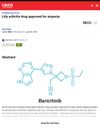 June 2022 in “C&EN global enterprise”
 This source notes that Olumiant (baricitinib), a rheumatoid arthritis drug by Eli Lilly and Company, has been approved as the first systemic treatment for severe alopecia areata.
January 2026 in “International Journal of Molecular Sciences” This review highlights brimonidine’s potential as a dermatological agent, noting its ability to improve rosacea-related facial redness and its effectiveness in various other skin conditions due to its vasoconstrictive and anti-inflammatory actions, with minimal systemic absorption and a favorable safety profile for long-term use.
1 citations
,
October 2015 in “Joint bone spine” This study found that ankylosing spondylitis patients who are members of a self-help organization tend to have higher educational levels, are better informed about their disease, and have better functional outcomes than non-members, although potential confounders may affect disease outcome measures.
September 2025 in “Clinical and Experimental Rheumatology”  3 citations
,
May 2018 in “Reproductive Sciences”
3 citations
,
May 2018 in “Reproductive Sciences” In this randomized study, BAY 1158061, a prolactin receptor antibody, was found to be safe, well-tolerated, and exhibited low immunogenicity in healthy postmenopausal women, but had no effect on serum prolactin levels compared to placebo.

This study found that baricitinib, a selective Janus kinase inhibitor, led to significantly improved scalp coverage in alopecia areata patients over 36 weeks compared to placebo, though adverse effects like acne and urinary tract infections were reported.
September 2025 in “HAL (Le Centre pour la Communication Scientifique Directe)” This study, involving a retrospective analysis of 24 patients in France, found that paradoxical psoriasiform alopecic reactions on the scalp associated with TNFα-targeted therapies for inflammatory bowel disease are rare yet non-scarring, with all patients achieving complete hair regrowth within two months after treatment adjustments.
 April 2024 in “Frontiers in pharmacology”
 This study compared JAK inhibitors for moderate-to-severe alopecia areata and found brepocitinib 30mg and deuruxolitinib 12mg to be most effective, though deuruxolitinib may cause more adverse events. Further research is needed for long-term efficacy and safety.
 2 citations
,
September 2021 in “JAAD case reports”
2 citations
,
September 2021 in “JAAD case reports” This report describes a case of a woman with ophiasis-pattern alopecia areata who experienced significant hair regrowth and maintained it for 6 months after treatment with dupilumab, though she eventually relapsed.
 49 citations
,
December 2018 in “JAAD case reports”
49 citations
,
December 2018 in “JAAD case reports” This case report describes a patient who developed alopecia after 18 weeks of treatment with dupilumab for atopic dermatitis.
 53 citations
,
January 2018 in “JAAD case reports”
53 citations
,
January 2018 in “JAAD case reports” This report describes the case of a patient who developed alopecia areata within five weeks of starting treatment for atopic dermatitis with dupilumab.
16 citations
,
January 2020 in “Annals of the rheumatic diseases” In this study, baricitinib improved the resolution of arthritis or rash in patients with systemic lupus erythematosus, but outcomes for skin involvement like alopecia were not reported.
 1 citations
,
May 2025 in “The Journal of Rheumatology”
1 citations
,
May 2025 in “The Journal of Rheumatology” In this case report, treatment with anifrolumab led to significant improvement in symptoms for a 52-year-old woman with refractory systemic lupus erythematosus, including resolution of chronic lupus headaches resistant to previous therapies.
This study found that adalimumab treatment led to regression of lesions in two patients with hidradenitis suppurativa after 16 weeks of therapy.
 October 2023 in “Frontiers in Medicine”
 In a reported case, researchers observed full hair regrowth on the scalp, eyebrows, and eyelashes of a 4-year-old with alopecia universalis after 10 months of treatment with dupilumab, following resistance to baricitinib.
1 citations
,
September 2025 in “Eye” This pharmacovigilance study found that certain systemic medications, including finasteride, bortezomib, and dupilumab, were disproportionately reported in association with eyelid disorders like blepharitis, meibomian gland dysfunction, and chalazia, suggesting these drugs may contribute to these conditions though benefits might still outweigh the risks.
April 2016 in “The journal of investigative dermatology/Journal of investigative dermatology” This study reports that cannabinoid receptor type 1 may influence psoriasis development by modulating laminin-511 expression, suggesting a potential target for treatment.
19 citations
,
December 2021 in “Dermatologic Therapy” Dupilumab can cause psoriasis in some patients.
5 citations
,
May 2024 in “Journal of Allergy and Clinical Immunology Global” In this case study, a 29-year-old male with severe atopic dermatitis and alopecia universalis experienced an excellent response to treatment with upadacitinib, indicating it may be a promising option for similar patients.
July 2024 in “Journal of Investigative Dermatology” 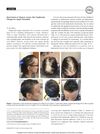 12 citations
,
August 2019 in “Dermatitis”
12 citations
,
August 2019 in “Dermatitis” This case report describes a 42-year-old woman with atopic dermatitis, whose alopecia areata reactivated rapidly after starting dupilumab, possibly indicating an unrecognized adverse effect in AD patients.

This study reports that a combination of upadacitinib and oral minoxidil resulted in complete hair regrowth in a 20-year-old with alopecia universalis, Crohn's disease, and atopic dermatitis.
 5 citations
,
January 2021 in “Inflammatory Bowel Diseases”
5 citations
,
January 2021 in “Inflammatory Bowel Diseases” In this report, a female patient with ulcerative colitis, alopecia areata, and pyoderma gangrenosum showed improvement in all three conditions after being treated with tofacitinib.
January 2023 in “International Journal of Trichology” This study found that bicalutamide mesotherapy resulted in subtle hair density improvements and was well tolerated by premenopausal women with androgenetic alopecia.
13 citations
,
April 2024 in “JAAD Case Reports” This review discusses current treatments for discoid lupus erythematosus and highlights anifrolumab as a promising option for difficult cases, but no new clinical results are reported.
May 2025 in “JEADV Clinical Practice” This study found that using calcipotriene and betamethasone dipropionate cream in a real-world setting significantly improved clinical outcomes and patient quality of life for adults with mild-to-moderate scalp psoriasis, especially among those with higher adherence, demonstrating high treatment satisfaction.
June 2025 in “British Journal of Dermatology” In this case report, the temporal relationship between starting dupilumab treatment and the onset of psoriasis in an adult with atopic dermatitis suggests that dupilumab may contribute to psoriatic lesions, and dermatologists should consider psoriasis a potential adverse event of the medication.
2 citations
,
October 2023 in “JDDG Journal der Deutschen Dermatologischen Gesellschaft” This case report found that dupilumab treatment in a 5-year-old with prurigo nodularis considerably reduced her itch severity and nearly cleared the skin lesions after six months.
1 citations
,
January 2026 in “International Journal of Dermatology” In this study, a case of dissecting cellulitis of the scalp was reported in a man after starting dupilumab therapy, highlighting potential immune pathways involved and the importance of recognizing such paradoxical inflammatory reactions to prevent irreversible alopecia.