 September 2022 in “F1000Research”
 This study found that hair plucking via waxing led to greying of hair in castrated mice, suggesting that decreased androgen levels may contribute to age-related hair greying in humans.
1 citations
,
April 2008 in “Pigment Cell & Melanoma Research” This study suggests that Foxn1 expression in keratinocytes influences pigmentation in mice, highlighting differences in the molecular mechanisms between mouse and human pigmentation processes.
178 citations
,
June 1994 in “Journal of Investigative Dermatology” This study found that a non-scarring alopecia in C3H/HeJ mice resembles human alopecia areata and may serve as a valuable model for studying specific subtypes of the human condition.
December 2016 in “The journal of investigative dermatology/Journal of investigative dermatology” This study revealed that Patched receptors establish a Hedgehog signaling gradient in developing hair follicles, which may influence their formation and potentially offer a diagnostic tool for distinguishing Hedgehog-driven tumors.
 418 citations
,
September 2012 in “Nature”
418 citations
,
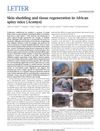
September 2012 in “Nature” This study reports the first instance of skin autotomy in mammals, specifically in African spiny mice, and suggests they may possess a greater regenerative capacity than previously understood, possibly offering insights for regenerative medicine.
1 citations
,
August 2019 In this study, researchers developed a pemphigus mouse model expressing anti-Desmocollin 3 antibodies and found it mimicked atypical pemphigus with distinct pathological features compared to the standard Desmoglein 3 model.
28 citations
,
June 1995 in “The Journal of Dermatology” This study reports that flaky skin mice exhibit skin and nail features that closely resemble human psoriasis vulgaris, suggesting they may serve as a natural model for this condition.
In this study, introducing the rat OTC gene into spf-ash mice led to increased OTC activity and normalized hair growth and biochemical markers like urinary orotic acid and serum citrulline, partially correcting the symptoms of OTC deficiency.
4 citations
,
April 2023 in “bioRxiv (Cold Spring Harbor Laboratory)” This study presents an improved reference genome for the African spiny mouse, which may aid in understanding its tissue regeneration at the molecular level.
 28 citations
,
October 2004 in “Differentiation”
28 citations
,
October 2004 in “Differentiation” This study identified a large deletion in the desmoglein 4 gene as the genetic basis of the Iffa Credo "hairless" rat's skin phenotype, linking it to lanceolate hair mutations.
December 2022 in “Laboratory Animal Research” This study described two cases of trichoblastomas in the tactile hair skin of aged house musk shrews, highlighting that their histological structure differs from that in humans and other animals.
April 2019 in “Journal of Investigative Dermatology” This paper discusses two preclinical models for studying alopecia areata and finds that testing new therapeutic agents should involve both the C3H/HeJ mouse model and the humanized mouse model for comprehensive insights.
1 citations
,
January 2024 in “Animal Research and One Health” This commentary highlights the potential of using transgenic and genome-edited mouse models to validate findings from livestock genomic and multi-omic analyses, aiding in the understanding of economically significant animal traits.
29 citations
,
June 1998 in “Developmental Biology” This study found that the patchwork mutation in mice affects melanocyte survival in hair follicles, leading to a variegated coat pattern without partially pigmented hairs due to a community effect among melanoblasts.
 December 2023 in “The journal of cell biology/The Journal of cell biology”
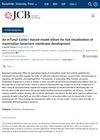
 This study developed the mTurquoise2-Col4a1 mouse model and used fluorescent tagging of collagen IV to offer new insights into basement membrane dynamics during hair follicle budding, revealing that basement membranes are flexible and stable structures in developing skin tissue.
92 citations
,
April 2009 in “Journal of Investigative Dermatology” The Celsr1 gene is crucial for normal hair patterning in mice.
11 citations
,
January 2005 in “Brazilian Journal of Medical and Biological Research” This study found no qualitative skin differences during development between mutant hairless USP mice and BALB/c mice, except for enlarged cysts in the hairless strain.
September 2025 in “OPAL (Open@LaTrobe) (La Trobe University)” This study found that topical treatment with 7DHC and BM15766 reduced hair growth in mice compared to those treated with Ethanol/DMSO, and hair did not recover after treatment ceased, alongside increased apoptotic cells and decreased expression of specific genes.
135 citations
,
May 1994 in “Medical Entomology and Zoology” This collection reviews various animal models for dermatological research, particularly focusing on genetic mutations in laboratory mice, and reports no original findings.
 March 2015 in “Journal of Visualized Experiments”
 This study developed a simple and reliable technique to quantify hair loss in mice, potentially enhancing assessment and comparison of new alopecia therapies in preclinical research.
188 citations
,
June 1998 in “Molecular cell” This study found that mimicking the XPD point mutation in mice resulted in trichothiodystrophy-like symptoms, supporting the role of basal transcription and DNA repair defects in the disease.
 January 1957 in “Nihon Chikusan Gakkaiho”
 This article examines microscopic structural differences and pigment distribution in various rabbit hair colors and reports no clinical results.
50 citations
,
February 2004 in “Genomics” This study identified a missense mutation in the rat Desmoglein 4 gene, causing abnormal hair shaft development in lanceolate hair mutant rats by disrupting a critical calcium binding site.
26 citations
,
July 2007 in “Wound Repair and Regeneration” This study found that MRL/MpJ mice heal burn wounds with scar formation, experiencing delayed wound closure and impaired myofibroblast development, which contrasts with quicker contraction in BALB/c mice.
 1 citations
,
March 2015 in “Journal of Visualized Experiments”
1 citations
,
March 2015 in “Journal of Visualized Experiments” This study developed a method to quantify hair loss in mice, aiding the evaluation of new treatments for alopecia.
 17 citations
,
June 2011 in “The journal of investigative dermatology/Journal of investigative dermatology”
17 citations
,
June 2011 in “The journal of investigative dermatology/Journal of investigative dermatology” This study observed that mice with a Cx43 mutation exhibited slower and asynchronous hair regrowth with severe cuticle weathering, mimicking aspects of hair phenotype in some ODDD patients.
9 citations
,
January 1975 in “PubMed” In this study, researchers using a mouse model found that the hairlessness in nude mice is likely due to a shared defect in the thymus and skin, not thymic dysgenesis alone.
July 1993 in “Journal of Radioanalytical and Nuclear Chemistry” Mouse hair element patterns vary, making it unreliable for tracking time.
42 citations
,
September 2003 in “Journal of Investigative Dermatology” A missing mK6irs1 gene causes hair loss in mice.
14 citations
,
August 2013 in “Journal of Parasitology” This study reported that 39.7% of Amargosa voles had mite-associated lesions, which may severely impact their health and fitness.