 April 2026 in “Laboratory Animal Research”
 This study developed a novel Hairless Rag2/Jak3 KO mouse model, which provides superior optical properties and thinner skin compared to existing models, enhancing its utility for noninvasive tumor monitoring and evaluation of anticancer therapies.
 4 citations
,
August 2023 in “Nature Communications”
4 citations
,
August 2023 in “Nature Communications” In this study, researchers observed that the combination of hair progenitors and their micro-niche changes every three days in mouse zigzag hair, and disruptions in specific genes affected this rhythm, highlighting the importance of this periodic change for normal hair morphology.
44 citations
,
April 1979 in “Journal of Ultrastructure Research” 20 citations
,
May 2011 in “Journal of Clinical Investigation” In this study, a transgenic mouse model was used to demonstrate that targeted cell loss in different tissues led to varying degrees of regenerative outcomes, including reversible impaired glucose tolerance, irreversible hair loss, and permanent moderate deafness.
 October 2025 in “HAL (Le Centre pour la Communication Scientifique Directe)”
 This research observed that, in domestic cats like Maine Coon and Rex breeds, a "piebald" coat color pattern is likely influenced by the Silver locus, although the specific mutations involved are yet to be published.
6 citations
,
March 2007 in “BioTechniques” This study observed that PCR-based genotyping for cre-loxP mice can lead to errors due to cre-mediated recombination in non-target tissues like tails, affecting the detection of lox alleles.
 2 citations
,
September 2020 in “Schweizer Archiv für Tierheilkunde”
2 citations
,
September 2020 in “Schweizer Archiv für Tierheilkunde” This study found that Swiss cattle exhibiting rat-tail syndrome are heterozygous for genetic variants linked to pigmentation and color dilution, likely due to Holstein introgression in the Simmental breed.
 December 2014 in “Bangladesh Journal of Veterinary Medicine”
 In this study, mixed lice infestations and their associated skin changes were observed in the Egyptian lesser blind mole rat, marking the first report of such findings in this species.
 60 citations
,
October 2010 in “Molecular Imaging and Biology”
60 citations
,
October 2010 in “Molecular Imaging and Biology” This study observed that skin pigmentation significantly attenuates bioluminescent signals in C57Bl/6 mice, complicating quantitative optical imaging and requiring consideration in experimental design.
1 citations
,
July 2007 in “Journal of Investigative Dermatology” The mutation causes hairless mice due to mislocalized and dysfunctional HR protein.
 7 citations
,
November 2010 in “Genesis”
7 citations
,
November 2010 in “Genesis” Mouse Scube3 affects teeth, tongue, vibrissae, and eye development, but not facial structure or limb growth.
 6 citations
,
October 2012 in “Journal of Heredity”
6 citations
,
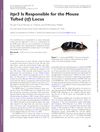
October 2012 in “Journal of Heredity” This study identified the Itpr3 gene as responsible for the tufted hair loss phenotype in the BTBR mouse strain.
55 citations
,
February 2013 in “The Anatomical Record” This study found that the mouse nail unit structurally resembles the human nail unit, indicating it could be useful for researching nail diseases and biology.
38 citations
,
September 1997 in “The journal of investigative dermatology/Journal of investigative dermatology” This study identified histologic lesions and a defect in adhesion molecules causing hair loss in mice with the bal mutation, linked to a mutation in the desmoglein 3 gene.
4 citations
,
May 1998 in “PubMed” This study found that the Bsk phenotype in mice did not result from a recombination event between specific keratin genes, leaving the gene linked to this mutation unidentified.
93 citations
,
May 1990 in “The EMBO Journal” Mice with extra sheep genes had hair that fell out and regrew in cycles.
15 citations
,
October 1976 in “Biochemical Journal” This study found that Naked trait mice exhibit a decrease in certain low-molecular-weight proteins in their hair, which contain high levels of glycine and tyrosine, compared to normal mice.
21 citations
,
June 2009 in “Mammalian genome” This study describes a mouse model for Marie Unna Hereditary Hypotrichosis, identifying mutations in the hairless gene that result in sparse or absent hair and cyst-like hair follicles.
 50 citations
,
April 2014 in “Nature Communications”
50 citations
,
April 2014 in “Nature Communications” This study analyzed skin from 538 knockout mouse mutants and identified 50 with epidermal phenotypes, providing valuable insights into genetic conditions and systemic effects related to skin abnormalities.
24 citations
,
October 2022 in “Cell Regeneration” This study describes a new mouse model for vitiligo that mimics key clinical features such as skin depigmentation and CD8 + T cell infiltration, providing a useful tool for in-depth research and drug discovery.
This study found that fibroblasts from highly regenerative mammals, such as spiny mice and rabbits, exhibit unique metabolic characteristics, including a preference for glycolysis and specific mitochondrial features, which may contribute to their resistance to oxidative stress and support tissue regeneration.
 4 citations
,
January 1992 in “The Tohoku Journal of Experimental Medicine”
4 citations
,
January 1992 in “The Tohoku Journal of Experimental Medicine” In this study, chronic zinc chloride administration in mice led to the replacement of long coarse hairs with short fine hairs, while overall skin histology remained normal.
11 citations
,
January 1977 in “Archives of dermatological research” Mouse tail skin has different keratinization near hair follicles and scales.
February 2018 in “bioRxiv (Cold Spring Harbor Laboratory)” This study found that distinct spiny hair morphologies in rodents arose independently multiple times but did not link the Ecdysoplasin A receptor gene mutation that affects human hair to these variations.
372 citations
,
December 2004 in “Nature Genetics” 195 citations
,
November 2001 in “The Journal of Cell Biology” This study found that desmocollin 1 is crucial for strong adhesion and barrier maintenance in the mouse epidermis, with its absence leading to skin and hair issues resembling chronic dermatitis.
 51 citations
,
January 2006 in “Wound Repair and Regeneration”
51 citations
,
January 2006 in “Wound Repair and Regeneration” This study found that MRL/MpJ mouse dorsal skin wounds heal with similar scar formation and collagen deposition as C57bl/6 and Balb/c mice.
7 citations
,
March 1990 in “Pigment Cell Research” This animal study observed that while topical MBEH and intraperitoneal phenol induced hair graying in eumelanic mice, they had little effect on pheomelanic mice, and amcinonide reduced certain epidermal melanocytes in both.
 40 citations
,
November 2021 in “npj Regenerative Medicine”
40 citations
,
November 2021 in “npj Regenerative Medicine” In this study, spiny mice showed superior cardiac recovery after myocardial infarction compared to other mouse strains, with enhanced myocardial preservation and functional stabilization.
February 1999 in “The anatomical record” This study observed defects in hair cuticle cross-linking in some, but not all, mouse mutants with sparse or structurally unsound hair.