 December 2024 in “Kırıkkale Üniversitesi Tıp Fakültesi Dergisi”
 This study found that chromosomal microarray analysis identified copy number variations in 12% of patients with dysmorphic features and congenital anomalies, demonstrating its potential as a diagnostic tool, especially for rare CNVs and immune deficiency linked to the deletion of CTLA4.
9 citations
,
October 2020 in “Journal of the American Academy of Dermatology” Patients with central centrifugal cicatricial alopecia may have a higher risk of breast and colorectal cancer.
 76 citations
,
April 2005 in “Cancer Epidemiology, Biomarkers & Prevention”
76 citations
,
April 2005 in “Cancer Epidemiology, Biomarkers & Prevention” This study found that the AR-E211 A allele is associated with a lower risk of both metastatic prostate cancer and androgenetic alopecia in an Australian population.
 1 citations
,
January 2025 in “Frontiers in Oncology”
1 citations
,
January 2025 in “Frontiers in Oncology” This review highlights REV7's crucial roles in maintaining genome stability, its implication in several cancers, and its association with poor prognoses and treatment resistance, while also noting that REV7 suppression may improve chemotherapy sensitivity.
 September 2016 in “Journal of Dermatological Science”
 This case report describes the first documented instance of epidermal nevus syndrome caused by a postzygotic KRAS G12C mutation in a three-year-old Japanese girl.
8 citations
,
March 2011 in “Endocrine” In this study, researchers identified a novel p.R50X mutation in the vitamin D receptor gene, linked to hereditary vitamin D-resistant rickets in two siblings.
 August 2020 in “Pakistan Journal of Zoology”
 This study identified a novel genetic mutation, c.429delC in the hairless gene, associated with atrichia with papular lesions in two Pakistani families.
 6 citations
,
February 2013 in “Medical Oncology”
6 citations
,
February 2013 in “Medical Oncology” In this study, researchers reported that the SHBG +5790 G>A polymorphism was associated with an increased risk of developing resistance to hormonal castration in advanced prostate cancer patients.
 November 2022 in “Journal of Investigative Dermatology”
 This study identified a novel LZTR1 mutation associated with hybrid schwannoma and neurofibroma in a patient with schwannomatosis, but not all cases of hybrid tumors are linked to this condition.
21 citations
,
January 2006 in “Hormone Research in Paediatrics” In this case study, a girl with hereditary vitamin D resistant rickets had a novel mutation in the VDR gene that affected hair cycling without causing total alopecia, suggesting ligand-independent VDR function in hair cycling.
 October 2023 in “Psychiatry research. Case reports”
 In this study, researchers observed that twins with a novel de novo nonsense variant in HRAS exhibited distinctive features, including neuropsychiatric symptoms, potentially indicating a wider clinical spectrum for conditions known as RASopathies.
In this study, conditional inactivation of the Mad2l1 SAC gene in mice led to aggressive and lethal acute lymphoblastic leukemia and hepatocellular carcinoma, demonstrating a link between chromosomal instability and cancer development.
 5 citations
,
June 2023 in “BMC genomics”
5 citations
,
June 2023 in “BMC genomics” This study found that a specific genetic mutation in the Fgf5 gene may contribute to the long-hair trait in Angora rabbits by reducing the binding capacity of the FGF5 protein.
 January 2013 in “International Journal of Trichology”
 This case report highlights the discovery of a novel TRPS1 gene mutation in a 17-year-old with TRPS type I, underscoring the diagnostic importance of hair symptoms in congenital hair diseases.
 95 citations
,
February 2019 in “The New England Journal of Medicine”
95 citations
,
February 2019 in “The New England Journal of Medicine” This article discusses the potential genetic basis of central centrifugal cicatricial alopecia in women of African ancestry but does not provide new research results.
This study found that inhibiting mTORC2 in glioblastoma cells reduced DNA repair and increased apoptosis, highlighting its potential role in cancer cell survival and DNA damage response.
 November 2023 in “Advanced Science”
 A specific hair protein variant increases the spread of breast cancer and is linked to worse survival rates.
 36 citations
,
October 2016 in “Bone”
36 citations
,
October 2016 in “Bone” This case report describes a male patient with aromatase deficiency, revealing that a c.628G>A mutation can lead to varied clinical features, such as low bone mass and normal metabolic profiles.
150 citations
,
June 1999 in “Oncogene”  4 citations
,
April 2019 in “Gynecological Endocrinology”
4 citations
,
April 2019 in “Gynecological Endocrinology” This study found that the rs 1570360 polymorphism and the T-G-C haplotype of the VEGF gene may be associated with a protective factor against polycystic ovary syndrome in a Brazilian population.
4 citations
,
May 1998 in “PubMed” This study found that the Bsk phenotype in mice did not result from a recombination event between specific keratin genes, leaving the gene linked to this mutation unidentified.
 8 citations
,
December 2009 in “Journal of The European Academy of Dermatology and Venereology”
8 citations
,
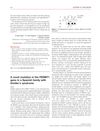
December 2009 in “Journal of The European Academy of Dermatology and Venereology” This article discusses a novel mutation in the FERMT1 gene identified in a Spanish family with Kindler’s syndrome but reports no new clinical results.
September 2019 in “Journal of Investigative Dermatology” CCCA in women of African ancestry may be caused by PADI3 gene mutations and intense hair grooming.
 17 citations
,
June 2017 in “Gene”
17 citations
,
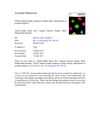
June 2017 in “Gene” This is the first report of the FOXN1 p.R255X mutation from India, demonstrating the global spread of this genetic mutation previously found only in an Italian community.
31 citations
,
March 2014 in “Journal of the European Academy of Dermatology and Venereology” In this study, multiple cutaneous adverse effects were observed in patients with metastatic malignant melanoma receiving BRAF inhibitors, but most were well managed with appropriate treatment.
15 citations
,
March 2021 in “EMBO Reports” PRSS35 enzyme may help start skin tumors and could be a target for cancer treatment.
 145 citations
,
May 2008 in “Cancer Science”
145 citations
,
May 2008 in “Cancer Science” This review discusses how increased gene copy number for telomerase components may contribute to telomerase up-regulation in cancer cells, although the exact mechanisms are not fully understood.
 9 citations
,
September 2014 in “Cancer Epidemiology, Biomarkers & Prevention”
9 citations
,
September 2014 in “Cancer Epidemiology, Biomarkers & Prevention” This study found that men without prostate cancer carrying the A-allele of SNP rs1204038 had a 65% higher risk of PSA levels above 3 ng/mL compared to those with the G-allele, increasing referrals for further examination.
88 citations
,
August 1998 in “Carcinogenesis” This study found that overexpression of ornithine decarboxylase and activated Ha-ras together led to a high rate of tumor development in a mouse model without additional carcinogens.
July 2005 in “The American Journal of Human Genetics” The AR gene is linked to male-pattern baldness, TNFSF4 to heart disease, SLC19A3 to BBGD, MCT8 to a syndrome, and segmental duplications to genetic variation.