 April 2012 in “The Journal of Urology”
 This meta-analysis reported that dietary intake of omega-3 or omega-6 fatty acids does not significantly impact prostate cancer risk.
 January 2025 in “Dermatology Reports”
 This case report describes a 61-year-old Italian man with a rare, localized variant of junctional epidermolysis bullosa linked to the R795X mutation in the COL17A1 gene, highlighting the importance of precise diagnosis for effective management of rare genetic disorders.
 November 2025 in “Archiv für Pathologische Anatomie und Physiologie und für Klinische Medicin”
 This study examined 16 sporadic trichoblastic tumors and found that although one showed malignant transformation, clinical follow-up revealed no residual or metastatic disease. RNA sequencing indicated a high tumor mutational burden and absence of a UV-related signature, helping to distinguish these tumors from similar growths.
May 2024 in “LA Referencia (Red Federada de Repositorios Institucionales de Publicaciones Científicas)” This study investigated genetic and epigenetic markers for prostate cancer, reporting that certain genotype combinations may influence cancer risk or protection and identifying GSTP1 promoter methylation as a strong prognostic and diagnostic marker linked to tumor aggressiveness.
November 2012 in “Experimental and Clinical Endocrinology & Diabetes” This case report describes a 46,XY female patient with a novel homozygous nonsense mutation in the LHCGR gene, highlighting the need for molecular analysis in disorders of sexual development.
26 citations
,
June 2004 in “Clinical Genetics” This study describes a case of epidermolysis bullosa simplex where maternal somatic and germline mosaicism was identified, highlighting the significance for genetic counseling in sporadic cases.

This study found that chemically induced skin tumors in mice predominantly originated from Lgr6 + and/or Lrig1 + stem cells of the upper hair follicle rather than from other stem cell populations.
 April 2026 in “Human Genome Variation”
 In this study, researchers identified a recurrent MBTPS2 splice-site variant as a mutational hotspot in IFAP syndrome across diverse families, with phenotype severity suggesting the influence of additional modifiers.
3 citations
,
July 2022 in “Brain and Behavior” This study observed that a CARASIL mouse model demonstrated abnormal behavior, vascular and cellular changes, and upregulation of the TGF-β/Smad signaling pathway, indicating its potential involvement in CARASIL pathogenesis.
August 2020 in “bioRxiv (Cold Spring Harbor Laboratory)” This study found that KrasG12D mutant cells are typically cleared from adult pancreas tissues through mechanisms involving the EphA2 receptor, suggesting its role as a tumor suppressor in pancreatic cancer.
 September 2024 in “Frontiers in Genetics”
 In this study, researchers found a significant association between the rs13405699 SNP at 2q31.1 and male pattern baldness among Han Chinese men, suggesting genetic influence on this condition in this population.
October 2024 in “Frontiers in Oncology” This case study reports a novel mutation in the TRPV3 gene causing atypical Olmsted syndrome, characterized by disabling keratoderma and squamous cell carcinoma, highlighting the need for careful long-term monitoring in affected patients.
 30 citations
,
July 2019 in “Endocrinology”
30 citations
,
July 2019 in “Endocrinology” This review discusses how the HSD3B1(1245C) genotype may impact androgen physiology and the progression of castration-resistant prostate cancer, and does not report new experimental results.
11 citations
,
November 2015 in “Carcinogenesis” In this study, researchers found that deleting TNFα in PKCε transgenic mice reduced the development of cutaneous squamous cell carcinomas induced by UV radiation or a chemical protocol.
6 citations
,
June 2006 in “International Journal of Gynecological Pathology” This study reports that in a case of benign Brenner tumor, elevated androgens may originate from luteinized stromal cells, as these cells do not convert androgen to estrogen due to suppressed aromatase biosynthesis.
 1 citations
,
March 2015 in “Journal of the European Academy of Dermatology and Venereology”
1 citations
,
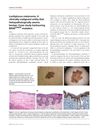
March 2015 in “Journal of the European Academy of Dermatology and Venereology” This letter to the editor shares a case study of lentiginous melanoma that appears clinically malignant but histopathologically benign, involving the BRAFV600R mutation.
 3 citations
,
November 2015 in “Endocrinology, Diabetes & Metabolism Case Reports”
3 citations
,
November 2015 in “Endocrinology, Diabetes & Metabolism Case Reports” This case study reports a rare instance of RC11 associated with precocious puberty, severe hyperandrogenism, insulin resistance, and type 2 diabetes, suggesting a possible link to 11q-syndrome.
105 citations
,
October 2018 in “Nature” This study found that vismodegib promotes Basal cell carcinoma regression by inducing tumor differentiation but leaves a small population of quiescent cells that can drive relapse, which can be eliminated by adding a Wnt signaling inhibitor.
April 2010 in “Cancer Research” This study suggests that Mcl-1 has a non-apoptotic role in promoting keratinocyte proliferation and Wnt/β-catenin signaling, potentially indicating a novel oncogenic activity.
This study found that the rs3185480 polymorphism in the APCDD1 gene was associated with an elevated risk of developing androgenic alopecia and reduced protein levels, potentially due to altered codon usage affecting translation efficiency.
This study found that mutations in the PADI3 gene, which is important for hair shaft formation, may contribute to central centrifugal cicatricial alopecia among patients.
 56 citations
,
April 2015 in “American journal of medical genetics. Part A”
56 citations
,
April 2015 in “American journal of medical genetics. Part A” This study reports on eight previously unpublished cases of Bohring-Opitz syndrome with ASXL1 mutations, suggesting the importance of screening for Wilms tumors in these patients.
146 citations
,
February 2012 in “Journal of Clinical Investigation” This review discusses the role of Hedgehog signaling in basal cell carcinoma development and highlights genetic mouse models and potential targeted therapies, but reports no new clinical results.
 1 citations
,
December 2018 in “Journal of genetic medicine”
1 citations
,
December 2018 in “Journal of genetic medicine” In this case report, a 20-year-old male with tricho-rhino-phalangeal syndrome was found to have a de novo frameshift mutation in the TRPS1 gene, highlighting the challenges in diagnosing this rare disorder.
 June 2023 in “British Journal of Dermatology”
 In this case report, researchers described a female child with total alopecia due to a mutation in the SNRPE gene, emphasizing the need for updated genetic testing as knowledge advances to avoid diagnostic delays in hereditary nonsyndromic hypotrichosis.
 September 2017 in “Journal of Investigative Dermatology”
 This study found that in AGA, the risk allele at locus 2q35 alters WNT10A expression through EBF1, suggesting a potential androgen-dependent regulatory mechanism.
 April 2011 in “Vestnik dermatologii i venerologii”
 This study found an association between 'short' CAG repeats in the androgen receptor gene and increased non-random X chromosome inactivation in women with androgenic alopecia.
3 citations
,
June 2017 in “Reproductive biomedicine online” In this study, the SRD5A2 rs523349 polymorphism was significantly associated with an increased risk of miscarriage, particularly during the second trimester.
May 2020 in “International journal of molecular biology” This article reviews the pattern and progression of androgenic alopecia in men and women, but it does not present new clinical findings.
4 citations
,
January 2009 in “PubMed” In this study, researchers identified an autosomal dominant mutation (E402K) in exon 7 of the KRT86 gene as a cause of Monilethrix in a large family from Turkey.