1 citations
,
July 2025 in “BMC Medicine” The authors concluded that establishing and standardizing methods for data collection are crucial to improving PCOS diagnosis and research due to challenges observed in data harmonization across diverse international cohorts.
January 2000 in “Alambique: Didáctica de las ciencias experimentales” This study found that impairments in cholesterol biosynthesis in hair follicles of primary cicatricial alopecia patients trigger an inflammatory immune response, potentially linking sterols to inflammation in the disease's pathogenesis.
 3 citations
,
March 2012 in “Actas Dermo-Sifiliográficas”
3 citations
,
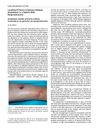
March 2012 in “Actas Dermo-Sifiliográficas” An elderly man with skin amyloidosis and abnormal blood proteins was monitored without finding widespread disease after 18 months.
August 2025 in “JEADV Clinical Practice” In this case report, researchers documented a 71-year-old woman with both alopecia areata and bullous pemphigoid who showed significant improvement using dupilumab after other treatments failed, highlighting its potential for autoimmune diseases with overlapping inflammatory mechanisms.
May 2015 in “European Journal of Paediatric Neurology” This study describes three additional cases of encephalocraniocutaneous lipomatosis, emphasizing the importance of examining patients with ocular and ipsilateral skin lesions for this rare neurocutaneous disorder.
 4 citations
,
February 2019 in “PubMed”
4 citations
,
February 2019 in “PubMed” This study found that cortexolone 17α-propionate (clascoterone) effectively inhibited androgen receptor-regulated transcription and IL-6 synthesis in scalp cells, potentially making it a promising candidate for topical treatment of androgenetic alopecia.
 February 2023 in “Military Medical Science Letters”
 This study concluded that both pure-PRP and leukocyte-PRP injections significantly reduced serum CD 68 levels in knee osteoarthritis patients, with pure-PRP being more effective than leukocyte-PRP.
 1 citations
,
March 2019 in “KnE life sciences”
1 citations
,
March 2019 in “KnE life sciences” This case report suggests that human dermal papillae conditioned media may accelerate wound healing in congenital aplasia cutis due to varicella infection.
6 citations
,
June 2016 in “Journal of cellular biochemistry” This study found that the mammalian Hr protein can interact with the p53 pathway by binding to a specific p53 response element, influencing the regulation of genes involved in cell cycle control.
1 citations
,
January 2007 in “Side effects of drugs annual” This chapter reviews dermatological treatments, noting that botulinum toxin A is associated with a higher occurrence of focal weakness compared to controls, and reports on adverse effects of finasteride and PUVA therapy.
31 citations
,
September 2011 in “European journal of pharmaceutics and biopharmaceutics” This study found that biodegradable PLA particles released fluorochromes in a time-dependent manner on human skin, with BP-PLA particles releasing rapidly and DiAsp-PLA particles providing sustained release and accumulation in hair follicles.
 41 citations
,
April 2016 in “Journal of experimental botany”
41 citations
,
April 2016 in “Journal of experimental botany” This research suggests that the barley protein RACB supports cell polarity functions rather than interfering with immunity, as it aids nucleus positioning during fungal attack rather than affecting early immune responses.
October 2025 in “Environment International” This study reports that prenatal and prepubertal exposure to organochlorine compounds and perfluoroalkyl substances may affect pubertal development at age 12, with observed changes in development patterns in both girls and boys, highlighting the need for further research.
1 citations
,
January 2024 in “Pharmaceuticals” The researchers reported that dPGS-PCL as a carrier improved the penetration of tofacitinib in an ex-vivo human skin model compared to free tofacitinib, but did not show significant differences in inhibiting IL-6 and IL-8 during short incubation.
 1 citations
,
September 2019 in “Journal of Investigative Dermatology”
1 citations
,
September 2019 in “Journal of Investigative Dermatology” In this study, researchers used a CRISPR-based method to correct mutations in the COL7A1 gene in stem cells from RDEB patients, restoring normal collagen expression in engineered skin grafts in mice.
 3 citations
,
March 2019 in “Case Reports”
3 citations
,
March 2019 in “Case Reports” This report highlights a case of possible association between myotonic dystrophy type 1 and basal cell carcinoma, urging clinicians to consider this link despite negative genetic testing for known hereditary BCC syndromes.
25 citations
,
January 1999 in “Journal of cutaneous laser therapy” This report describes an African-American woman with pseudofolliculitis barbae, hirsutism, and associated postinflammatory hyperpigmentation who was effectively treated with a diode laser.
 20 citations
,
May 2016 in “Journal of Cutaneous Pathology”
20 citations
,
May 2016 in “Journal of Cutaneous Pathology” This study suggests that the presence and arrangement of plasmacytoid dendritic cells can help distinguish chronic cutaneous lupus erythematosus from other types of scarring alopecia.
 April 2018 in “Journal of Investigative Dermatology”
 This study found that 1550-nm Er:Glass fractional laser treatment significantly increased hair density and shaft diameter in patients with androgenetic alopecia, though the mechanism may not involve Wnt10A or IGF-1 expression.
22 citations
,
June 2017 in “Stem cell reports” This study found that PTEN regulates the number and genomic stability of hair follicle stem cells in the skin, with its deficiency leading to increased stem cell accumulation and senescence through interactions with BMAL1 and BMI-1.
 January 2026 in “Dermatology Online Journal”
 This case report highlights that CCCA can present with multifocal patchy hair loss in younger men of African descent, suggesting the need for careful evaluation when diagnosing atypical alopecia patterns.
 June 2024 in “British Journal of Dermatology”
 This article presents a family case study of dermatopathia pigmentosa reticularis linked to a specific KRT14 gene variant, detailing symptoms and stressing the importance of molecular diagnosis for management.
January 2014 in “cIRcle (University of British Columbia)” This research found that modifying brachytherapy seeds with contrast-enhancing materials in photoacoustic imaging increased signal-to-noise ratios and imaging depth, and demonstrated potential for tissue differentiation by analyzing temperature-induced changes in PA intensity.
 November 2020 in “Journal of The American Academy of Dermatology”
 This study examined dermoscopic features in African-American women with different types of alopecia and found that a perifollicular pink blush, potentially indicating inflammation, was common, particularly resolved with anti-inflammatory treatment, suggesting dermoscopy could aid in management.
21 citations
,
May 2021 in “Materials & Design” This study developed a new multifunctional medical dressing using Bletilla striata polysaccharide and ethanol extract that demonstrated hemostatic, antibacterial, and significant wound healing effects, as evidenced by quicker healing rates and improved skin conditions in treated wounds compared to controls.
 June 2023 in “British Journal of Dermatology”
 This case study confirmed a diagnosis of Werner syndrome in a 27-year-old woman through genetic testing, highlighting the condition's characteristics and the importance of multidisciplinary management.
 March 2014 in “Journal of The American Academy of Dermatology”
 A botanical extract may help manage hair loss from chemotherapy by preventing cell death in hair follicles.
 53 citations
,
October 2012 in “The FASEB Journal”
53 citations
,
October 2012 in “The FASEB Journal” This study found that bimatoprost stimulated hair growth in both human scalp follicle cultures and mouse pelage in vivo, suggesting it might offer a promising treatment for scalp alopecias.
March 2026 in “Journal of the American Academy of Dermatology” In this study, patients with active lymphocytic cicatricial alopecia showed significant improvement using a three-stage treatment regimen involving Tofacitinib, Apremilast, and Crisaborole, with 93.5% experiencing marked improvement and only three mild adverse events reported.
August 2024 in “Postgraduate Medical Journal” A rare skin reaction from cancer treatment was successfully managed with topical treatments and antihistamines.