This study examined the effects of one-time versus two-time hair bleaching in people from Padang City, finding that two-time bleaching significantly increased hair dryness and reduced elasticity compared to one-time bleaching, emphasizing the importance of considering bleaching frequency for hair health.
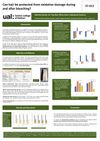 September 2018 in “University of the Arts London Research Online (University of the Arts London)”
 This study assessed three materials—L-arginine, hydrolysed keratin, and cystine-silanol copolymer—ex vivo for their potential to reduce undesirable effects of hair bleaching, such as damage to hair proteins.

Hair coloring and bleaching can permanently break down hair protein and temporarily change its properties.
11 citations
,
November 2016 in “Clinical and Experimental Dermatology” This study describes the first known case of erosive pustular dermatosis of the scalp triggered by a burn from hair bleaching, which resolved completely with superpotent topical corticosteroids.
In this experimental study, researchers found that using aluminum foil in hair bleaching significantly improves lightness and color uniformity compared to not using foil, indicating a more effective technique for achieving optimal hair coloring results.
December 2025 in “Journal of Forensic Sciences” This pilot study found that prebleaching either virgin or previously colored hair only slightly affects the SERS spectra of dyes applied afterward, without impacting the accuracy of dye identification, supporting the technique's robustness for forensic analysis of hair dyes.
 July 2007 in “Clinical Risk”
 A woman got severe scalp burns from a salon's improper hair bleaching treatment.
 4 citations
,
January 2011 in “Analytical Letters”
4 citations
,
January 2011 in “Analytical Letters” This study demonstrated that a flow injection method using potassium permanganate for detecting minoxidil provided accurate recoveries and agreed closely with HPLC results, showing potential for effective analysis of commercial samples.
March 2024 in “Journal of functional biomaterials” This study demonstrated that a strain of lactic acid bacteria from kimchi, identified as Pediococcus inopinatus, showed antibacterial activity against certain oral pathogens and effectively bleached stained artificial teeth and inhibited biofilm formation, offering potential for addressing teeth discoloration and halitosis.
30 citations
,
November 2013 in “SLEEP” This study suggests that inhibiting testosterone via the 5α-reductase pathway might help alleviate sleep-related breathing instability in certain central sleep apnea populations.
 6 citations
,
February 2016 in “International Journal of Dermatology”
6 citations
,
February 2016 in “International Journal of Dermatology” This review discusses historical and literary accounts of sudden hair whitening, known as canities subita, and presents no new clinical findings.
3 citations
,
May 2024 in “Frontiers in Physiology” In this study, male rats with spinal cord injury that received either E2 or DHT supplementation both showed restored expression of respiratory neuroplasticity following acute intermittent hypoxia, with E2 also enhancing overall breathing recovery.
 February 2025 in “Journal of Cosmetic Dermatology”
 This case report describes a 34-year-old Asian female who experienced prolonged localized facial blanching following botulinum toxin type A injection, marking the first such documented case in this population.
 September 2019 in “Acta scientific microbiology”
 This study found that there is no correlation between breathing rate and premature greying of hair among university students.
20 citations
,
December 2006 in “Archives of dermatology”  15 citations
,
January 2020 in “RSC advances”
15 citations
,
January 2020 in “RSC advances” In this study, researchers developed a new Supported Ionic Liquid Phase palladium catalyst that showed effectiveness in aminocarbonylation reactions for synthesizing pharmaceutical compounds like CX-546 and a precursor of Finasteride, though results were sensitive to substrate variations and prompted palladium leaching concerns.
24 citations
,
April 2016 in “Experimental Dermatology” This study found that chemical treatments like perming, dyeing, and bleaching significantly alter amino acids and lipids in human hair, which may impact hair strength and quality.
 5 citations
,
May 2022 in “Fashion and Textiles”
5 citations
,
May 2022 in “Fashion and Textiles” This study found that Argan oil conditioner significantly enhanced tensile strength and retained hair color in bleached hair more effectively than Camellia oil.
157 citations
,
April 1997 in “International journal of legal medicine” This study found that cosmetic hair treatments like bleaching and dyeing significantly reduced drug concentrations in hair samples, with decreases ranging from 30% to over 60% depending on the treatment and hair damage level.
119 citations
,
May 1987 in “The Journal of Dermatologic Surgery and Oncology” This study found that pigmentation following sclerotherapy is likely caused by hemosiderin deposition from red blood cells rather than post-inflammatory hyperpigmentation, with most cases resolving spontaneously within 6–24 months.
 63 citations
,
August 1996 in “Forensic Science International”
63 citations
,
August 1996 in “Forensic Science International” In this study, bleaching and perming were found to significantly reduce opiate concentrations in both spiked and naturally opiate-positive human hair samples.
 43 citations
,
September 2001 in “Scanning”
43 citations
,
September 2001 in “Scanning” Hair treatments like bleaching increase friction by exposing tiny pores on the hair surface.
 36 citations
,
October 2014 in “Langmuir”
36 citations
,
October 2014 in “Langmuir” This study concluded that bleach treatment partly transforms the hydrophobic top layer of human hair cuticles into a hydrophilic surface with clustered cysteic acid, visualized at the nano-scale using dynamic Chemical Force Microscopy.
 36 citations
,
August 2011 in “Journal of dermatological science”
36 citations
,
August 2011 in “Journal of dermatological science” This article examines the role and composition of integral hair lipids in forming a protective barrier similar to the skin's epidermal lipid layer and reports no new findings about their effects.
33 citations
,
June 1995 in “International journal of legal medicine” This study observed that prolonged water or soil exposure can lead to significant reductions in drug levels in bleached and natural hair samples.
31 citations
,
February 1999 in “Dermatologic surgery” This report describes a case where solar-induced postinflammatory hyperpigmentation following laser hair removal was treated with a combination of topical treatments and serial TCA peels, resulting in only slight improvement.
 25 citations
,
May 2019 in “Heliyon”
25 citations
,
May 2019 in “Heliyon” This study found that excessive heat caused the most significant structural changes in hair from Caucasian and Afro samples, especially when combined with other treatments like bleaching and straightening.
 25 citations
,
December 2011 in “Surface and interface analysis”
25 citations
,
December 2011 in “Surface and interface analysis” This study reports that hair damage from bleaching is associated with the oxidative cleavage of fatty acid thioester bonds, detectable by measuring the decrease in mass spectrometry peak at m / z 76.
 20 citations
,
June 2012 in “British Journal of Dermatology”
20 citations
,
June 2012 in “British Journal of Dermatology” This study discusses the proteomic profile associated with hair damage but does not report new experimental findings.
 20 citations
,
January 2003 in “Journal of oleo science”
20 citations
,
January 2003 in “Journal of oleo science” This study found that both everyday physical and environmental stresses, as well as chemical treatments, contributed to hair damage, with cuticle layers being more noticeably affected.