July 2021 in “British Journal of Dermatology” This report describes a boy with ectodermal dysplasias who was genetically diagnosed due to newly discovered TSPEAR gene variants, which have now been associated with this condition.
9 citations
,
December 2004 in “Archives of Pathology & Laboratory Medicine” This report discusses a case of a rare congenital neck mass called a "wattle" or congenital cervical tragus, emphasizing its histological features and its association with other branchial arch anomalies.
 July 2024 in “Dermatology Practical & Conceptual”
 This article discusses the diagnostic challenges between certain neonatal scalp conditions and highlights the potential of line-field confocal optical coherence tomography to provide detailed, non-invasive skin examination, without presenting new clinical findings.
94 citations
,
March 1996 in “Journal of Investigative Dermatology”  8 citations
,
November 2015 in “The American journal of dermatopathology/American journal of dermatopathology”
8 citations
,
November 2015 in “The American journal of dermatopathology/American journal of dermatopathology” The authors present a case of punctate follicular porokeratosis, suggesting it as a distinct clinical entity distinguished by keratotic lesions originating specifically from hair follicles.
21 citations
,
January 2008 in “Indian Journal of Dermatology Venereology and Leprology” This archive describes the Bioline International platform, which hosted open access journals from developing countries but reports no new research findings.
January 2026 in “Annals of Dermatology” This review outlines evidence-based strategies for diagnosing pediatric hypopigmented disorders and emphasizes distinguishing vitiligo from self-limiting conditions through a systematic clinical approach; no new results are reported.
March 2023 in “Journal of Cosmetic Dermatology” The researchers in this study described the use of trichoscopy to assist in diagnosing aplasia cutis congenita of the scalp in a dark-skinned newborn, noting that trichoscopic findings can differ from those seen in light-skinned patients, yet remain a valuable diagnostic tool.
3 citations
,
December 2003 in “Archives of Pathology & Laboratory Medicine” This article reviews the distinctive features of cutaneous lymphadenoma, a variant of trichoblastoma, and its differential diagnosis, but it presents no new empirical results.
October 2024 in “International Journal of Comprehensive Veterinary Research.” In this study, researchers examined the skin of neonatal rabbits and found that most hair follicles were in the terminal stage, with hair shafts protruding through the epidermis, but noted the absence of sweat glands.
May 2007 in “Bioline International (Bioline International)” This study reports that 91.4% of pregnant women in south India experienced pigmentary alterations, highlighting various skin changes occurring during pregnancy.
7 citations
,
January 1988 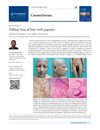 September 2024 in “Cosmoderma”
 This case study reports a 20-year-old male with lifelong hair loss and unresponsive skin-colored papules, without other systemic abnormalities or similar family medical history.
September 2024 in “Dermatologica Sinica” This study reported a rare case of pityriasis rubra pilaris-like skin reaction in an 18-year-old woman after starting ponatinib treatment for relapsed Philadelphia chromosome-positive acute lymphoblastic leukemia, which resolved after treatment adjustment and did not recur over 15 months.
 20 citations
,
April 2011 in “British Journal of Dermatology”
20 citations
,
April 2011 in “British Journal of Dermatology” Reflectance confocal microscopy can tell apart white dots on the scalp as either sweat gland ducts or hair follicle openings.
7 citations
,
March 2004 in “Journal of the American Academy of Dermatology” Tiger tail banding and hair abnormalities are reliable indicators for diagnosing trichothiodystrophy.
1 citations
,
May 2007 in “Chinese Medical Journal” This case report describes a 24-year-old woman with a rare giant cerebriform pigmented nevus on the scalp, which was identified as a giant congenital intradermal nevus based on clinical and pathological findings.
October 1976 in “BMJ. British medical journal” 84 citations
,
September 2008 in “Developmental biology” This study found that cellular retinoic acid-binding proteins and fatty acid-binding proteins are dynamically expressed in skin development and respond differently to retinoic acid, β-catenin, and Notch signaling.
 21 citations
,
August 2011 in “Clinics in Dermatology”
21 citations
,
August 2011 in “Clinics in Dermatology” This review discusses skin signs that can indicate systemic diseases and provides no new clinical results; it aims to aid physicians in diagnosing these conditions.
8 citations
,
November 2020 in “Skin Research and Technology” This study found that enlarged facial pores in women show distinct microstructural alterations, including regular keratinocyte arrangement and irregular dermo-epidermal junctions, highlighting changes in skin tension linked to pore enlargement.
 August 2019 in “Journal of Investigative Dermatology”
 This study found that tight junctions extend to the most superficial layer of the stratum granulosum in human skin, challenging previous claims of their limited presence in the epidermis.
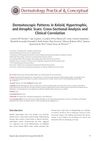 October 2025 in “Dermatology Practical & Conceptual”
 Dermatoscopy helps track scar changes and guide treatment.
January 2026 in “JDDG Journal der Deutschen Dermatologischen Gesellschaft” This case report describes a five-year-old boy diagnosed with nevus comedonicus syndrome, a rare skin condition, characterized by asymptomatic skin lesions and a congenital cataract of the right eye, without inflammation or typical signs of related conditions.
July 2023 in “Media Dermato Venereologica Indonesiana” This case study highlights that RDEB-mitis can be misdiagnosed in older adults, emphasizing the importance of accurate diagnosis as it does not require immunosuppressive treatment.
 May 2009 in “South African Family Practice”
 The author believes that giving medical conditions official names can sometimes overwhelm or scare patients.
 January 2014 in “Pathology”
 RET mutation is important in familial medullary thyroid carcinoma, and BRAF mutation in papillary thyroid carcinoma is linked to more aggressive cancer and higher death rates.
 April 2025 in “Veterinary Dermatology”
 This study observed that dermoscopy is a useful technique for distinguishing between infundibular keratinising acanthoma and follicular cysts in dogs, with specific dermoscopic features noted for each.
June 2026 in “Skin Appendage Disorders” This study suggests that pili annulati is likely more common than traditionally thought, highlighting the importance of recognizing its characteristic clinical and trichoscopic features for accurate diagnosis.