4 citations
,
January 2026 in “Micro” This review introduces a framework to integrate bioinspired conductive materials and advanced 3D/4D printing in regenerative medicine for dynamic, responsive tissue regeneration, emphasizing the potential of smart scaffolds to adapt to physiological cues.
 2 citations
,
May 2023 in “Photobiomodulation, photomedicine, and laser surgery”
2 citations
,
May 2023 in “Photobiomodulation, photomedicine, and laser surgery” This editorial reviews how photobiomodulation therapy might effectively treat both hyperpigmentation and depigmentation skin disorders, but reports no new clinical results.
7 citations
,
June 2025 in “Nano Energy” This study reports that triboelectro-responsive DNA hydrogels, enhanced with conductive polymers and triboelectric stimulation, effectively accelerate wound healing and exhibit strong anti-bacterial and anti-inflammatory properties, achieving 99.8% closure of bacterium-infected diabetic wounds in 14 days.
 January 2026 in “Nano-Micro Letters”
 This review discusses the principles, materials, and applications of melt electrowriting-based 4D printing for creating biomimetic scaffolds, but reports no new clinical results; it highlights recent advancements and remaining challenges in the field.
 12 citations
,
October 2012 in “Dermatologic Clinics”
12 citations
,
October 2012 in “Dermatologic Clinics” This review discusses the use of electromagnetic radiation, including low-level laser therapy, for hair loss management, but it reports no new clinical results and suggests further research.
 March 2026 in “Frontiers in Immunology”
 In this study, a 49-year-old female with metastatic adrenocortical carcinoma experienced an abscopal effect following pulse electric field ablation, suggesting potential as an adjunct to systemic immunotherapy for liver tumors.
 2 citations
,
January 1992 in “Neurologia medico-chirurgica”
2 citations
,
January 1992 in “Neurologia medico-chirurgica” This study describes a new radiation method called three-dimensional moving field radiation therapy, which showed improved tumor targeting and reduced damage to surrounding tissues compared to traditional one-plane methods.
433 citations
,
April 2015 in “Photomedicine and laser surgery” This editorial discusses the terminology and distinctions between Low-Level Light/Laser Therapy and Photobiomodulation Therapy but reports no new clinical findings.
April 2025 in “Journal of Biophotonics” This study found that 808 nm laser photobiomodulation altered mitochondrial respiration and enhanced osteogenic protein expression in human dental pulp stem cells, with the effects being dose-specific and more pronounced at 15 J/cm².
 92 citations
,
September 2019 in “ACS nano”
92 citations
,
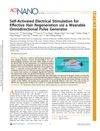
September 2019 in “ACS nano” This study observed that a wearable electric stimulation device significantly promoted hair regeneration in rats and mice, outperforming conventional pharmacological treatments and enhancing growth factor secretion.
 November 2020 in “Journal of The American Academy of Dermatology”
 This paper discusses photobiomodulation therapy for androgenetic alopecia, focusing on the potential differences in efficacy between laser diodes and LEDs, and reports no new clinical results.
January 2011 in “Junshi yixue” This study found that high-power millimeter wave exposure can cause skin injury in mice, with the severity of damage correlating to the duration of radiation.
 28 citations
,
January 2017 in “Critical Reviews in Therapeutic Drug Carrier Systems”
28 citations
,
January 2017 in “Critical Reviews in Therapeutic Drug Carrier Systems” This review classifies engineered nanomaterials by composition and application in biomedicine, highlighting diverse uses like regenerative medicine and potential occupational side effects, but reports no new clinical results.
 December 2024 in “Regenerative Biomaterials”
 This paper reviews strategies for modifying the structure and protein delivery of electrospun nanofibrous materials, emphasizing their potential to guide tissue repair and highlighting current challenges and future research directions in this emerging field.
February 2023 in “American Journal of Biomedical and Life Sciences” The researchers reported that hair bio element median derivatives bioassay is an effective and reliable method for evaluating the nutritional status of various bio elements, offering a non-invasive approach for nutritional health surveillance and precision medicine.
 44 citations
,
October 2017 in “Scientific Reports”
44 citations
,
October 2017 in “Scientific Reports” This study found that far-infrared radiation preconditioning significantly enhanced the proliferation, survival, and migration of bone marrow-derived stem cells in vitro, indicating potential therapeutic benefits for cardiac ischemia treatment.

This chapter reports that essential oil-based therapy, or aromatherapy, poses potential benefits for managing various disorders, such as pain, psychological issues, and skin conditions, although toxicity risks necessitate careful use under professional supervision.
 February 2023 in “Biophysical Journal”
 Light can be used to stimulate ear hair cells, improving speed and consistency over previous methods.
 June 2026 in “Ophthalmology and Therapy”
 This review concluded that near-infrared and red light photobiomodulation shows potential for certain ocular conditions like age-related macular degeneration and dry eye disease, but clinical evidence is still mixed and insufficient to establish it as a standard therapy.
1 citations
,
July 2025 in “Chemosensors” This study developed a closed-loop system for emergency wound care that monitors infection in real-time using biomarkers and delivers amikacin-loaded liposomes for treatment, integrating a conductive hydrogel for environmental protection and antibacterial benefits.
 January 2025 in “Clinical and Medical Engineering Live”
 This study discusses the potential health risks associated with occupational radiation exposure, including genetic mutations, cancers, and other diseases, and outlines strategies for prevention and occupational health safety.
3 citations
,
May 2025 in “Lasers in Surgery and Medicine” This study suggested that MRF may support skin regeneration and rejuvenation by promoting collagen synthesis and regulating factors involved in fibroblast activation and ECM remodeling, with preliminary findings indicating ADSCs might aid these processes.
 February 2026 in “International Journal of Molecular Sciences”
 This review explores the potential roles of extracellular vesicles in various medical fields, emphasizing their promise but noting the need for standardization and clinical testing before widespread application.
9 citations
,
January 2025 in “Droplet” This review explores recent advancements in precise cell manipulation technologies, detailing the status, principles, benefits, limitations, and future potential of methods like single-cell manipulation and 3D bioprinting for cells and tissue engineering.
 1 citations
,
January 2018 in “Springer eBooks”
1 citations
,
January 2018 in “Springer eBooks” Photobiomodulation is an effective and safe treatment for increasing hair growth in people with hair loss.
 11 citations
,
October 2019 in “Journal of Cancer Immunology”
11 citations
,
October 2019 in “Journal of Cancer Immunology” This article discusses the role of external beam radiotherapy as a primary treatment method for cancer and reports no new clinical findings.
 June 2022 in “Journal of Dermatology Research”
 This study found that 448-kHz Capacitive-Resistive Electrothermal Therapy led to a significant increase in hair density in women with Female Pattern Hair Loss, likely due to stimulated proliferation of dermal papilla cells.
 November 2023 in “Journal of Cosmetic and Laser Therapy”
 This study surveyed 60 participants via social media to gather insights on patient preferences and experiences with at-home photobiomodulation devices for hair loss, finding that the majority had not previously used such a device.
February 2026 in “Advanced Sensor Research” In this review, researchers examined advanced sensing technologies and bioelectronic interfaces that could improve understanding of the skin–brain axis, highlighting challenges and strategies for integrating these platforms into models for studying skin and neural interactions.
 December 2025 in “Progress in Biomedical Engineering”
 This article reviews emerging mechanobiological strategies like electrical stimulation and microneedling combined with nanotechnology as non-invasive methods for hair loss treatment, suggesting these approaches could provide futuristic alternatives to current therapies such as minoxidil, finasteride, and hair transplants.