 December 2021 in “International journal of minor fruits, medicinal and aromatic plants”
 This review identifies common medicinal plant species in Sri Lankan home gardens and discusses their traditional Ayurvedic uses, but it reports no new clinical results.
 August 2021 in “Journal of Fundamental and Applied Pharmaceutical Science”
 In this study, a 5% black tea extract hair tonic showed hair growth-promoting activity in rabbits, achieving 9.62 mm growth by day 18, with all tested formulas proving physically stable.
 June 2021 in “World Journal Of Advanced Research and Reviews”
 In this study, researchers evaluated emulsions made with natural plant extracts and oils on guinea pigs, finding that a specific hydrophilic/lipophilic balance and globule size led to a stable emulsion and stimulated hair growth.
 June 2021 in “Journal of emerging technologies and innovative research”
 This article reviews the potential hair-protective effects of Onion and Aloe vera against damage from hair dyes but reports no new experimental results.
 January 2021 in “Online Publication Service of Würzburg University (Würzburg University)”
 This study examines the use of diphenylcyclopropenone in treating alopecia areata patients at the University Hospital Würzburg and investigates how the treatment affects patients' quality of life.
 September 2020 in “British Journal of Dermatology”
 This article provides issue information for the September 2020 edition of the British Journal of Dermatology and contains no new research findings.
 September 2019 in “Asian Journal of Pharmaceutical and Clinical Research”
 In this study, researchers found that the methanolic seed extract of Tectona grandis, known for its use in traditional medicine, demonstrated strong analgesic properties in Swiss albino mice, being effective at doses of 200–250 mg/kg and safe up to 1000 mg/kg.
 April 2019 in “International journal of research in dermatology”
 This case report describes a 6-year-old child with twenty nail dystrophy and alopecia areata of the scalp.
 April 2019 in “International research journal of pharmacy”
 This study found that a 50% ethanolic extract of Adiantum capillus had significant analgesic and anti-inflammatory effects in animals, particularly at the highest tested dose of 300 mg/kg.
 October 2018 in “Ayurlog: national journal of research in ayurveda science”
 This article discusses methods to enhance scalp hair strength and beauty according to Ayurvedic principles, without presenting new clinical results, and emphasizes understanding various aspects of hair health from Ayurvedic texts.
 May 2018 in “White Rose eTheses Online (University of Leeds, The University of Sheffield, University of York)”
 In this study, researchers found that alopecia areata patients show a significant reduction in suppressive regulatory T-cells and an increase in inflammatory T-cell populations, suggesting an immunological imbalance contributing to the disease.
 June 2017 in “Journal of Traditional and Folk Practices”
 This study enumerates the traditional uses of Begonia malabarica by tribes in Tamil Nadu, where it is reported to be used for treating a variety of ailments, with further research planned to evaluate its biological potential.
 January 2017 in “Archives of clinical and biomedical research”
 This case report suggests that melanin, as an energy generator, may offer a new perspective on studying and treating autoimmune disorders such as alopecia areata.
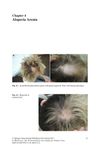 December 2016 in “Springer eBooks”
 A 45-year-old woman with autoimmune diseases experienced patchy hair loss due to alopecia areata, which has no cure but can be treated, with varying success.
 February 2016 in “Online journal of biological sciences”
 This study found that a mixture of Lawsonia inermis L. powder and honey could significantly speed up burn wound healing and promote hair growth in rabbits compared to control and honey-alone treatments.
 June 2015 in “Journal of the turkish academy of dermatology”
 This review revisits the principles regarding the critical role of diet and nutrition in managing certain skin diseases but reports no new findings.

This review discusses the potential association between vaccination and alopecia areata, highlighted in case reports, notably with the hepatitis B virus vaccine, but provides no new results.

In this study, researchers found that alopecia areata is linked to immune cell activation against hair follicle autoantigens and is associated with heart changes and cardiac marker alterations in humans and mice.
 January 2015 in “Journal of clinical & experimental dermatology research”
 This study found that treatment with PTH-CBD stimulated hair growth in mice with alopecia areata, with increased levels of beta catenin indicating activation of the Wnt pathway.
 September 2002 in “Fertility and sterility”
 This study found that hirsutism is more frequent among female relatives of PCOS patients, suggesting a hereditary aspect of PCOS, while premature balding was not more common among male relatives.
34 citations
,
April 1982 in “BMJ” 1 citations
,
January 2014 in “Jurnal Tata Rias” In this study, the hair tonic with a 3:3 avocado extract to honey ratio was most preferred by panelists and may be suitable for preventing hair loss.
 15 citations
,
January 2021 in “Cellular and Molecular Biology”
15 citations
,
January 2021 in “Cellular and Molecular Biology” This study found that Prosopis farcta is a rich source of phenolic compounds with strong antioxidant activity, suggesting its potential for use in food, beverage, feed, and pharmaceutical applications.
 July 2026 in “International Journal of Drug Delivery Technology”
 This study evaluated a Piper betle leaf emulgel for topical use and found it to have good stability, non-irritant properties, and significant hair growth activity in albino mice, suggesting its potential for dermatological and hair growth applications.
 March 2025 in “Dental Journal (Majalah Kedokteran Gigi)”
 This study developed a biodegradable gelatin and chitosan hemostatic sponge, enhanced with pomegranate peel extract, for dental applications, highlighting its effective antibacterial properties, improved blood absorption, and reduced clotting time, suggesting potential for use in clinical dental and wound care procedures.
January 2024 in “AIP conference proceedings” 
This study identified ISPP-Rb, a novel immuno-stimulatory complex from Royoporus badius, that significantly activates murine macrophage cells and induces multiple proinflammatory cytokines.
1 citations
,
May 2025 in “International Immunopharmacology” This study found that L-borneol, derived from Chinese medicine, significantly promotes the differentiation of rat hair follicle stem cells into basal layer cells, aiding wound healing, with the process involving inhibition of the PODXL2 gene by the microRNA rno-miR-127.
September 2025 in “Plants” In this study, the wood essential oil of *Juniperus morrisonicola* exhibited significant anti-inflammatory activity, notably inhibiting nitric oxide production in stimulated macrophages, and showed cytotoxic effects against liver cancer cells, suggesting its potential for drug development and eco-friendly applications.
 December 2023 in “Natural product research”
 This study found that compound 4 from Urtica triangularis subsp. pinnatifida exhibited stronger anti-BPH activity against BPH-1 cells with an IC50 of 79.75 μM compared to finasteride's IC50 of 91.8 μM, while compounds 1, 2, and 5 showed moderate activity.