44 citations
,
October 2009 in “Journal of the American Academy of Dermatology” This study reported that 1% bexarotene gel was well tolerated and possibly effective for inducing partial hair regrowth in alopecia areata, but more rigorous trials are needed to confirm its efficacy.
 February 2013 in “Journal of The American Academy of Dermatology”
 Finasteride solution helps treat hair loss.
 2 citations
,
March 2015 in “Clinical and Experimental Dermatology”
2 citations
,
March 2015 in “Clinical and Experimental Dermatology” This article addresses an unusual side effect of azathioprine but provides no abstract or detailed results, focusing instead on a specific dermatological perspective.
 November 2022 in “The journal of investigative dermatology/Journal of investigative dermatology”
 This study observes that TYK2 inhibition with BMS-986202 may extend hair follicle growth phases and decrease inflammatory cell markers in alopecia areata, suggesting potential for clinical application.
February 2006 in “Inpharma Weekly” 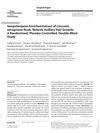 5 citations
,
January 2018 in “Skin Pharmacology and Physiology”
5 citations
,
January 2018 in “Skin Pharmacology and Physiology” This study found that a high sesquiterpene C. aeruginosa extract significantly reduced axillary hair growth in women compared to placebo with no apparent adverse effects.
 2 citations
,
April 2023 in “JEADV. Journal of the European Academy of Dermatology and Venereology/Journal of the European Academy of Dermatology and Venereology”
2 citations
,
April 2023 in “JEADV. Journal of the European Academy of Dermatology and Venereology/Journal of the European Academy of Dermatology and Venereology” This systematic review evaluated the safety of JAK-inhibitors for alopecia areata, finding that most adverse events were mild and systemic formulations were well-tolerated; however, increased rates of certain infections and laboratory abnormalities were noted, with isolated severe cases but no fatal outcomes.
 May 2023 in “Advancements in Homeopathic Research”
 This study investigated the effectiveness of a botanical formulation, Zauberӧl®, on testosterone-induced alopecia in Wistar rats, focusing on ingredients such as Arnica montana and Hibiscus Rosa sinensis. Results are not reported in the abstract.
December 2023 in “Reactions weekly” December 2023 in “Reactions weekly” September 2013 in “Reactions weekly”  1 citations
,
March 2023 in “Clinical, Cosmetic and Investigational Dermatology”
1 citations
,
March 2023 in “Clinical, Cosmetic and Investigational Dermatology” This review discusses recent advances in understanding and treating alopecia areata, emphasizing the ongoing challenges and unmet needs in disease management; it reports no new clinical findings.
35 citations
,
March 2010 in “Journal of Dermatological Science” Ebastine may help regrow hair in alopecia areata patients.
This case study reports that a pediatric patient with recalcitrant alopecia areata was treated using a 308 nm excimer lamp and topical tofacitinib 2% gel.
 November 2023 in “Expert Opinion on Pharmacotherapy”
 This abstract does not provide any specific results or findings but describes male androgenic alopecia as a progressive and psychologically distressing hair-loss disorder involving hair follicle miniaturization.
20 citations
,
August 2010 in “The Journal of Urology” The study found that ezetimibe effectively reduced prostate enlargement in an animal model of benign prostatic hyperplasia, suggesting it as a potential alternative or complementary treatment.
 23 citations
,
September 2017 in “Journal of the American Academy of Dermatology”
23 citations
,
September 2017 in “Journal of the American Academy of Dermatology” This article hypothesizes that apremilast, a phosphodiesterase 4 inhibitor, could be a targeted treatment for alopecia areata due to its ability to suppress interferon-gamma production, but reports no new clinical results.
 September 2024 in “Journal of the American Academy of Dermatology”
 This study found that a new compounded topical solution for alopecia was clinically tolerable and did not cause irritation, while also showing potential to enhance hair growth through fibroblast proliferation and gene expression.
This study evaluated the stability of multiple active ingredients in TrichoSol™ for use in alopecia treatments, finding varying stability durations at room temperature—up to 180 days for some ingredients—supporting its use as a compounding vehicle in personalized therapies.
November 2025 in “The Journal of Dermatology” In this case report, a Japanese woman with both atopic dermatitis and alopecia areata showed improvement in both conditions following treatment with nemolizumab.
This meta-analysis reports that ritlecitinib significantly improved hair growth in alopecia areata patients compared to placebo, although its potential requires further clinical exploration.
June 2026 in “JAAD Case Reports” This study found that Dex-loaded hyaluronic acid hydrogel microneedles significantly reduced pain in an acute inflammatory visceral pain model without sedation, suggesting a promising and patient-friendly alternative to intravenous delivery.
August 2025 in “International Journal of Pharmaceutics” In AGA animal models, this study found that finasteride-loaded microspheres provided rapid and sustained dihydrotestosterone suppression, promoting hair regrowth through dual-phase drug release.
 April 1940 in “Archives of dermatology”
 This abstract presents a case of arsenical dermatitis with pigmentation and alopecia developed during treatment with arsphenamine for a positive Wassermann reaction.
March 2023 in “Asian Journal of Beauty and Cosmetology” This study found that the herbal extract HX109 promoted hair growth in mice by increasing cell viability and enhancing hair regrowth, with the effects increasing as doses rose.
3 citations
,
April 2011 in “Klinische Pädiatrie” Immunosuppression therapy with methylprednisolone effectively treats childhood alopecia areata.
 October 2023 in “International journal of rheumatic diseases”
 This study found that the JAK3/TEC kinase inhibitor ritlecitinib was effective and well tolerated in patients aged 12 and older with alopecia areata, providing a potential systemic treatment option for this condition, especially in cases of significant psychosocial impact.
 August 2008 in “European Neuropsychopharmacology”
 RY-023, a specific drug, can improve early stage memory learning without affecting general activity in rats, but it's less effective for later learning stages and doesn't impact memory recall.
This study found that PLX, a mixture of tomato extract and chitooligosaccharide, may reduce prostate weight in testosterone-induced BPH in rats, suggesting it could act as a 5α-reductase inhibitor.