 April 2018 in “Journal of Investigative Dermatology”
 This study found that Anigozanthos Flavidus flower extract may improve skin elasticity and reduce wrinkles by increasing essential extracellular matrix proteins in both in vitro and in vivo settings.
July 2026 in “Journal of Medicinal Chemistry” In this study, candidate compound 39 demonstrated potent androgen receptor antagonism and faster hair-growth efficacy in a mouse model compared to pyrilutamide, while maintaining favorable safety and pharmacokinetic profiles, suggesting potential for topical use in androgenic alopecia.
 December 2024 in “PubMed”
 This study evaluates the compatibility of six active pharmaceutical ingredients, including finasteride and spironolactone, with TrichoFoam™, a foam vehicle used in personalized treatments for alopecia, though it does not report specific results.
January 2018 in “Journal of analytical, bioanalytical and separation techniques” August 2024 in “Journal of Drug Delivery Science and Technology” In this study, the researchers reported that minoxidil-loaded transfersomes using a cyclodextrin strategy significantly increased drug stability, skin permeation, and hair regrowth in a mouse model of androgenetic alopecia compared to traditional formulations and commercial tinctures.
February 2026 in “International Journal of Dermatology” In a single-center study, adolescents with moderate-to-severe alopecia areata treated with ritlecitinib 50 mg daily for 24 weeks showed significant hair regrowth, with 27.3% achieving near-complete regrowth and 45.5% substantial improvement, without serious safety concerns, according to these researchers.
 37 citations
,
May 2016 in “JAAD case reports”
37 citations
,
May 2016 in “JAAD case reports” This abstract describes monilethrix, an autosomal dominant genodermatosis with symptoms like hair fragility and keratosis pilaris, and does not report new experimental results.
3 citations
,
July 2025 in “Clinical and Experimental Dermatology” This study reported that patients with alopecia areata treated with ritlecitinib in a real-life setting had a higher rate of positive response on the Severity of Alopecia Tool score compared to those in the ALLEGRO trial.
 November 2021 in “Revista Ibero-Americana de Humanidades, Ciências e Educação”
 This paper evaluates the therapeutic response of androgenetic alopecia to topical application of specific compounds using digital drug delivery but reports no new clinical results.
July 2026 in “Experimental Dermatology” In this study, researchers found that minoxidil sulfate enhances the anti-inflammatory effects of the JAK inhibitor baricitinib in alopecia areata, modulating inflammatory signals and preserving immune privilege features in human hair cells, which suggests potential benefits for combined therapy.
July 2021 in “Anais brasileiros de dermatologia/Anais Brasileiros de Dermatologia” This article reports on a family with six members diagnosed with monilethrix, highlighting varying degrees of alopecia linked to this rare hair shaft defect.
 January 2026 in “International Journal of Innovative Technologies in Social Science”
 This review reports that ritlecitinib, baricitinib, and deuruxolitinib, all JAK inhibitors, are effective treatments for moderate-to-severe alopecia areata, with differences in selectivity and onset of action, and suggests that emerging biologic therapies may enhance treatment by offering more targeted immune modulation.
 January 2024 in “American journal of clinical dermatology”
 This study reports that ritlecitinib, when used for up to 24 months in patients aged 12 and older with alopecia areata, has an acceptable safety profile, with a similar proportion of adverse events in both ritlecitinib and placebo groups in the placebo-controlled cohort.
 1 citations
,
September 2016 in “Acta Chromatographica”
1 citations
,
September 2016 in “Acta Chromatographica” This study validated a new RP-HPLC method for accurately determining doxazosin mesylate and finasteride in bulk powders and capsule formulations.
June 2024 in “Current Developments in Nutrition” In this study, KeraGLO, a nutritional supplement with hydrolyzed keratin, was shown to significantly improve skin wrinkle depth, smoothness, moisture, firmness, and hair health in healthy adult females over a 90-day period at both 500mg and 1000mg doses compared to baseline.
 3 citations
,
August 2019 in “Journal of The American Academy of Dermatology”
3 citations
,
August 2019 in “Journal of The American Academy of Dermatology” Clascoterone safely promotes hair growth similar to minoxidil.
 January 2022 in “Revista Dermatológica Centro Uraga”
 This article reviews two cases of monilethrix in siblings, detailing their clinical and dermatoscopic characteristics, but reports no new findings.
 October 2024 in “International Journal of Medical Arts”
 This study found that both intralesional pentoxifylline and intralesional corticosteroids improved hair regrowth in patients with localized alopecia areata, but intralesional corticosteroids were more effective, achieving 100% hair regrowth compared to 60% with pentoxifylline.
January 2023 in “Pharmaceutics” In this study, researchers developed a new topical atraric acid formulation, AA-TF#15, which showed a significantly higher drug penetration and increased hair regrowth in mice compared to minoxidil and finasteride treatments, suggesting its potential effectiveness for treating scalp androgenic alopecia.
 13 citations
,
January 2017 in “Chemical & Pharmaceutical Bulletin”
13 citations
,
January 2017 in “Chemical & Pharmaceutical Bulletin” This study found that a synthetic avicequinone C analogue, 5e, was significantly more potent in inhibiting steroid 5α-reductase type 1 activity in human keratinocytes compared to the original isolated compound.
4 citations
,
July 2023 in “Nature Medicine” The FDA approved a new Pfizer drug for hair loss in teens.
January 2016 in “Indian Journal of Paediatric Dermatology” This study found that a combination treatment using oral and topical steroids with topical minoxidil was well-tolerated in children with severe recalcitrant alopecia areata, showing good responses except in alopecia universalis cases.
2 citations
,
September 2024 in “Journal of the American Academy of Dermatology” Deuruxolitinib is generally safe for treating alopecia areata.
 June 2024 in “Majallah-i dānishgāh-i ̒ulum-i pizishkī-i Kirmān.”
 This study evaluated enhancers to improve skin absorption of topical cetirizine for androgenic alopecia treatment and found eucalyptus and Tween 80 most effective, while propylene glycol had the weakest effect.
 February 2024 in “Archiv EuroMedica”
 This review suggests that annurca apple extract, rich in polyphenols, may be a promising alternative for treating baldness, though further research is needed to clearly assess its effectiveness compared to existing treatments.
 2 citations
,
July 2007 in “Cancer biology & therapy”
2 citations
,
July 2007 in “Cancer biology & therapy” This study found that 86% of patients with follicular non-Hodgkin's lymphoma were alive and nearly two-thirds remained in complete remission eight years after initial treatment with the radioimmunotherapy drug Bexxar.
 1 citations
,
July 2018 in “CMAJ. Canadian Medical Association journal”
1 citations
,
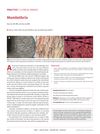
July 2018 in “CMAJ. Canadian Medical Association journal” This case report describes a three-year-old girl with a two-year history of hair loss who was previously treated with selenium sulfide shampoo, with no family history of alopecia.
 5 citations
,
January 2018 in “Skin appendage disorders”
5 citations
,
January 2018 in “Skin appendage disorders” Minoxidil base is preferred for hair loss treatment, but minoxidil sulfate may be an alternative for unresponsive patients.
20 citations
,
February 2004 in “Clinical & Experimental Immunology” This study suggests that long-term treatment with the contact sensitizer SADBE in mice may reduce leucocyte traffic in alopecia areata through impaired leucocyte extravasation.
 June 2026 in “Dove Medical Press (Taylor and Francis Group)”
 This paper reviews existing and emerging therapies for alopecia areata, describing the impact of targeted treatments in this field, and introduces a global network of disease registers to study the long-term safety and effectiveness of these new options.