 1 citations
,
March 2026 in “American Journal of Clinical Dermatology”
1 citations
,
March 2026 in “American Journal of Clinical Dermatology” In this Italian retrospective study, ritlecitinib 50 mg/day showed effectiveness and good tolerability for treating severe alopecia areata over 24 weeks, achieving significant hair regrowth particularly in adolescents, as well as improvements in eyebrows, eyelashes, nails, and quality of life, with mostly mild adverse effects.
15 citations
,
January 2025 in “Journal of the European Academy of Dermatology and Venereology” Ritlecitinib is effective and safe for treating alopecia areata, promoting significant hair regrowth.
 38 citations
,
March 2017 in “Expert Opinion on Investigational Drugs”
38 citations
,
March 2017 in “Expert Opinion on Investigational Drugs” This review examines the potential of bimatoprost for treating various types of eyelash and eyebrow hypotrichosis, discussing its pharmacological properties but providing no new clinical results.
 September 2024 in “Dermatology”
 This abstract discusses finasteride and dutasteride's mechanisms in treating androgenetic alopecia and notes FDA approval for finasteride, but reports no new clinical results.
 April 2023 in “The journal of investigative dermatology/Journal of investigative dermatology”
 This study found that treatment with ritlecitinib led to significant scalp hair regrowth in patients with alopecia areata at Weeks 24 and 48, with higher response rates observed in those receiving 50 mg compared to 30 mg doses.
 23 citations
,
September 2017 in “Journal of the American Academy of Dermatology”
23 citations
,
September 2017 in “Journal of the American Academy of Dermatology” This article hypothesizes that apremilast, a phosphodiesterase 4 inhibitor, could be a targeted treatment for alopecia areata due to its ability to suppress interferon-gamma production, but reports no new clinical results.
 24 citations
,
October 2018 in “JAAD Case Reports”
24 citations
,
October 2018 in “JAAD Case Reports” This paper reviews the challenges of treating alopecia areata affecting eyelashes and discusses the risks associated with traditional therapies; it reports no new clinical results.
August 2026 in “JAMA Dermatology” This study found that upadacitinib significantly improved hair regrowth compared to placebo in adults and adolescents with severe alopecia areata, and demonstrated a positive benefit-risk profile.
 1 citations
,
September 2022 in “Nepal journal of dermatology, venereology & leprology”
1 citations
,
September 2022 in “Nepal journal of dermatology, venereology & leprology” This review examines the use of apremilast for non-FDA-approved dermatological conditions, noting varied efficacy but a favorable safety profile compared to conventional treatments.
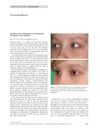 15 citations
,
November 2009 in “Clinical and Experimental Dermatology”
15 citations
,
November 2009 in “Clinical and Experimental Dermatology” This case study describes a 16-year-old girl with alopecia areata affecting her eyelashes and eyebrows, who showed very limited response to treatment with topical mometasone furoate and subsequent partial hair loss upon stopping the treatment.
 3 citations
,
July 2010 in “Archives of internal medicine”
3 citations
,
July 2010 in “Archives of internal medicine” A woman kept her eyelashes during chemotherapy possibly because of her glaucoma eye drops.
 February 2023 in “European Journal of Dermatology”
 In this retrospective study from North France, apremilast was used in patients with psoriasis and recent cancer, showing a good safety profile and improved quality of life, though with 65.2% experiencing non-serious adverse events. The need for further research on oncological safety was highlighted.
3 citations
,
November 2024 in “Clinical Research” This article discusses the immune mechanisms involved in alopecia areata, focusing on T-cell activity and cytokine-driven JAK signaling, but reports no new clinical results.
2 citations
,
October 2021 in “Journal of Cosmetic Dermatology” In this randomized trial, the researchers observed that both montelukast and finasteride effectively reduced acne severity and lesion count in women with moderate acne, but finasteride showed greater efficacy. Both medications had transient, non-serious side effects, indicating satisfactory tolerability and safety.
 March 2026 in “Clinical Cosmetic and Investigational Dermatology”
 In this case study, treatment with the selective JAK1 inhibitor upadacitinib significantly improved symptoms in a patient with refractory alopecia areata, vitiligo, ankylosing spondylitis, and allergic asthma-nasal syndrome, though a transient liver function abnormality was noted.
 November 2024 in “Postępy Biochemii”
 This article highlights the potential for latanoprost acid, a metabolite of the glaucoma medication latanoprost, to serve as an effective alternative to current treatments for androgenetic alopecia, such as minoxidil and finasteride, facilitating a faster development process for related drugs.
 December 2025 in “Journal of Pakistan Association of Dermatologists”
 This case report highlights a rare instance of erosive pustular dermatosis of the scalp in a patient on afatinib, underlining the importance of early recognition and management of this adverse effect.
 33 citations
,
November 1994 in “Archives of Biochemistry and Biophysics” 3 citations
,
January 2011 in “Yearbook of Dermatology and Dermatologic Surgery”
33 citations
,
November 1994 in “Archives of Biochemistry and Biophysics” 3 citations
,
January 2011 in “Yearbook of Dermatology and Dermatologic Surgery”  25 citations
,
January 2011 in “Annals of Dermatology”
25 citations
,
January 2011 in “Annals of Dermatology” This case report documents a 61-year-old woman treated with erlotinib who experienced the rare side effect of cicatricial alopecia.
1 citations
,
August 2021 in “Journal of Investigative Dermatology” ASLAN004 was safe and well-tolerated, supporting further development for treating certain diseases.
 1 citations
,
April 2019 in “Acta Medica Philippina”
1 citations
,
April 2019 in “Acta Medica Philippina” This review discusses emerging evidence on azathioprine's efficacy and safety for severe alopecia areata, reporting sustained response in many patients but emphasizing the need for controlled trials.
 65 citations
,
February 2015 in “Neuro-Oncology”
65 citations
,
February 2015 in “Neuro-Oncology” In this study, four children with recurrent atypical teratoid rhabdoid tumors experienced disease stabilization or regression after treatment with alisertib, suggesting its potential role in future trials for this condition.
 50 citations
,
December 2009 in “Journal of The European Academy of Dermatology and Venereology”
50 citations
,
December 2009 in “Journal of The European Academy of Dermatology and Venereology” This study found that latanoprost may be effective for treating eyelash alopecia areata, achieving cosmetically acceptable regrowth in 45% of patients.
 July 2003 in “Pediatrics in review”
 This article reviews 12 newly approved drugs with pediatric indications from 2001, discussing their clinical importance for general pediatricians, but reports no new clinical results.
June 2025 in “British Journal of Dermatology” This study details a case of a 20-year-old woman with APECED syndrome and alopecia areata who experienced complete scalp hair regrowth and improved quality of life after nine months of ruxolitinib treatment, highlighting the drug's effectiveness for severe AA linked to AIRE gene mutation.
 27 citations
,
March 2017 in “Current Clinical Pharmacology”
27 citations
,
March 2017 in “Current Clinical Pharmacology” In this review, the authors discuss the pharmacology of dutasteride and compare its efficacy to finasteride for treating androgenetic alopecia, highlighting dutasteride's effectiveness demonstrated in several clinical trials.
 October 2015 in “Reactions Weekly”
 A woman got a scalp condition from using latanoprost, but it improved after stopping the drug and starting other treatments.
April 2025 in “Anais Brasileiros de Dermatologia” Abrocitinib effectively treats severe alopecia areata with significant improvement and no side effects.
7 citations
,
August 2024 in “Clinical and Experimental Dermatology” In this retrospective study conducted at a trichology clinic, the off-label use of upadacitinib for at least 24 weeks was found to have a promising efficacy and safety profile for treating severe alopecia areata in adolescents.