 September 2020 in “Research Square (Research Square)”
 This study reported the expression patterns and potential functions of long non-coding RNAs in the hair follicle cycle of yak, with insights into their sequence conservation between yak and cashmere goat.
July 2026 in “Journal of the American Academy of Dermatology”  11 citations
,
June 2017 in “Journal of cell science”
11 citations
,
June 2017 in “Journal of cell science” In this study, researchers found that AGD1 is crucial for membrane recruitment during root hair development in Arabidopsis thaliana, with its pleckstrin homology domain essential for targeting specific plasma membrane regions.

In a mouse hair-growth model, this study found that the optimized compound 39 matched the efficacy of pyrilutamide for androgenic alopecia, with faster response and maintained safety, suggesting it as a promising topical AR antagonist with reduced systemic toxicity risk.

This study reports that the newly optimized AR antagonist 39 demonstrated effective hair growth and safety in a mouse model of androgenetic alopecia, showing comparable efficacy to pyrilutamide with faster response and favorable pharmacokinetics, due to innovative structural design and dual metabolic inactivation strategy.
This study used whole-genome resequencing to analyze genetic diversity and selection in 17 rabbit breeds, identifying genes linked to traits like coat color and body size, which could inform breeding and conservation efforts.
 2 citations
,
April 2023 in “JEADV. Journal of the European Academy of Dermatology and Venereology/Journal of the European Academy of Dermatology and Venereology”
2 citations
,
April 2023 in “JEADV. Journal of the European Academy of Dermatology and Venereology/Journal of the European Academy of Dermatology and Venereology” This systematic review evaluated the safety of JAK-inhibitors for alopecia areata, finding that most adverse events were mild and systemic formulations were well-tolerated; however, increased rates of certain infections and laboratory abnormalities were noted, with isolated severe cases but no fatal outcomes.
 September 2014 in “Hair transplant forum international”
 This abstract provides a personal reflection on Dr. Jerry Wong's contributions to hair restoration and his collaborative work with Hasson, without presenting new clinical data.
 1 citations
,
March 2023 in “Skin”
1 citations
,
March 2023 in “Skin” This study describes the patterns of clinical response in patients with severe alopecia areata treated with baricitinib over 52 weeks, based on integrated data from two Phase 3 trials.
7 citations
,
May 2021 in “General and comparative endocrinology” This study concluded that qiviut cortisol can be used as a measure of HPA axis activity in muskoxen, with hair growth phase and body region affecting cortisol levels.
November 2023 in “Journal of Investigative Dermatology” JAK inhibitors are effective and generally safe for treating alopecia areata, but monitoring for side effects is important.
5 citations
,
October 1990 in “Archives of Dermatology” 8 citations
,
December 2017 in “Small Ruminant Research” This study reports that variation in the ovine TCHH gene may influence wool fibre curvature, with specific gene variants affecting the mean fibre curvature in sheep.
 1 citations
,
August 2016 in “Journal of Buffalo Science”
1 citations
,
August 2016 in “Journal of Buffalo Science” This study examined hair follicle arrangement to identify a suspected wild boar involved in a dynamite blast, concluding based on circumstantial evidence that it may have belonged to a wild boar.
 November 2017 in “Asian journal of pharmaceutical and clinical research”
 This study predicted that 6-hydroxy genistein, coreximine, and scoulerine from Dadap leaves may act as anti-alopecia agents by interacting with JAK2, but further in-vivo testing is needed.
1 citations
,
September 1986 in “Journal of the Forensic Science Society” This study found that hair root sheaths can be accurately typed for erythrocyte acid phosphatase, adenylate kinase, and adenosine deaminase, consistent with blood typing results from the same donors.
January 2012 in “Journal of Northwest A & F University” In this study, the researchers observed that Eda mRNA expression in goat skin peaks during the catagen phase of the hair cycle, suggesting its involvement in hair cycle regulation.
June 2025 in “British Journal of Dermatology” This study reviewed clinical trials on JAK inhibitors for alopecia areata, finding them effective for short-term hair regrowth with a favorable safety profile, but noted limited data on long-term risks like malignancies or cardiovascular events beyond two years.
October 2023 in “The Open Dermatology Journal” Baricitinib is effective for severe alopecia areata with manageable side effects, mainly upper respiratory infections.

In this study on mice, a baricitinib-loaded microneedle patch enhanced hair growth in alopecia areata lesions (68% vs control: 33%, p < 0.05), suggesting it may deliver treatment effectively and pain-free, with fewer systemic side effects.
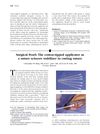 July 2005 in “Journal of The American Academy of Dermatology”
 This article discusses the various uses of the cotton-tipped applicator in dermatologic surgery, highlighting its innovative role as a suture scissors stabilizer, but reports no clinical results.
 10 citations
,
June 2024 in “American Journal of Clinical Dermatology”
10 citations
,
June 2024 in “American Journal of Clinical Dermatology” This review highlights that while sonidegib and vismodegib offer promising treatment options for advanced basal cell carcinoma, their use is often limited by treatment-emergent adverse events, which can be managed through protocol modifications and supportive interventions.
 January 2026 in “International Journal of Innovative Technologies in Social Science”
 This review reports that ritlecitinib, baricitinib, and deuruxolitinib, all JAK inhibitors, are effective treatments for moderate-to-severe alopecia areata, with differences in selectivity and onset of action, and suggests that emerging biologic therapies may enhance treatment by offering more targeted immune modulation.
 October 2025 in “Proceedings of the National Academy of Sciences”
 This study identifies the PI4P-RHD4 module as a key regulator of GET pathway receptor dynamics in Arabidopsis, affecting TA protein insertion and root hair growth.
June 2026 in “Journal of Investigative Dermatology” This study reported that the anti-γc antibody hC2 restored hair follicle homeostasis and suppressed hair loss in an AA-like mouse model by inhibiting autoreactive T-cell activity, suggesting that hC2 may offer a safer and more effective treatment for alopecia areata compared to current Jak inhibitors.
 13 citations
,
April 1994 in “Journal of Investigative Dermatology”
13 citations
,
April 1994 in “Journal of Investigative Dermatology” Androgen receptors found in monkey scalps, similar to humans, affect hair growth.
 41 citations
,
October 2011 in “Clinical and Experimental Dermatology”
41 citations
,
October 2011 in “Clinical and Experimental Dermatology” This meta-analysis suggests that the G allele of AR StuI polymorphism might be a potential risk factor for AGA, particularly in white populations.
 June 2024 in “World Journal of Management Science”
 This abstract describes Upubscience Publisher as a prominent publisher of over 40 open access, peer-reviewed journals across numerous academic fields, supported by an editorial team of leading researchers. Results are not reported in this description.
189 citations
,
July 2000 in “American Journal of Botany” In this study, wild-type Arabidopsis thaliana with responsive root hairs efficiently acquired phosphorus under low-phosphorus conditions compared to mutants, suggesting an adaptive advantage in nutrient-limited environments.