This study suggests that pseudopelade may be an autonomous disease based on its distinctive clinical and histopathological features not present in other scarring alopecias.
1 citations
,
May 2025 in “The Journal of Dermatology” In this study, increased Treg cell activity indicated by IL-10 and IL-15 was identified as a feature of ADTA, distinguishing it from AA and potentially explaining ADTA's more favorable prognosis.
 January 2023 in “Karger Kompass. Dermatologie”
 This review discusses the complexity of identifying hair follicle antigens involved in alopecia areata and reports no new clinical results, emphasizing the need for further research on autoantigen identity.
April 2022 in “Microbiology and Immunology” This study suggests that a specific short sequence repeat in Malassezia restricta may be linked to increased colonization and the development or exacerbation of androgenetic alopecia.
73 citations
,
June 2017 in “Experimental Dermatology” The authors suggest that tooth, dermal scale, epidermal scale, feather, and hair evolved in parallel from a shared placode/dermal cell unit in an early vertebrate gnathostome with odontodes, around 420 million years ago.
4 citations
,
January 2013 in “International Journal of Trichology” Monilethrix has no effective treatment, but avoiding hair trauma helps manage it.
December 2022 in “Biochemical and Biophysical Research Communications” This study found that HtrA2 inactivation in mnd2 mice is associated with delayed hair cycle phases and growth retardation of adipocytes, suggesting HtrA2's role in regulating adipogenesis-related hair growth.
 April 2018 in “Journal of Investigative Dermatology”
 In this study, researchers identified CENPV as a new CYLD interacting partner that localizes to primary cilia and regulates acetylated tubulin levels, offering insights into the pathogenesis of skin appendage tumors.
 December 2025 in “Therya notes”
 In this study, researchers documented the first instance of alopecia in bats within the Puebla region, specifically affecting two Artibeus jamaicensis and one Choeronycteris mexicana, possibly linked to environmental stress from human activities interfering with their nutrition.
July 2025 in “Veterinary Parasitology Regional Studies and Reports” This study found that both oral afoxolaner (NexGard®) and topical Frontline Combo® achieved 100% efficacy in eradicating Heterodoxus spiniger infestations within 30 days in dogs, with significant reductions in associated symptoms like hair loss and pruritus.
 25 citations
,
April 2007 in “Journal of The American Academy of Dermatology”
25 citations
,
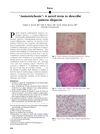
April 2007 in “Journal of The American Academy of Dermatology” This article introduces the term "anisotrichosis" to describe the significant variation in hair shaft diameters observed in pattern alopecia, drawing a parallel to anisocytosis seen in blood smears, but reports no new research findings.
27 citations
,
July 1993 in “The journal of investigative dermatology/Journal of investigative dermatology” September 2023 in “Journal of the American Academy of Dermatology” Dermatologists should consider alpha-gal syndrome in patients with unexplained chronic skin issues.
2 citations
,
December 2023 in “International Journal of Dermatology” In this study, researchers identified a unique variant of alopecia areata characterized by an increase in telogen hair follicles and minimal inflammation present in the microenvironment.
 March 2026 in “JOURNAL OF CLINICAL AND DIAGNOSTIC RESEARCH”
 This case series reports three novel and atypical morphological patterns of alopecia areata, termed the central sparing, paw, and punctate patterns, highlighting their importance for dermatologists in improving diagnosis and management of the condition.
 9 citations
,
July 2010 in “British Journal of Dermatology”
9 citations
,
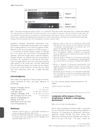
July 2010 in “British Journal of Dermatology” This article reports on lentiginosis observed within plaques of linear atrophoderma of Moulin and discusses its potential classification as a twin-spotting phenomenon but provides no new clinical research results.
5 citations
,
March 1981 in “PubMed” This case report details a 2-year-old girl who developed hypertrichosis on areas of her skin affected by multiple insect bites and subsequent scratching, resulting in unusual hair growth.
 7 citations
,
July 2020 in “Immunological Investigations”
7 citations
,
July 2020 in “Immunological Investigations” This study observed that the rs231775 CTLA4 genetic variant was more prevalent in Alopecia Areata patients than controls, particularly among those with severe disease.
 January 2020 in “Przegla̧d dermatologiczny”
 A 5-year-old boy was diagnosed with congenital triangular alopecia, a type of hair loss without skin changes, usually starting between ages 2-5, with no specific treatment.
1 citations
,
March 2024 in “PubMed” This case report describes an adult female who developed localized hair loss on her scalp two months after tick bites, illustrating tick bite alopecia's distinct patterns and highlighting the need to consider ticks as a possible cause of such hair loss.
July 2021 in “Anais brasileiros de dermatologia/Anais Brasileiros de Dermatologia” This article reports on a family with six members diagnosed with monilethrix, highlighting varying degrees of alopecia linked to this rare hair shaft defect.
 September 2016 in “Journal of The American Academy of Dermatology”
 This case study identified the condition as Monilethrix in a 17-year-old female, characterized by a beaded hair appearance and linked to a genetic cause.
2 citations
,
August 2007 in “Zoonoses and Public Health” This study documented clinical cases of dermatophytosis in two free-ranging southern chamois in the Eastern Pyrenees, with Trichophyton mentagrophytes identified in both animals.
10 citations
,
January 1995 in “Dermatology” This case study suggests that early or significant alopecia in young adults may warrant investigation for underlying congenital conditions like trichorhinophalangeal syndrome.
37 citations
,
June 2000 in “Experimental dermatology” This study investigated a spontaneous mutation in mice resulting in hair abnormalities and elevated IgE levels, which resembles human Netherton's syndrome and monilethrix.
July 2025 in “International Journal of Trichology” This study reported six pediatric cases of temporal triangular alopecia and highlighted the use of trichoscopy to distinguish it by detecting a distinctive carpet of vellus hair, helping to differentiate TTA from other hair loss conditions.
26 citations
,
April 2011 in “British Journal of Dermatology” This study identified novel mutations in the DSG4 gene in a Japanese patient with monilethrix, affecting protein interactions that may disrupt hair shaft structure.
 6 citations
,
August 2012 in “The Journal of Pediatrics”
6 citations
,
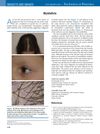
August 2012 in “The Journal of Pediatrics” This case report describes a 12-year-old girl diagnosed with monilethrix, characterized by fragile, beaded hair shafts, with no effective treatment currently available.
33 citations
,
October 2005 in “Journal of Investigative Dermatology” A specific gene mutation causes sparse, brittle hair in a family.
2 citations
,
May 1979 in “PubMed” This report describes four cases of monilethrix in children and concludes that periodic inhibition of keratin synthesis, not a metabolic defect, may explain the hair abnormality.