 32 citations
,
December 2014 in “Journal of experimental botany”
32 citations
,
December 2014 in “Journal of experimental botany” In this study, the authors concluded that arabinogalactan proteins recognized by specific antibodies are involved in the differentiation and development of barley root epidermal cells, contributing to root hair development.
 October 2025 in “Proceedings of the National Academy of Sciences”
 This study identifies the PI4P-RHD4 module as a key regulator of GET pathway receptor dynamics in Arabidopsis, affecting TA protein insertion and root hair growth.
 6 citations
,
April 2017 in “Experimental dermatology”
6 citations
,
April 2017 in “Experimental dermatology” This study found that B6.CD80CD86−/− mice developed autoimmune-like alopecia with nearly 100% incidence by 40 weeks, making them a promising model for studying human alopecia areata.
 5 citations
,
May 2020 in “Life science alliance”
5 citations
,
May 2020 in “Life science alliance” This study found that epidermal-specific deletion of integrin α3β1 significantly reduces papilloma formation in a skin carcinogenesis model by modulating HB stem cell behavior and CCN2 expression.
 17 citations
,
August 2018 in “BMC Genomics”
17 citations
,
August 2018 in “BMC Genomics” The researchers found that HOXC13 regulates different keratin proteins in a mixed manner, with certain SNPs impeding this regulation, while also demonstrating negative-feedback by HOXC13 and positive regulation by LEF1 and melatonin on the HOXC13 promoter.
 March 2014 in “Hair transplant forum international”
 This article discusses the various titles given to individuals assisting in hair transplant surgeries and provides no clinical research findings.
January 2026 in “Experimental Dermatology” The study suggests that refractory chronic alopecia areata cases have more infiltrating skin resident memory T cells, and using a JAK inhibitor may be an effective treatment option.
26 citations
,
March 2006 in “Endocrine, metabolic & immune disorders. Drug targets” This article discusses the functions of the enzyme 17beta-HSD10, including its role in steroid metabolism and potential links to Alzheimer's disease, but reports no new experimental findings.
 72 citations
,
October 2009 in “The FASEB journal”
72 citations
,
October 2009 in “The FASEB journal” This study found that thyrotropin-releasing hormone (TRH) acts as a potent stimulator of hair growth in human scalp hair follicles, promoting elongation and prolonging the anagen phase.
65 citations
,
September 2014 in “Orphanet Journal of Rare Diseases” This study identified mutations in the STUB1 gene linked to hereditary cerebellar ataxia with cognitive impairment, revealing potential effects on protein function and patient symptoms, including accelerated aging.
 11 citations
,
September 2011 in “British Journal of Dermatology”
11 citations
,
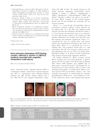
September 2011 in “British Journal of Dermatology” New ABCA12 gene mutations were linked to a skin condition with scaling and hair loss, and a treatment helped with hair loss in a related case.
July 2017 in “OPAL (Open@LaTrobe) (La Trobe University)” In this study, researchers investigated the role of the ATX-LPA axis in asthma pathogenesis using human and mouse models and highlighted the potential for developing new ATX inhibitors as effective asthma treatments.
November 2025 in “Journal of Investigative Dermatology” Chronic refractory alopecia areata has more skin-resident memory T cells, and JAK inhibitors may help reduce them.

Baricitinib helps keep hair, eyebrows, and eyelashes regrown for 3 years in most people with severe hair loss.
 6 citations
,
January 2018 in “Dermato-endocrinology”
6 citations
,
January 2018 in “Dermato-endocrinology” This study found that acanthosis nigricans in the knuckles correlates with higher insulin and HOMA-IR values, potentially serving as an early, accessible marker for insulin resistance even without excess weight.
 September 2023 in “Journal of The American Academy of Dermatology”
 In this study, baricitinib was evaluated for its effectiveness in promoting concurrent regrowth of scalp hair, eyebrows, and eyelashes in patients with severe alopecia areata, showing clinically meaningful responses compared to placebo.
69 citations
,
December 2015 in “BMC plant biology” This study provides evidence that five Hyp-O-GALT genes are crucial for AGP galactosylation and that AGP glycans are vital for various aspects of plant growth and development.
 March 2026 in “International Journal of Dermatology and Venereology”
 This study found that abrocitinib showed promising efficacy and safety in adolescents with moderate-to-severe alopecia areata, with significant hair regrowth observed over 10 months of treatment.
This study identified a 14,883 bp genomic deletion affecting the Plcd1 and Vill genes as likely responsible for the abnormal phenotype observed in snthr-1Bao mice.
 176 citations
,
August 2015 in “The journal of allergy and clinical immunology/Journal of allergy and clinical immunology/The journal of allergy and clinical immunology”
176 citations
,
August 2015 in “The journal of allergy and clinical immunology/Journal of allergy and clinical immunology/The journal of allergy and clinical immunology” This study identified a distinct cytokine activation signature in alopecia areata, involving TH2, TH1, IL-23, and IL-9/TH9 pathways, suggesting potential targeting strategies similar to those in psoriasis and atopic dermatitis.
1 citations
,
April 2019 in “The journal of investigative dermatology/Journal of investigative dermatology” This study observed significant differences in the skin microbiome between hidradenitis suppurativa patients and healthy individuals, notably with decreased β-diversity and a distinct abundance of certain bacteria in affected skin.
 November 2023 in “The journal of investigative dermatology/Journal of investigative dermatology”
 This study suggests that hemoglobin α expression in the epidermis is induced by oxidative stress and may function as an antioxidant, contributing to skin barrier function.
17 citations
,
May 2013 in “Journal of Investigative Dermatology” Mutations in β1 integrins cause embryonic death but have milder effects on skin.
79 citations
,
December 1999 in “Mechanisms of Development” Whn is crucial for hair growth in certain areas by controlling a specific gene.
 12 citations
,
July 1957 in “Journal of Investigative Dermatology”
12 citations
,
July 1957 in “Journal of Investigative Dermatology” This historical observation found that parathyroid extract treatment in newborn rats led to a condition resembling scleroderma, characterized by skin hardening, calcium deposition, and possible necrosis.
1 citations
,
August 2021 in “Journal of Investigative Dermatology” ASLAN004 was safe and well-tolerated, supporting further development for treating certain diseases.
 September 2024 in “Journal of the American Academy of Dermatology”
 In this study, patients with severe alopecia areata treated with baricitinib over 152 weeks experienced sustained patient-reported improvements in scalp, eyebrow, and eyelash hair regrowth, with higher responders observed in the 4mg dose group compared to the 2mg group.
 September 2022 in “Journal of The American Academy of Dermatology”
 This study found that baricitinib was effective in regrowing eyebrow and eyelash hair in patients with severe alopecia areata, with similar improvements observed in both clinician-reported and patient-reported measures.
36 citations
,
October 2007 in “Journal of Investigative Dermatology” This study found that overexpression of betacellulin in transgenic mice delayed hair follicle morphogenesis and cycling, increased keratinocyte proliferation, and enhanced wound angiogenesis without affecting wound healing strength.
9 citations
,
October 1947 in “The Lancet”