 39 citations
,
May 2011 in “European Journal of Clinical Investigation”
39 citations
,
May 2011 in “European Journal of Clinical Investigation” This review discusses the various causes of hirsutism other than PCOS, emphasizing the importance of distinguishing potentially life-threatening conditions like androgen-secreting tumors from more benign causes; it reports no new clinical findings.
 16 citations
,
January 2006 in “The Aging Male”
16 citations
,
January 2006 in “The Aging Male” This review discusses various skin diseases with endocrinological origins and reports no clinical results, highlighting the need for interdisciplinary understanding in diagnosis.
 13 citations
,
January 2012 in “International Journal of Trichology”
13 citations
,
January 2012 in “International Journal of Trichology” In this study, idiopathic hirsutism was identified as the most common cause of hirsutism among the participants, with a significant difference in hormone levels between cases of polycystic ovarian syndrome and idiopathic hirsutism.
 4 citations
,
January 2015 in “Türk Patoloji Dergisi”
4 citations
,
January 2015 in “Türk Patoloji Dergisi” This review discusses the skin manifestations of endocrine diseases and reports no new clinical findings, emphasizing the importance of recognizing these signs for early diagnosis.
 2 citations
,
June 2022 in “Northern Clinics of Istanbul”
2 citations
,
June 2022 in “Northern Clinics of Istanbul” This study found no significant difference in the prevalence of PCOS between women with and without PSD, although some clinical and blood parameters did differ.
 January 2020 in “Asian Journal of Basic Science & Research”
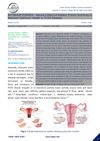
 This review discusses the role of Nutrease powder in managing hormonal disturbances in polycystic ovary syndrome and reports no new clinical results.
 October 2018 in “Springer eBooks”
 The document concludes that various hair disorders have different treatments, including medication, surgery, and addressing underlying causes.
 September 2002 in “Comprehensive Therapy”
 Primary care is key in managing PCOS, focusing on lifestyle changes and medications like birth control and metformin.
 9 citations
,
July 2009 in “Journal Of Endocrinology, Metabolism And Diabetes Of South Africa”
9 citations
,
July 2009 in “Journal Of Endocrinology, Metabolism And Diabetes Of South Africa” The document concludes that managing PCOS involves treating symptoms and reducing long-term metabolic risks, with lifestyle changes being important.
 48 citations
,
May 2012 in “Journal of Midwifery & Women's Health”
48 citations
,
May 2012 in “Journal of Midwifery & Women's Health” This review discusses the symptoms, diagnosis, and current treatment recommendations for polycystic ovary syndrome, noting that many women may remain undiagnosed and at risk for complications.
 23 citations
,
March 2009 in “Skin Pharmacology and Physiology”
23 citations
,
March 2009 in “Skin Pharmacology and Physiology” This study found significant hormonal differences, including elevated cortisol and androstenedione levels, in both male and female androgenic hair loss patients compared to controls, suggesting complex hormonal interactions in the condition.
 14 citations
,
September 2018 in “The journal of allergy and clinical immunology/Journal of allergy and clinical immunology/The journal of allergy and clinical immunology”
14 citations
,
September 2018 in “The journal of allergy and clinical immunology/Journal of allergy and clinical immunology/The journal of allergy and clinical immunology” In this study, a novel homozygous mutation in the STAT5B gene was identified in a 17-year-old boy with growth hormone-refractory growth failure, severe eczema, and autoimmune disease, suggesting a similarity to known STAT5B deficiency phenotypes.
 4 citations
,
April 2017 in “International journal of reproduction, contraception, obstetrics and gynecology”
4 citations
,
April 2017 in “International journal of reproduction, contraception, obstetrics and gynecology” This study found a 21-fold increased risk of metabolic syndrome associated with a higher waist-hip ratio in women with polycystic ovary syndrome, highlighting the need for focused management in obese patients.
 April 2026 in “JOJ Dermatology & Cosmetics”
 This review highlights that effective management of PCOS-related dermatological issues, such as hirsutism and acne, requires a multidisciplinary approach involving hormonal therapies, metabolic interventions, and lifestyle changes.
 April 2024 in “International Journal of Advanced Multidisciplinary Research and Studies”
 This study outlines a multidisciplinary approach to investigate primary amenorrhea, emphasizing the necessity to consider medical history, physical examination, and potential hormonal or anatomical causes, and recommends early referral in cases of chromosomal abnormalities or persistent amenorrhea following the development of secondary sexual characteristics.
 November 2004 in “John Wiley & Sons, Ltd eBooks”
 This chapter reviews polycystic ovary syndrome (PCOS), focusing on its definition, causes, and treatment approaches, but reports no new research findings.
 28 citations
,
October 1998 in “Baillière's clinical endocrinology and metabolism”
28 citations
,
October 1998 in “Baillière's clinical endocrinology and metabolism” This review examines age-related changes in androgen levels in women and explores the rationale for testosterone replacement therapy, but it reports no new clinical findings.
 September 2022 in “Journal of Contemporary medical practice”
 This study found that among women with polycystic ovarian disease, 72% experienced infertility, indicating a correlation between PCOD and difficulties in conceiving.
 April 2022 in “International Journal of Science and Research (IJSR)”
 This study found a correlation between polycystic ovarian disease and infertility among women, with 72% of participants experiencing difficulty conceiving.
 4809 citations
,
January 2004 in “Fertility and Sterility”
4809 citations
,
January 2004 in “Fertility and Sterility” This review discusses polycystic ovary syndrome, emphasizing its broad range of manifestations and associations with risks like type 2 diabetes and cardiovascular events, but reports no new clinical results.
 1514 citations
,
December 2011 in “Fertility and sterility”
1514 citations
,
December 2011 in “Fertility and sterility” This consensus report reviews current knowledge and identifies knowledge gaps concerning the various health aspects of polycystic ovary syndrome, without presenting new clinical findings.
 1265 citations
,
October 2013 in “The Journal of Clinical Endocrinology and Metabolism”
1265 citations
,
October 2013 in “The Journal of Clinical Endocrinology and Metabolism” This guideline from the Endocrine Society recommends using the Rotterdam criteria for diagnosing polycystic ovary syndrome and outlines first-line treatments, emphasizing hormonal contraceptives and lifestyle intervention.
 378 citations
,
November 2011 in “Human reproduction update”
378 citations
,
November 2011 in “Human reproduction update” This review discusses the epidemiology, causes, diagnosis, and management of hirsutism in women, noting that effective treatment requires addressing the root cause as well as the hair growth.
 305 citations
,
February 2007 in “Hormone and metabolic research”
305 citations
,
February 2007 in “Hormone and metabolic research” This review discusses the roles of androgens and estrogens in skin functions and disorders, and highlights the use of estrogen-progestin treatments and anti-androgens in managing hirsutism and acne, without reporting new results.
 254 citations
,
September 2014 in “Menopause”
254 citations
,
September 2014 in “Menopause” The NAMS 2014 recommendations guide healthcare providers on treating health issues in midlife women, emphasizing individualized care and informed decision-making.
 237 citations
,
January 2010 in “The Journal of Sexual Medicine”
237 citations
,
January 2010 in “The Journal of Sexual Medicine” The authors updated recommendations on diagnosing and treating women's sexual dysfunctions, emphasizing a comprehensive assessment approach, while noting the need for further multidisciplinary research.
 212 citations
,
May 2010 in “American Journal of Obstetrics and Gynecology”
212 citations
,
May 2010 in “American Journal of Obstetrics and Gynecology” This article suggests using only firm criteria to diagnose polycystic ovary syndrome in adolescents, due to the evolving nature of its features during this period.
 117 citations
,
May 2017 in “Human Reproduction Update”
117 citations
,
May 2017 in “Human Reproduction Update” This review examines the epidemiology, pathophysiology, diagnosis, and management strategies for non-classic congenital hyperplasia due to 21-hydroxylase deficiency, and provides evidence-based recommendations for its treatment and genetic counseling.
 105 citations
,
January 2009 in “Medicine”
105 citations
,
January 2009 in “Medicine” This study found that ethinylestradiol and high-dose cyproterone acetate significantly reduced hirsutism scores and were effective for treating acne and alopecia in women with hyperandrogenism.
 97 citations
,
July 2006 in “Dermatologic therapy”
97 citations
,
July 2006 in “Dermatologic therapy” This article reviews the diagnosis and treatment approaches for cutaneous manifestations of PCOS, reporting on various treatment options without presenting new clinical results.