11 citations
,
December 2013 in “International Journal of Dermatology” This study found that variations in the IL16 gene, specifically SNPs rs17875491 and rs11073001, may be associated with increased risk and phenotype expression of alopecia areata in the Korean population.
19 citations
,
July 2020 in “EBioMedicine” In this study, the researchers identified a variant in the CCHCR1 gene associated with an alopecia areata subtype characterized by impaired keratinization and autoimmune events.
 January 2024 in “Archives of Endocrinology and Metabolism”
 In this case report, a novel heterozygous mutation in the insulin receptor gene was identified in an adolescent girl with type A insulin resistance syndrome, characterized by excessive hair growth and skin changes, and her mother.
6 citations
,
June 2021 in “EClinicalMedicine” In this study, ALRV5XR significantly increased hair regrowth in women with androgenetic alopecia or telogen effluvium, with no adverse events reported.
 6 citations
,
July 2022 in “Journal of health economics and outcomes research”
6 citations
,
July 2022 in “Journal of health economics and outcomes research” This study found that US adolescents with alopecia areata, especially those with alopecia totalis or universalis, experience significantly higher healthcare costs and resource use compared to matched controls.
 1 citations
,
August 2011 in “Dermatology Reports”
1 citations
,
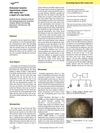
August 2011 in “Dermatology Reports” This case report describes a new family with autosomal recessive hypotrichosis simplex with woolly hair, suggesting the disorder may be underreported due to misdiagnosis.
8 citations
,
January 2011 in “International journal of trichology” This report discusses the accurate diagnosis of atrichia with papular lesions, emphasizing its distinction from alopecia universalis to prevent unnecessary steroid treatment, and presents a case matching APL diagnostic criteria.
January 2018 in “bioRxiv (Cold Spring Harbor Laboratory)” This study found that the mutant hairless rhino bald protein in mice interacts with the vitamin D receptor but cannot repress its transactivation and shows abnormal cellular localization.
 1 citations
,
November 2011 in “Journal of AIDS & Clinical Research”
1 citations
,
November 2011 in “Journal of AIDS & Clinical Research” Raltegravir may cause hair loss in some patients.
January 2008 in “HAL (Le Centre pour la Communication Scientifique Directe)” This study identified complex regulatory elements and interactions involving the Hr gene and HR protein that are crucial for hair follicle formation and cycling in mammals.
1 citations
,
January 2025 in “Archives of Dermatological Research” This study found that patients with alopecia areata had significantly higher serum IL-1R1 levels, IL-1R1 gene expression, and hsa-miR-19b-3p levels compared to healthy controls, suggesting these could serve as diagnostic and prognostic markers for the disease's severity.
 April 2020 in “International journal of research in dermatology”
 This case report presents an 8-year-old girl with congenital atrichia, marked by complete hair loss and papular lesions, linked to mutations in the human hairless gene.
January 2026 in “Scientific Reports” This study found that among pediatric patients with alopecia areata, elevated eosinophilic hematological ratios were observed, suggesting these could serve as markers for disease exacerbation and the pathophysiology of the condition.
 November 2025 in “Mendeley Data”
 This study observed that JAK inhibitor therapy may be safely administered to patients with alopecia areata and latent HBV or stable TB, without reactivation of these infections, when appropriate monitoring and prophylaxis are used.
 18 citations
,
April 2013 in “PLOS ONE”
18 citations
,
April 2013 in “PLOS ONE” This study found that in a mouse model, alopecia areata was associated with changes in heart structure, biochemistry, and gene expression linked to cardiac hypertrophy after ACTH exposure.
May 2025 in “CPT Pharmacometrics & Systems Pharmacology” This study examined the safety profile of ritlecitinib, a drug for alopecia areata, and found that it does not cause significant QTc prolongation or severe lymphopenia, with no unique safety risks expected in adolescents.
 January 2026 in “Frontiers in Bioscience-Landmark”
 This study reported that, in a laboratory setting, araliadiol derived from Centella asiatica activated antioxidant pathways, mitigating urban particulate matter-induced oxidative stress and skin damage.
 May 2008 in “Hair transplant forum international”
 This abstract provides no results, as it only notes Sharon Keene's professional role and describes a non-blood test for AGA genetics.
 1 citations
,
January 2022 in “Journal of Biosciences and Medicines”
1 citations
,
January 2022 in “Journal of Biosciences and Medicines” This review discusses the roles of androgens and androgen receptor in skin diseases like acne and hirsutism, and highlights the promise of antiandrogen drugs, reporting no new clinical findings.
 3 citations
,
March 2020 in “International Journal of Dermatology”
3 citations
,
March 2020 in “International Journal of Dermatology” This correspondence about the treatment of chronic alopecia areata with tildrakizumab reports no clinical results; the authors present an open-label pilot study setup.
 6 citations
,
November 2004 in “Bioorganic & Medicinal Chemistry Letters”
6 citations
,
November 2004 in “Bioorganic & Medicinal Chemistry Letters” This study found that arylhydantoin and arylthiohydantoin derivatives with hydroxybutyl or methyl side-chains showed superior androgen receptor binding affinity and may serve as promising radioiodinated AR ligands.
July 2025 in “Zenodo (CERN European Organization for Nuclear Research)” Ritlecitinib helps regrow hair in alopecia areata and is safe for long-term use.
66 citations
,
July 2010 in “Journal of Proteome Research” This study suggests that an immune response to trichohyalin and keratin 16 may contribute to the pathogenesis of alopecia areata.
 January 2014 in “IOSR journal of pharmacy”
 This case report identifies alopecia universalis as a probable adverse drug reaction to adalimumab in a patient with psoriasis and psoriatic arthritis.
July 1998 in “Annals of saudi medicine/Annals of Saudi medicine” This case report describes a misdiagnosed case of HAIR-AN syndrome with an unfortunate outcome, highlighting the challenges in distinguishing it from other hyperandrogenic conditions.
 April 2016 in “Journal of The American Academy of Dermatology”
 AGA patients have a lower quality of life than AA patients.
March 2026 in “Immunological Medicine” This review discusses the use of Janus kinase inhibitors for severe alopecia areata in Japan, noting their effectiveness in some patients but highlighting the need for new therapies due to non-responsiveness and relapse in others; it reports no new clinical results.
44 citations
,
December 2005 in “Journal of Investigative Dermatology” This study found significant associations between certain MICA variants and haplotypes with alopecia areata, suggesting MICA as a potential candidate gene linked to the disease's susceptibility and severity.
In this study, the researchers found no significant link between CAG repeat numbers in the androgen receptor gene and female pattern hair loss in a Chinese population.
July 2025 in “Zenodo (CERN European Organization for Nuclear Research)” Ritlecitinib helps regrow hair in alopecia areata and is safe for long-term use.