February 2017 in “Cancer Research” In this study involving women undergoing taxane-based chemotherapy, a twice-daily topical application of BPM31543 was well-tolerated and showed potential in reducing severe hair loss, prompting further investigation at higher doses.
69 citations
,
May 2002 in “Journal of Investigative Dermatology” This study suggests that congenital atrichia with papular lesions may be more common than previously thought and proposes diagnostic criteria including the observation of hypopigmented whitish streaks on the scalp.
 September 2024 in “Journal of the American Academy of Dermatology”
 In this study, a novel compound named AH-001 demonstrated effective androgen receptor protein degradation, reducing hair loss progression in a mouse model of androgenetic alopecia, with minimal systemic exposure and side effects, suggesting potential for safer treatment.

This study explored the molecular mechanisms by which Polygonum multiflorum may treat androgenic alopecia, suggesting it influences cell apoptosis and inflammation through specific pathways, with potential application value pending further testing.
3 citations
,
May 2025 in “Carbohydrate Polymers” In this study, researchers developed a dissolvable microneedle patch containing baricitinib for alopecia areata treatment, reporting significantly higher hair growth in mouse models compared to controls, suggesting its potential as an effective, pain-free topical therapy.
October 2023 in “Journal of Pakistan Association of Dermatologists” In this study, reflectance confocal microscopy was shown to provide early insights into sub-clinical treatment progress in patients with androgenetic alopecia, potentially offering advantages over global photography.
 April 2025 in “Pakistan Journal of Health Sciences”
 This study demonstrated that weekly azathioprine pulse therapy was more effective than betamethasone oral mini-pulse in promoting hair regrowth in patients with moderate to severe alopecia areata.
12 citations
,
June 2025 in “Gut Microbes” This study developed BroadAMP-GPT, a computational-experimental framework, to discover new antimicrobial peptides, identifying candidates effective against multidrug-resistant pathogens. Notably, AMP_S13 showed strong stability, low toxicity, and efficacy in infection models, highlighting the platform's potential in combating antimicrobial resistance.
April 2023 in “Journal of Investigative Dermatology” This study assessed an AI-based mobile app for evaluating androgenetic alopecia severity, finding that it achieved 94% accuracy compared to human dermatologists, while participants often underestimated their own hair loss severity.
October 2025 in “Clinical and Experimental Dermatology” Among patients with biopsy-proven FAPD in specialized hair clinics, this study found the condition is common in females around 52.5 years old, with treatment generally stabilizing or slightly improving hair loss, despite challenges in differentiating FAPD from androgenetic alopecia.
 April 2023 in “Journal of Investigative Dermatology”
 In this study, the KPAI and KP-IGA scoring systems for assessing keratosis pilaris showed excellent interrater and intrarater reliability, offering standardized measures for clinical and research use.
 January 2024 in “JEADV clinical practice”
 This study reported high patient satisfaction with multidisciplinary shared medical appointments for alopecia areata and frontal fibrosing alopecia, with participants appreciating the educational and supportive group environment.
 11 citations
,
June 2017 in “Journal of cell science”
11 citations
,
June 2017 in “Journal of cell science” In this study, researchers found that AGD1 is crucial for membrane recruitment during root hair development in Arabidopsis thaliana, with its pleckstrin homology domain essential for targeting specific plasma membrane regions.
August 2023 in “Zenodo (CERN European Organization for Nuclear Research)” This abstract discusses the non-invasive technique of scalp micropigmentation for hair loss, focusing on its cosmetic effects and customization options, and reports no new research findings.
 142 citations
,
March 2019 in “Frontiers in Cellular Neuroscience”
142 citations
,
March 2019 in “Frontiers in Cellular Neuroscience” This review discusses the development and potential therapeutic applications of adenosine receptor agonists and positive allosteric modulators, noting that while many clinical trials have been unsuccessful, initial results for new compounds are promising.
November 2025 in “Journal of Investigative Dermatology” AMP-303 injections can increase hair growth in androgenetic alopecia with minimal side effects.
 January 2024 in “Annals of Dermatology”
 This study found that DPCP immunotherapy effectively treats alopecia areata, identifying factors that influence treatment response and patient satisfaction, which may aid in standardizing the treatment for improved outcomes.
 July 2022 in “Biomedicines”
 This study found that 4-aminopyridine significantly enhanced skin wound healing by accelerating wound closure, improving skin architecture, and promoting hair follicle neogenesis and tissue regeneration.

This study found that inhibiting AP-1 activity in mice can induce lineage transdifferentiation between squamous and sebaceous tumors, suggesting AP-1's role in maintaining tumor cell identity.
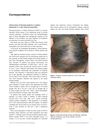
January 2025 in “Dermatology Online Journal” The man's hair loss and skin papules were diagnosed as atrichia with papular lesions, not alopecia areata universalis.
 13 citations
,
January 2018 in “International Journal of Dermatology”
13 citations
,
January 2018 in “International Journal of Dermatology” This clinical study on fibrosing alopecia in a pattern distribution among a Latin American population reports no new results but addresses this specific condition in its demographic context.
 May 2017 in “Journal of The American Academy of Dermatology”
 This phase 2 trial found that SM04554, a Wnt signaling modulator, was well-tolerated and increased follicle counts in males with androgenetic alopecia, suggesting potential for promoting hair growth.
 April 2026 in “Dermatology Practical & Conceptual”
 This study suggests that autologous micrograft technology may be more effective than finasteride in promoting hair growth in patients with androgenetic alopecia.
 1 citations
,
September 2022 in “Nepal journal of dermatology, venereology & leprology”
1 citations
,
September 2022 in “Nepal journal of dermatology, venereology & leprology” This review examines the use of apremilast for non-FDA-approved dermatological conditions, noting varied efficacy but a favorable safety profile compared to conventional treatments.
July 2026 in “Journal of the American Academy of Dermatology” This study observed that upadacitinib demonstrated significant efficacy and favorable safety for treating alopecia areata over 12 months in a real-world setting, with patients having an atopic background showing better early response; no serious adverse events were reported.
In a hair-growth mouse model, this study reported that the novel AR antagonist candidate 39, derived from structural optimization of 14-P1, achieved similar efficacy to pyrilutamide with faster response and maintained safety, demonstrating potent AR antagonism and favorable pharmacokinetics with lower systemic toxicity risk.
22 citations
,
September 2020 in “Journal of the American Academy of Dermatology” This study suggests that apremilast shows prolonged efficacy for up to 2 years in hidradenitis suppurativa patients who initially responded to the treatment, although further verification in a larger cohort is needed.

In this study, researchers optimized the soft drug AR antagonist 14-P1 to create candidate 39, which demonstrated effective AR antagonism and safety in a hair-growth mouse model, showing similar efficacy to pyrilutamide but with quicker onset and a lower risk of systemic toxicity.
 January 2023 in “Dermatologic Therapy”
 In this randomized controlled trial, the nutritional supplement PPT5 α was associated with increased terminal hair percentages and improved self-assessed hair parameters in women with early-stage androgenetic alopecia.
 June 2020 in “Journal of Investigative Dermatology”
 This study of photobiomodulation therapy devices for androgenetic alopecia found variable improvements in hair grade across different skin types and devices, suggesting a need for larger, more comprehensive trials.