 June 2026 in “HAL (Le Centre pour la Communication Scientifique Directe)”
 This infographic compares the safety profiles of SH‑1, a cosmetic ingredient, which showed no systemic absorption, and PP405, an investigational drug with dose-dependent systemic uptake and potential threshold breaches, highlighting differences in safety between cosmetic and investigational substances according to this report.
This study identified a 14,883 bp genomic deletion affecting the Plcd1 and Vill genes as likely responsible for the abnormal phenotype observed in snthr-1Bao mice.
 April 2017 in “Journal of Investigative Dermatology”
 This study found that retinoic acid and a retinol complex formulation showed different permeation and compound localization in a skin equivalent model, with unique lipid changes observed with only the retinol formulation.
June 2026 in “British Journal of Dermatology” This case study suggests that intense inflammation after photodynamic therapy may trigger or worsen fibrosing alopecia in susceptible individuals.
 September 2023 in “Journal of The American Academy of Dermatology”
 In this study, researchers evaluated how subjects perceive the effectiveness of three FDA-cleared photobiomodulation devices for home use in treating androgenetic alopecia, though specific outcomes or comparative effectiveness are not reported in the abstract.
July 2024 in “Journal of Investigative Dermatology” OR101 may effectively treat atopic dermatitis and similar skin conditions.
 2 citations
,
August 2022 in “Korean journal of medicinal crop science/Han-gug yagyong jagmul hag-hoeji”
2 citations
,
August 2022 in “Korean journal of medicinal crop science/Han-gug yagyong jagmul hag-hoeji” This study investigated the antioxidant and anti-inflammatory effects of the plant extract BLH308 and its potential to reduce hair loss, showing significant antioxidant activity in vitro.
January 2015 in “INDONESIAN JOURNAL OF PHARMACY” This study developed a simple HPLC method for accurately estimating tamsulosin and finasteride in pharmaceutical forms, demonstrating good precision and potential application in combined dosage analysis.
1 citations
,
November 2023 in “SKIN The Journal of Cutaneous Medicine” February 2004 in “European Urology Supplements”  April 2023 in “Journal of Investigative Dermatology”
 This study demonstrated that the Epidermal Biopotential Sensing System (EBSS) can measure digital biomarkers of pain in mice, suggesting potential applications in assessing pain and screening analgesics in populations with communication difficulties.
 November 2025 in “Clinical Cosmetic and Investigational Dermatology”
 LIPH mutations cause woolly hair in some Chinese people.
July 2014 in “European Journal of Cancer” p14ARF and p16Ink4a cause hair follicle stem cell aging and dysfunction.
July 2026 in “Journal of the American Academy of Dermatology” 513 citations
,
February 2022 in “Advanced Science” This study demonstrated that incorporating PDA@Ag nanoparticles into a cationic guar gum hydrogel significantly enhanced photothermal conversion efficiency, achieving superior antibacterial efficacy both in vitro and in vivo, advancing the potential of PDA as a photothermal antibacterial agent.
 1 citations
,
October 2025 in “Nano Research”
1 citations
,
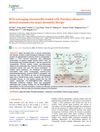
October 2025 in “Nano Research” In this study, researchers developed a dissolvable microneedle patch combining HA-TEMPO and Portulaca oleracea L.-derived nanoparticles, which effectively reduced oxidative stress and inflammation in an atopic dermatitis model while restoring immune balance, suggesting a promising treatment strategy.
January 2013 in “프로그램북(구 초록집)” July 2025 in “Journal of Investigative Dermatology” July 2008 in “Hair transplant forum international” This event overview highlights the dual focus on education and friendship among participants, but it reports no new research findings.
 September 2015 in “Dermatologic Surgery”
 In this study, the researchers developed a computer-aided imaging system to quantitatively measure baldness in Chinese women with female pattern hair loss, potentially improving the precision of severity evaluation compared to traditional scales.
July 2024 in “Journal of Investigative Dermatology” JW0061 may be a new treatment for hair loss by promoting hair growth through WNT signaling.
June 2015 in “The American journal of dermatopathology/American journal of dermatopathology” This study demonstrated that a 1-step, peroxidase-labeled conjugated antibody method provides more accurate immunoreactivity patterns in hair follicle substructures compared to the 2-step LSAB method, which may cause false-positive staining in sebaceous glands.
In this study, a newly designed protein degrader targeting androgen receptors showed promise in reversing hair regrowth inhibition in a mouse model of androgenetic alopecia, suggesting potential as a novel and safe treatment strategy.
 May 2024 in “FEBS open bio”
 In this study, testing Annurca apple extract on human follicle dermal papilla cells indicated its potential to prevent patterned hair loss by reducing oxidative stress and increasing factors involved in hair growth.
July 2024 in “Journal of Investigative Dermatology” ATR04-484 ointment shows promise for treating skin issues from cancer therapies.
 1 citations
,
September 2024 in “International Journal of Advanced Multidisciplinary Research and Studies”
1 citations
,
September 2024 in “International Journal of Advanced Multidisciplinary Research and Studies” This study observed that 100% of cancer patients at Dr. Moewardi Surakarta Hospital receiving carboplatin-paclitaxel chemotherapy experienced grade 2 alopecia as an adverse drug reaction.
34 citations
,
January 2016 in “Analytical Chemistry” This study reports that a new DART-HRMS method can effectively analyze intact hair for drug use timelines, with cocaine detection aligning with forensic standards and identifying multiple drugs from high-resolution data.
 January 2024 in “Dermatologic Surgery”
 This abstract pertains to a dermatology-related academic profile without reporting any specific study findings. Results or research details are not provided.
 July 2013 in “Journal of clinical & experimental dermatology research”
 This study found that prototype right heart circulatory assist devices significantly improved hemodynamics and reduced pulmonary vascular resistances in piglet models of acute hemodynamic shock.
 5 citations
,
December 2017 in “The Journal of Dermatology”
5 citations
,
December 2017 in “The Journal of Dermatology” This report describes a unique case of Schöpf–Schulz–Passarge syndrome in a Taiwanese man linked to a previously unreported homozygous WNT 10A mutation, underscoring its role in ectodermal dysplasia.