March 2008 in “The Knowledge Bank (The Ohio State University)” This study found that AR-007 degrades faster and has a stronger association with hsp70 than AR-014, suggesting it is less stable when bound to the androgen receptor.
3 citations
,
November 2022 in “Frontiers in Plant Science” This study found that microwave-assisted extraction significantly increased the yield of secondary metabolites, including phenolic and flavonoid content, from Nardostachys jatamansi, enhancing its anti-Alzheimer's potential compared to conventional extraction methods.
June 2025 in “Stem Cells and Cloning Advances and Applications” In this study, researchers demonstrated that their technology efficiently produces CFx-δ2 from stem cells and accelerates wound healing by enhancing fibroblast activity, reducing inflammation, and promoting blood vessel formation.
September 2025 in “Blood Advances” This study found that targeting androgen receptors with prostate cancer drugs ARN509 and finasteride induced remission and increased survival in a leukemia mouse model, suggesting a potential new treatment approach for acute myeloid leukemia.
November 2025 in “Medicina” This study found that patients with alopecia areata had a lower heart rate compared to healthy controls and showed disease-severity-related changes in body composition, though the clinical importance of these findings is still unclear.
 May 2023 in “Elsevier eBooks”
 This source outlines current research exploring CRISPR-Cas9, siRNA, miRNA, and tissue engineering as potential treatments for androgenetic alopecia, noting the need for further safety and efficacy studies before human application.
July 2024 in “Journal of Investigative Dermatology” This study found that in mice with alopecia areata, CD8+ T cells showed clonal expansion and specific regulatory networks, which might help identify new therapeutic targets for patients not responding to JAK inhibitors.
65 citations
,
September 2014 in “Orphanet Journal of Rare Diseases” This study identified mutations in the STUB1 gene linked to hereditary cerebellar ataxia with cognitive impairment, revealing potential effects on protein function and patient symptoms, including accelerated aging.
 February 2025 in “PubMed”
 In this study, researchers evaluated CS12192, a selective JAK3 inhibitor, in an alopecia areata mouse model and found it reversed hair growth inhibition comparably to baricitinib, with better safety and similar immune-modulating mechanisms.
 January 2024 in “Wiadomości Lekarskie”
 This review suggests that integrating artificial intelligence in diabetic foot management could significantly improve early diagnosis and wound healing by facilitating thermographic analysis and developing "smart dressings," though challenges in training, legal, and ethical aspects remain.
22 citations
,
November 2022 in “Materials & Design” This study found that using a combination of Alginate-TEMPO-oxidized cellulose nanofiber-α-tocopherol membranes and Pluronic-α-tocopherol hydrogels facilitated better wound healing in diabetic rats through enhanced angiogenesis and no observable toxicity compared to using each treatment individually.
 June 2026 in “International Journal of Molecular Sciences”
 This review synthesizes current evidence on the Warburg effect in anaplastic thyroid carcinoma and discusses potential therapeutic targets, but reports no new clinical results.
30 citations
,
June 2000 in “Journal of dermatological science” In this study, researchers found that keratinocytes are unlikely to be target cells for androgen, as shown by limited androgen receptor transcriptional activity in keratinocyte cells.
 August 2023 in “Stem Cell Research & Therapy”
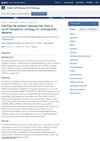
 This study found that cell-free fat extract (CEFFE) enhanced hair growth in mice with androgenetic alopecia by increasing hair follicle density and promoting proliferation while regulating the DHT/AR pathway.
February 2024 in “Cancers” This review highlights recent progress in developing androgen receptor degraders, such as PROTACs, for treating castration-resistant prostate cancer, and notes that several have entered phase I or II clinical trials, showcasing potential to address drug resistance challenges.
March 2026 in “Journal of Investigative Dermatology” This study found that GPT-4o demonstrated high concordance with in-person and image-based provider assessments in generating SALT scores for alopecia areata, suggesting its potential as an adjunct tool in clinical practice for automating these assessments.
September 2022 in “Zenodo (CERN European Organization for Nuclear Research)” This article discusses various methods, including Skincell Advanced and Mesoderm youth activator cream, for improving skin appearance and reducing signs of aging but reports no new research findings.
6 citations
,
November 2022 in “Antioxidants” In this study, sandalore was found to activate OR2AT4, which inhibits senescent cell traits and restores proliferation in human keratinocytes, suggesting potential anti-aging applications.
28 citations
,
October 2024 in “Advanced Materials” This study reports that a new artificial skin system using multi-layered hydrogels can promote scarless wound healing and regenerate appendages like hair follicles without cell transplantation.
 June 2026 in “Archives of Dermatological Research”
 In this study, the rs4541843 G > A variant was found to be significantly associated with increased risk and severity of alopecia areata, as well as elevated expression of hsa-miR-182-5p, suggesting their potential as molecular markers for diagnosis and severity assessment.
September 2023 in “British Journal of Dermatology” In this study, researchers found that patients with severe alopecia areata show varied regrowth timelines with baricitinib, and those with the most severe cases may still experience delayed but eventual improvement.
3 citations
,
March 2023 in “Cell Biology International” In this study, ASC-enriched autologous fat grafting was found to be more effective and satisfying than conventional fat grafting for treating facial contour deformities with hyperpigmentation.
 October 2018 in “bioRxiv (Cold Spring Harbor Laboratory)”
 This study investigated NNAT expression in embryonic and postnatal rat tissues, finding its localization in both undifferentiated and differentiated cells across tissues such as the pancreas, tongue, and testis.
28 citations
,
November 2004 in “Endocrinology” This study by Gao et al. reports that two nonsteroidal selective androgen receptor modulators, S1 and S4, demonstrated tissue-selective actions in rats, suppressing prostate growth while maintaining muscle growth without altering hormone levels.
 16 citations
,
January 2003 in “Nuclear Receptor Signaling”
16 citations
,
January 2003 in “Nuclear Receptor Signaling” Androgens and SARMs play a role in body mass, frailty, skin health, and hair growth, and are used in treating prostate cancer, acne, and hair loss, with potential for new uses and improved versions in the future.
 23 citations
,
December 2017 in “Scientific Reports”
23 citations
,
December 2017 in “Scientific Reports” This study found that the ARL15 gene affects adipocyte differentiation and adiponectin secretion, and suggests that ARL15 haploinsufficiency may predispose individuals to lipodystrophy.
 January 2020 in “bioRxiv (Cold Spring Harbor Laboratory)”
 This study identified novel genetic variants in APOE ε4 non-carriers associated with Alzheimer's disease age-of-onset, linking them to regulatory mechanisms like the unfolded protein response in the pathology of Alzheimer's and other degenerative diseases.
April 2011 in “The FASEB Journal” This research found that prolonged doses of Amlodipine at 5mg/kg BW or higher impaired fertility indicators in adult male rats, affecting sperm morphology, count, and motility.
December 2020 in “Ambiance in Life” This study found no correlation between lipid markers and androgenetic alopecia severity, but noted a potential link between lower HDL levels and more severe alopecia in women.
 1 citations
,
December 2022 in “Current Issues in Molecular Biology”
1 citations
,
December 2022 in “Current Issues in Molecular Biology” This study found that orally administered Annurca apple extract improved hair length, thickness, weight, and density in mice, while also increasing the expression of hair growth-related genes and proteins, suggesting potential as a natural treatment for hair loss.