 89 citations
,
February 1993 in “Journal of Medicinal Chemistry”
89 citations
,
February 1993 in “Journal of Medicinal Chemistry” This research article focuses on nonsteroidal inhibitors of human type I steroid 5-alpha-reductase but reports no new results.
79 citations
,
October 2003 in “PubMed” In this study, PKCepsilon transgenic mice showed increased TNFalpha shedding during skin tumor promotion, which may contribute to the development of metastatic squamous cell carcinoma.
78 citations
,
December 2008 in “The Journal of Sexual Medicine” This review highlights that sexual dysfunction associated with 5-alpha-reductase inhibitors is recognized in clinical literature, with erectile dysfunction being the most common adverse effect, followed by ejaculatory dysfunction and decreased libido.
 73 citations
,
January 1994 in “European Urology”
73 citations
,
January 1994 in “European Urology” This study found that finasteride significantly reduced serum dihydrotestosterone levels, confirming its efficacy as a 5a-reductase inhibitor, while Permixon showed no effect in healthy male volunteers.
 71 citations
,
November 2012 in “Expert Opinion on Drug Safety”
71 citations
,
November 2012 in “Expert Opinion on Drug Safety” This article reviews the reported sexual and psychological side effects of 5-alpha reductase inhibitors for benign prostatic hyperplasia, emphasizing the need for further clinical studies.
 70 citations
,
June 1993 in “Biochemistry”
70 citations
,
June 1993 in “Biochemistry” This study found that the binding of finasteride to the enzyme 5a-reductase occurs at a slower rate than previously assumed, complicating the estimation of its real inhibitory constant.
 67 citations
,
February 1997 in “Teratology”
67 citations
,
February 1997 in “Teratology” This study demonstrated that high oral doses of finasteride caused external genital abnormalities in male rhesus monkey fetuses, but intravenous doses did not lead to abnormalities.
 59 citations
,
September 1994 in “The Journal of Clinical Endocrinology and Metabolism”
59 citations
,
September 1994 in “The Journal of Clinical Endocrinology and Metabolism” This study found that 4 weeks of finasteride treatment significantly decreased DHT levels in bald scalp to levels similar to hair-containing scalp in men with male pattern baldness.
54 citations
,
November 1995 in “The Journal of Clinical Endocrinology & Metabolism” In this study, females with 5 alpha-reductase-2 deficiency exhibited decreased body hair, normal sebum production, and delayed menarche, suggesting a role for DHT in hair growth and menstrual function.
53 citations
,
May 1996 in “The Journal of Clinical Endocrinology & Metabolism” This study identified multiple mutations in the 5 alpha-reductase-2 gene among male pseudohermaphrodites in the Dominican Republic, suggesting they do not share a common ancestry.
51 citations
,
July 2013 in “Brain Research” Testosterone needs to be converted to DHT to reduce stress response in male rats.
47 citations
,
January 2003 in “Current opinion in urology” This review discusses recent advancements in understanding the use of 5 alpha-reductase inhibitors for benign prostatic hyperplasia, indicating that dual isoenzyme inhibitors like dutasteride may enhance treatment outcomes, but no new clinical results are presented.
 38 citations
,
October 2014 in “Current Opinion in Endocrinology, Diabetes and Obesity”
38 citations
,
October 2014 in “Current Opinion in Endocrinology, Diabetes and Obesity” This review discusses the clinical and molecular history of 5-alpha reductase deficiency, highlighting its role in male sexual differentiation and potential therapeutic applications, but reports no new research outcomes.
 37 citations
,
April 2008 in “The Cochrane library”
37 citations
,
April 2008 in “The Cochrane library” This study concluded that five-alpha-reductase inhibitors may reduce prostate cancer risk but could increase the risk of high-grade prostate cancer in men regularly screened for the disease.
 37 citations
,
January 1980 in “PubMed”
37 citations
,
January 1980 in “PubMed” This study found that topical hair lotions with 17 alpha-estradiol may reduce telogen hair loss in patients with androgenetic alopecia, though they did not lead to new hair regrowth.
 36 citations
,
November 2020 in “Journal of The European Academy of Dermatology and Venereology”
36 citations
,
November 2020 in “Journal of The European Academy of Dermatology and Venereology” This study found that 5-alpha-reductase inhibitors were associated with a reduced frequency of COVID-19 symptoms in males with androgenetic alopecia.
 35 citations
,
June 2018 in “Urology”
35 citations
,
June 2018 in “Urology” This study of FAERS data suggests that finasteride, particularly at the 1 mg dosage, is associated with a wide range of adverse effects not previously established in long-term studies, especially among younger men.
 35 citations
,
April 2013 in “Sexual medicine reviews”
35 citations
,
April 2013 in “Sexual medicine reviews” This review found that 5α-reductase inhibitors are associated with slightly increased rates of sexual dysfunction, gynecomastia, and mood disorders, but the true significance and persistence of these effects remain unclear.
 35 citations
,
January 2002 in “Dermatology”
35 citations
,
January 2002 in “Dermatology” This article discusses alopecia areata occurring during Interferon Alpha-2b/Ribavirin therapy and reports no new clinical results.
 34 citations
,
February 1992 in “The Journal of Clinical Endocrinology and Metabolism”
34 citations
,
February 1992 in “The Journal of Clinical Endocrinology and Metabolism” In this study, the combination of finasteride and minoxidil significantly increased hair growth in balding male stumptail macaques compared to each drug alone.
 33 citations
,
January 2016 in “Skin appendage disorders”
33 citations
,
January 2016 in “Skin appendage disorders” This review examines medical literature on postfinasteride syndrome and reports no new results; the authors call for more controlled studies on permanent sexual dysfunction and mood changes linked to 5-alpha-reductase inhibitors.
 33 citations
,
October 1994 in “The Journal of Clinical Endocrinology and Metabolism”
33 citations
,
October 1994 in “The Journal of Clinical Endocrinology and Metabolism” This study found that finasteride treatment significantly reduced hirsutism scores in women with idiopathic hirsutism over 6 months and was well tolerated.
32 citations
,
July 2016 in “PubMed” This review discusses the adverse events associated with 5-alpha reductase inhibitors, finding them generally well-tolerated but noting potential risks like sexual side effects and psychological effects in men, and sparse data on use in women.
 30 citations
,
August 1992 in “The Journal of Clinical Endocrinology and Metabolism”
30 citations
,
August 1992 in “The Journal of Clinical Endocrinology and Metabolism” This study found that lowering serum DHT levels with 5 mg finasteride daily did not significantly alter serum gonadotropin levels in healthy young men after 28 days.
 29 citations
,
July 2012 in “The Journal of Sexual Medicine”
29 citations
,
July 2012 in “The Journal of Sexual Medicine” In this study using a rat model, discontinuing dutasteride improved some relaxant responses but did not fully restore erectile function, indicating a potential time-dependent detriment of the drug.
 26 citations
,
August 2014 in “Genetic Testing and Molecular Biomarkers”
26 citations
,
August 2014 in “Genetic Testing and Molecular Biomarkers” This study suggests that the TNF-α system may contribute to hyperandrogenism, obesity, and insulin resistance in polycystic ovarian syndrome, independent of the C850T polymorphism.
 22 citations
,
August 2014 in “Clinical endocrinology”
22 citations
,
August 2014 in “Clinical endocrinology” This study suggests that the use of finasteride for benign prostate hyperplasia may increase the risk of osteoporosis diagnosis, particularly at higher doses.
 22 citations
,
January 2001 in “Chemical & Pharmaceutical Bulletin”
22 citations
,
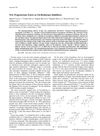
January 2001 in “Chemical & Pharmaceutical Bulletin” This study found that two new progesterone derivatives showed higher antiandrogenic effects and 5α-reductase inhibition than finasteride in hamsters, particularly reducing seminal vesicle weight and flank organ size.
 22 citations
,
September 1994 in “The Journal of Clinical Endocrinology and Metabolism”
22 citations
,
September 1994 in “The Journal of Clinical Endocrinology and Metabolism” This study found that three months of oral finasteride treatment significantly decreased dihydrotestosterone levels and hair growth in hirsute women without negatively affecting gonadotropin secretion.
21 citations
,
March 2018 in “JEADV. Journal of the European Academy of Dermatology and Venereology/Journal of the European Academy of Dermatology and Venereology” This review reported that 5-alpha-reductase inhibitors were effective in stabilizing disease progression or reducing the rate of progression in some cases of frontal fibrosing alopecia, though evidence on safety remains limited.