 March 2024 in “Journal of Natural Remedies”
 In this study, an 18-year-old boy with alopecia areata successfully experienced normal and healthy hair regrowth after 4 months using microneedling with cupping, alongside internal herbal medication and topical oil application, as a cost-effective and less invasive alternative to high-cost hair treatments and transplantation.
 February 2024 in “The Open dermatology journal”
 This systematic review reported that alopecia areata significantly impacts quality of life due to its psychological burdens, such as anxiety and depression, while emphasizing the need for increased awareness and support for affected individuals.
April 2023 in “The Medical Journal of Australia” In this case report, a five-year-old girl with a bald patch was diagnosed with congenital triangular alopecia, a localized non-scarring condition that typically remains unchanged and lacks effective treatment.
 March 2012 in “Journal of The American Academy of Dermatology”
 In this study, white females with Ludwig I female pattern hair loss had significantly higher hair density on the occipital scalp area, while Asian females had significantly thicker hair diameters in both frontal and occipital areas.
May 2025 in “Apollo Medicine” This study found that trichoscopy can be a helpful, noninvasive tool for identifying specific patterns that correlate with the clinical activity and severity of alopecia areata, enhancing its diagnosis and monitoring.
March 2025 in “NATIONS UNIVERSITY INTERNATIONAL JOURNAL OF MULTI-DISCIPLINARY STUDIES” This case report highlights that Baricitinib led to significant hair regrowth and resolution of atopic dermatitis symptoms in a 22-year-old female with coexisting autoimmune conditions.
 January 2023 in “International Journal of Homoeopathic Sciences”
 This case report describes a 14-year-old girl with alopecia areata who experienced hair restoration following homeopathic treatment aimed at balancing her immune system over a 6-month follow-up.
 72 citations
,
February 2011 in “The American Journal of Dermatopathology”
72 citations
,
February 2011 in “The American Journal of Dermatopathology” This study found that anti-TNF therapy-induced alopecia exhibits distinct clinical and histopathological features and can mimic psoriatic alopecia and alopecia areata, with some patients improving with topical treatment.
 60 citations
,
April 2018 in “Clinical, cosmetic and investigational dermatology”
60 citations
,
April 2018 in “Clinical, cosmetic and investigational dermatology” This review discusses the causes and diagnosis of traction alopecia, emphasizing education for high-risk populations as there is currently no cure, and presents no new clinical findings.
 45 citations
,
January 2010 in “International journal of trichology”
45 citations
,
January 2010 in “International journal of trichology” This review examines topical immunotherapy for severe alopecia areata, noting that diphencyprone and squaric acid dibutylester are non-mutagenic options with similar efficacy but different practical considerations, and reports no new clinical results.
 5 citations
,
April 2016 in “The American Journal of Dermatopathology”
5 citations
,
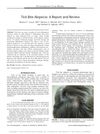
April 2016 in “The American Journal of Dermatopathology” This report describes a rare case of nonscarring alopecia linked to a tick bite on a 21-year-old male's scalp, with specific histological findings and proposed mechanisms.
 1 citations
,
February 2020 in “International Journal of Research in Dermatology”
1 citations
,
February 2020 in “International Journal of Research in Dermatology” This study describes the clinical profile of scalp alopecia areata among patients at a tertiary care hospital, finding it more common in males, particularly those aged 21-30, with sudden onset and often asymptomatic progression.
42 citations
,
March 2015 in “Anais Brasileiros de Dermatologia” This study reports two cases of alopecia associated with anti-TNF therapy, highlighting a new entity combining features of alopecia areata and psoriatic alopecia.
 32 citations
,
January 2014 in “Dermatology Research and Practice”
32 citations
,
January 2014 in “Dermatology Research and Practice” This study found that trichoscopy can rapidly and noninvasively diagnose tinea capitis and alopecia areata in pediatric patients by identifying specific hair patterns associated with each condition.
 3 citations
,
April 2021 in “Cureus”
3 citations
,
April 2021 in “Cureus” In this study, 62.7% of patients with alopecia areata had deficient vitamin D levels, yet there was no significant link between these levels and specific alopecia areata patterns.
 2 citations
,
August 2020 in “Journal of Cosmetic Dermatology”
2 citations
,
August 2020 in “Journal of Cosmetic Dermatology” This study found that in patients with alopecia areata, serum granulysin levels decreased significantly after treatment with tofacitinib and correlated with reduced disease severity, suggesting serum granulysin as an indicator of immunological activity and response to therapy.
 1 citations
,
July 2018 in “Elsevier eBooks”
1 citations
,
July 2018 in “Elsevier eBooks” This research focuses on alopecia areata, highlighting the psychological impact, especially of its variant alopecia areata incognita, and provides diagnostic and treatment tips, but does not report specific results.
 April 2026 in “Frontiers in Medicine”
 This case study reports a 26-year-old male with secondary syphilitic alopecia misdiagnosed as alopecia areata, likely contracted through non-penetrative sexual contact. Effective treatment with intramuscular benzathine penicillin G led to complete hair regrowth within three months.
 11 citations
,
October 2016 in “Pediatric dermatology”
11 citations
,
October 2016 in “Pediatric dermatology” This case study observed that three girls with alopecia experienced complete hair regrowth after avoiding balsam of Peru and related fragrances, suggesting contact allergy played a role in their hair loss.
 3 citations
,
December 2018 in “Journal of Pakistan Association of Dermatology”
3 citations
,
December 2018 in “Journal of Pakistan Association of Dermatology” This study found that patients with alopecia areata often presented with multilocular patches, common scalp involvement, and associated conditions like atopic dermatitis; the disease predominantly affected younger individuals.
 December 2025 in “Cureus”
 In this case report, a unique immunological mechanism was observed in an 11-year-old girl where the presence of one autoimmune disease appeared to prevent the manifestation of another, leading to the withdrawal of one type of lesion when another appeared.
 December 2016 in “Springer eBooks”
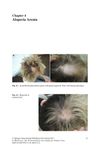
 A 45-year-old woman with autoimmune diseases experienced patchy hair loss due to alopecia areata, which has no cure but can be treated, with varying success.
 July 2013 in “Our Dermatology Online”
 In this study, minoxidil 2% solution was more effective than tacrolimus 0.1% ointment for promoting hair regrowth in mild to moderate patchy alopecia areata.
 July 2023 in “The Egyptian Journal of Hospital Medicine ”
 This review discusses the pathophysiology of alopecia areata, highlighting the role of CD8 cytotoxic T cells and the upregulation of JAK signaling pathways; it reports no new experimental results.
 148 citations
,
December 2018 in “Journal of autoimmunity”
148 citations
,
December 2018 in “Journal of autoimmunity” This review discusses genetic and environmental factors contributing to autoimmunity in alopecia areata and reports no new clinical findings, emphasizing the need for further study on its aetiology and pathophysiology.
63 citations
,
January 2006 in “Journal of cosmetic and laser therapy” This study found that pulsed infrared diode laser therapy (904 nm) was effective in promoting hair regrowth in 94% of patients with resistant patches of alopecia areata.
 49 citations
,
July 2009 in “Journal of the American Academy of Dermatology”
49 citations
,
July 2009 in “Journal of the American Academy of Dermatology” This report highlights two cases where patchy alopecia developed after mesotherapy for androgenetic alopecia, indicating potential risks associated with this treatment.
17 citations
,
August 2016 in “JEADV. Journal of the European Academy of Dermatology and Venereology/Journal of the European Academy of Dermatology and Venereology” This study reported that 45.5% of patients with beard alopecia areata progressed to scalp alopecia areata within at least 12 months, with most cases occurring during the first year.
 15 citations
,
February 2013 in “Journal of Clinical Medicine and Research”
15 citations
,
February 2013 in “Journal of Clinical Medicine and Research” The researchers reported that both cryotherapy and betamethasone lotion yielded similar improvement rates for alopecia areata patches, without complete recovery observed in any patient.
 15 citations
,
July 2002 in “Clinical and Experimental Dermatology”
15 citations
,
July 2002 in “Clinical and Experimental Dermatology” This review discusses the role of hair microscopy in diagnosing alopecia, stating that while it excludes diagnoses related to hair breakage, it only confirms nonspecific short anagen in alopecia cases.