 April 2023 in “IP Indian journal of clinical and experimental dermatology”
 This article reviews the pathogenesis, complications, and management of lichen planus, especially its persistent oral form, and highlights the need for further prospective studies.
 April 2026 in “International Journal of Homoeopathic Sciences”
 This case report highlights the role of mental symptoms in tailoring homoeopathic treatment for a 24-year-old male with alopecia barbae, a localized non-scarring hair loss condition affecting the beard, emphasizing the psychological component in its management.
 January 2026 in “International Journal of Applied Research”
 This review examines the potential role of homoeopathy in managing autoimmune diseases, focusing on evidence from recent case reports and studies. It discusses clinical outcomes in various conditions and explores possible immunomodulatory mechanisms associated with homoeopathic interventions.
 March 2026 in “International Journal of Homoeopathic Sciences”
 This narrative review reports preliminary evidence suggesting that an integrative homeopathic approach, combining constitutional treatment with topical mother tinctures, may aid in healing and reducing inflammatory acne lesions, though larger trials are needed to confirm these effects.
January 2025 in “Current Allergy and Asthma Reports”  1 citations
,
June 2024 in “BMC Oral Health”
1 citations
,
June 2024 in “BMC Oral Health” In this study, autologous platelet concentrates and topical steroids similarly reduced lesion size, Thongprasom scale, and pain in oral lichen planus patients, suggesting autologous platelet concentrates as a potential alternative treatment.
 August 2026 in “Zenodo (CERN European Organization for Nuclear Research)”
 In this case study, a 37-year-old woman with alopecia areata and associated endocrine disorders experienced significant improvement in hair regrowth, anxiety, and menstrual regularity following four months of individualized homeopathic treatment.
 January 2026 in “Journal of Case Reports and Scientific Images”
 This paper highlights the potential efficacy of constitutional homeopathic medicine, supplemented with dietary guidance and management of associated diseases like thyroid disorders, in treating alopecia areata to expedite recovery and reduce recurrence.
January 2026 in “International Journal of Homoeopathic Sciences” This study observed substantial improvements in scalp-hair coverage, symptom burden, and psychosocial functioning in 100 patients with alopecia areata treated with individualized homeopathic medicines, noting statistically significant reductions in SALT scores and improvements in AA-IGA categories over 18 months.
7 citations
,
July 2013 in “InTech eBooks” This article describes the various presentations of oral lichen planus and notes it often requires topical or systemic immunosuppressive treatment for associated discomfort, but it reports no new clinical results.
5 citations
,
July 2022 in “IBRO Neuroscience Reports” This study found that camphor and similar compounds depress neural activity in rat mechanoreceptors, suggesting that their effects may not be mediated through TRP channels.
 August 2026 in “Zenodo (CERN European Organization for Nuclear Research)”
 In this case study, a 37-year-old woman with alopecia areata, hypothyroidism, and PCOS showed significant improvement in hair regrowth, menstrual regularity, and anxiety reduction after four months of individualized homeopathic treatment with Pulsatilla, Fluoric acid, and Thuja occidentalis.
 June 2026 in “Indian Journal of Research in Homoeopathy”
 This case series evaluated the effects of individualised homoeopathic treatment on five patients with alopecia areata, finding clinical improvement and new hair growth in those treated with specific remedies like Phosphorus and Tuberculinum.
March 2024 in “INDIAN JOURNAL OF APPLIED RESEARCH” In this case report, the authors describe using Polarity Analysis for selecting homeopathic remedies to better match patient symptoms in treating alopecia areata, offering a potential alternative to corticosteroids, which are associated with significant side effects.
 April 2017 in “Journal of Investigative Dermatology”
 In this study, the novel isoprenylcysteine analog SIG-1451 was shown to inhibit pro-inflammatory cytokine release in various cell-based assays relevant to allergic dermatitis, acting on targets such as IL-4 and IL-6 with potential anti-inflammatory benefits.
3 citations
,
April 2019 in “Journal of Mind and Medical Sciences” This review discusses the application of photodynamic therapy for treating oral lichen planus and indicates its potential benefits, but it reports no new clinical results.
 July 2026 in “Journal of Homeopathy Studies”
 This study observed greater clinical improvement in patients with alopecia areata who received individualized homoeopathic constitutional treatment compared to those who received Acid Phos, but further research with objective measures is needed to confirm these findings.
 October 2021 in “International Journal of Homoeopathic Sciences”
 This article discusses the increasing incidence of polycystic ovarian syndrome due to lifestyle changes and stress, noting its impact on female infertility, but provides no new clinical findings.
December 2025 in “Zenodo (CERN European Organization for Nuclear Research)” This case study reported marked improvement in hair loss symptoms for a 30-year-old woman using Ayurvedic leech therapy (Jalaukavacharana), highlighting its potential as a gentle and minimally invasive alternative to conventional alopecia treatments.
 22 citations
,
March 2019 in “European Journal of Ophthalmology”
22 citations
,
March 2019 in “European Journal of Ophthalmology” This study found that switching patients with glaucoma or ocular hypertension from benzalkonium chloride-latanoprost to preservative-free latanoprost maintained intraocular pressure control and improved tolerability, potentially enhancing treatment adherence and quality of life.
April 2025 in “OPAL (Open@LaTrobe) (La Trobe University)” In this study, Platycladus orientalis leaf extract loaded into hyaluronic acid microneedles was found to promote hair follicle growth by enhancing the environment for hair cell proliferation and activating repair pathways, suggesting potential as a treatment for androgenic alopecia.
 December 2023 in “PubMed”
 This study highlights that homemade topical herbal preparations, although popular for their perceived safety, may lead to allergic reactions, notably with Mediterranean herbs, and advises cautious use, particularly for allergy-prone individuals.
 3 citations
,
June 2022 in “Dermatology and therapy”
3 citations
,
June 2022 in “Dermatology and therapy” This case report found that a novel botanical treatment halted disease progression and promoted hair regrowth in four patients with lichen planopilaris, indicating potential for use as a safe alternative therapy.
January 2010 in “USFEU Scientific Library (Ural State Forest Engineering University)” This study developed a grooved microneedle platform enabling precise transdermal delivery of triamcinolone acetonide for alopecia areata, achieving accurate dosing by controlling groove position and drug concentration.
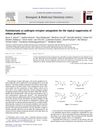 5 citations
,
September 2011 in “Bioorganic & Medicinal Chemistry Letters”
5 citations
,
September 2011 in “Bioorganic & Medicinal Chemistry Letters” This study identified pantolactam based compounds as effective topical antagonists of the androgen receptor, reducing sebum components in a hamster model.
 May 2026 in “International Journal of Homoeopathic Sciences”
 This study found that individualized homeopathic medicine can significantly improve outcomes in patients with alopecia areata, including complete hair regrowth and reduced SALT scores within 5 to 12 months, without relapse, and shows promise for alopecia universalis through targeted miasmatic and constitutional remedies.
 10 citations
,
October 1993 in “Archives of dermatological research”
10 citations
,
October 1993 in “Archives of dermatological research” The researchers reported that the antipsoriatic compounds 1,25-dihydroxy-vitamin D3 and calcipotriol thinned the living cell compartment in organotypic ORS cultures by accelerating the differentiation pathway rather than affecting proliferation.
 January 2024 in “Wiadomości Lekarskie”
 This study found that administering steroids alongside cochlear implantation using Skarżyński's six-step method helped preserve residual hearing in patients, with a higher hearing preservation rate observed in those receiving steroids compared to those without.
January 2025 in “African Journal of Biomedical Research” This abstract discusses the holistic approach of homeopathy to treating alopecia, emphasizing individualized care by considering a person's unique physical, emotional, and mental characteristics, but does not report specific study results.
 April 2026 in “Biomedicines”
 This study introduces a novel holistic treatment approach for keloid that combines systemic therapies, including Traditional Chinese Medicine, with local interventions to target the inflammatory microenvironment and keloid predisposition for improved management and prevention of recurrence.