 13 citations
,
November 2012 in “Journal of The European Academy of Dermatology and Venereology”
13 citations
,
November 2012 in “Journal of The European Academy of Dermatology and Venereology” This study found that topical clobetasol propionate cream provided a modest improvement in hair regrowth for alopecia areata patients, though those with atopy had higher relapse rates after treatment completion.

This article discusses the broad traditional uses and potential pharmaceutical applications of burdock, recommending the development of new products but reporting no experimental findings.
 1 citations
,
October 2025 in “Nano Research”
1 citations
,
October 2025 in “Nano Research” In this study, researchers developed a dissolvable microneedle patch combining HA-TEMPO and Portulaca oleracea L.-derived nanoparticles, which effectively reduced oxidative stress and inflammation in an atopic dermatitis model while restoring immune balance, suggesting a promising treatment strategy.
 19 citations
,
November 2011
19 citations
,
November 2011 This review discusses the topical use of systemic drugs for cutaneous disorders and reports a lack of strong evidence from randomized controlled trials, highlighting the need for larger comparative effectiveness studies.
68 citations
,
January 2008 in “Clinics in dermatology” This article reviews the principles and practices of Siddha medicine, discussing its traditional treatments for various skin and systemic diseases, but reports no new clinical results.
January 2011 in “Repository KITopen (Karlsruhe Institute of Technology)” This study suggests that contact sensitizers may treat alopecia areata by expanding suppressor cells and interfering with antigen presentation to lymphocytes.
 November 2023 in “The actual problems in dentistry”
 This review of 48 scientific sources identifies various treatment methods, including drug and non-drug approaches, for oral lichen planus, highlighting side effects and emphasizing the need for more effective and personalized treatments due to existing contraindications, especially in severe cases.
 April 2025 in “International Journal of Homoeopathic Sciences”
 In this study, a 17-year-old male with a recurring pilonidal sinus improved within two months after receiving homeopathic treatment with Silicea and Echinacea mother tincture, suggesting a potential role for homeopathy in managing such surgical cases.
August 2025 in “JOURNAL OF EXPERIMENTAL ZOOLOGY INDIA” This study reported that a spray containing Origanum marjoram essential oil significantly improved hair regrowth, dermal thickness, weight, and lymphocyte levels in rabbits with cyclophosphamide-induced alopecia, suggesting its potential as a natural alternative for hair loss treatment.
 5 citations
,
January 2021 in “Journal of The American Academy of Dermatology”
5 citations
,
January 2021 in “Journal of The American Academy of Dermatology” This article reflects on the history and significance of the FDA's approval of topical minoxidil for treating androgenetic alopecia in men and women, dating back to 1988 and 1991 respectively.
 October 2023 in “International journal of research in Ayurveda and pharmacy”
 This review found that the ingredients of Keedari thailam, a traditional Siddha formulation used for alopecia areata, exhibit antimicrobial, anti-inflammatory, and other pharmacological activities, suggesting potential therapeutic benefits according to recent research and Siddha literature.
July 2026 in “International Journal of Homoeopathic Sciences” This case study of a 9-year-old girl with alopecia areata reported that her homoeopathic treatment using Lycopodium clavatum led to reduced hair loss, halted formation of new patches, regrowth progression, scalp stabilization, and emotional improvement over a long-term follow-up.
 January 2024 in “International Journal of Homoeopathic Sciences”
 This abstract outlines the issue of hair loss caused by various factors, including stress and autoimmune disorders like alopecia areata, which results in spot baldness, but does not provide specific study results.
March 2026 in “Journal of Ayurveda and Integrative Medicine” This study found that the Sonowal Kachari tribe in Assam, India, utilizes 39 plant species for medicinal purposes, with leaves being the most commonly used part, highlighting the tribe's substantial traditional knowledge of herbal medicine.
 8 citations
,
January 2005 in “Acta Oto-Laryngologica”
8 citations
,
January 2005 in “Acta Oto-Laryngologica” This case study reports that ciclosporin effectively managed symptoms in a patient with steroid-dependent sudden sensorineural hearing loss, allowing discontinuation of corticosteroids and confirming remission through audiometry.
 January 2024 in “Sanjeevani Darshan National Journal of Ayurveda & Yoga”
 This study aims to evaluate the efficacy of a treatment approach called Sthanika Chikitsa, involving Shiro Lepa and specific herbal and nasal preparations, for managing Indralupta, a condition akin to Alopecia Areata characterized by hair loss. Results are not provided in the abstract.

This article critiques the dosages recommended by Dr. Orentreich for alopecia treatment, suggesting higher initial dosages of prednisone and intralesional steroids may be more effective based on the author's experiences.
In this study conducted at a tertiary care hospital's dermatology department, researchers reported frequent prescription errors and incomplete information, such as missing drug routes and usage, with significant instances of polypharmacy and potential drug interactions, emphasizing the need for improved rational drug usage practices.
1 citations
,
October 2017 in “Allergology International” March 2026 in “Plant Science Today” This study investigated the pharmacognostic characteristics of Adenostemma lavenia leaves, identifying key diagnostic features and confirming the presence of major phytoconstituents such as alkaloids and flavonoids, to help standardize this traditional medicinal herb.
 6 citations
,
January 2012 in “Indian Journal of Endocrinology and Metabolism”
6 citations
,
January 2012 in “Indian Journal of Endocrinology and Metabolism” Old drugs are often used for new, different medical purposes in endocrine pharmacology.
 146 citations
,
July 2003 in “Journal of the American Academy of Dermatology”
146 citations
,
July 2003 in “Journal of the American Academy of Dermatology” In this study, clobetasol propionate 0.05% ointment was found to induce hair regrowth in 28.5% of patients with severe alopecia areata under occlusive conditions, though long-term benefit was limited to 17.8%.
 July 2025 in “International Journal of Ayurveda and Pharma Research”
 This study reported that a month-long treatment using the Ayurvedic methods of leech therapy, herbal paste application, and rejuvenative medications resulted in visible improvement in scalp condition and hair density for a 32-year-old female with androgenetic alopecia.
1 citations
,
January 2014 in “Turkish Journal of Ophthalmology” This case report highlights a rare side effect of prostaglandin analogues, detailing prostaglandin-associated periorbitopathy in three glaucoma patients treated with bimatoprost and travoprost.
 April 2024 in “Skin health and disease”
 In this pilot study, participants with lymphocytic primary cicatricial alopecia who applied 6% topical gabapentin solution twice daily for 12 weeks experienced significant symptom reduction, though there was no noticeable change in nerve fibre density or neuropeptide expression.
2 citations
,
June 1953 in “Journal of the American Medical Association” This article explores the correlation between alopecia leprotica and Buddhist customs, presenting evidence that leprosy is contracted during infancy or childhood rather than in maturity; it reports no new clinical findings.
 1 citations
,
March 2024 in “Skin health and disease”
1 citations
,
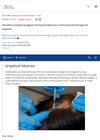
March 2024 in “Skin health and disease” This study found that vibration assisted analgesia reduced pain during intralesional corticosteroid therapy for hair loss, enabling treatment in a broader range of patients, including those with needle phobia.
April 2025 in “Digital Commons - East Tennessee State University (East Tennessee State University)” In a mice model of atopic dermatitis, this study reported that a formulated cromolyn sodium oleate gel significantly reduced scab size and provided better healing than dexamethasone, with fewer adverse effects.
 May 2026 in “International Journal of Homoeopathic Sciences”
 This article explores the use of homeopathy in aesthetic medicine, discussing various remedies like Silicea 30 and Arnica 30 for conditions such as wrinkles and acne, and highlighting their holistic approach targeting underlying causes without reported side effects.
 January 2025 in “Journal of Case Reports and Scientific Images”
 In this case study, an 8-year-old girl with alopecia areata showed hair regrowth in patches following homeopathic treatment, suggesting a positive response to this therapeutic approach.