July 2024 in “Journal of Investigative Dermatology” Alopecia areata causes negative emotions and stress due to hair loss and emotional triggers.
 May 2015 in “Journal of The American Academy of Dermatology”
 Both azathioprine and betamethasone treatments help with hair regrowth in alopecia areata, but azathioprine may have fewer side effects.
 July 2018 in “British Journal of Dermatology”
 Mindfulness reduces anxiety and depression in skin disease patients; dermatologists and psychiatrists often lack confidence in treating psychodermatological conditions.
2 citations
,
January 2022 in “BioMed Research International” This study suggests that Gujian oral liquid may reduce osteoarthritis symptoms by regulating inflammation and catabolism through the TNF-α/NF-kappa B signaling pathway, as confirmed by both in vivo and in vitro experiments.
November 2025 in “Contribuciones a las Ciencias Sociales” This study reported that a patient with androgenetic alopecia experienced significant improvements in hair density, thickness, and vitality using non-pharmacological approaches such as dietary adjustments, exercise, and supplementary treatments like low-level laser therapy and microneedling, suggesting these may be effective alternative management strategies.
 8 citations
,
February 2022 in “Scientific Reports”
8 citations
,
February 2022 in “Scientific Reports” This study suggests that 20 vital medicinal herbs may exert therapeutic effects on alopecia by regulating specific target genes and proteins, offering insights into their novel mechanisms distinct from conventional drugs.
 January 2022 in “Journal of Skin and Stem Cell”
 This review discusses trichodynia, its potential causes, and treatment options, but reports no new clinical findings.
 4 citations
,
January 2019 in “Dermatology Online Journal”
4 citations
,
January 2019 in “Dermatology Online Journal” This article discusses the potential of low-dose naltrexone as an adjuvant therapy for trichodynia in alopecias, noting its anti-inflammatory properties and need for further research.
1 citations
,
September 2024 in “Benha Journal of Applied Sciences” This review provides an overview of androgenetic alopecia, detailing its causes, diagnostic methods, and current treatments, noting that combination therapies show promise but newer options like cell-based treatments require more research.
April 2016 in “The journal of investigative dermatology/Journal of investigative dermatology” This study found that applying topical 6% gabapentin twice daily reduced disease activity and scalp pruritus in a patient with lymphocytic cicatricial alopecia, with no adverse effects reported.
 25 citations
,
January 2015 in “Advances in Psychosomatic Medicine”
25 citations
,
January 2015 in “Advances in Psychosomatic Medicine” This review discusses common psychodermatologic conditions and provides practical diagnostic and therapeutic recommendations but reports no new results; the authors emphasize the challenge of treating patients who lack insight into their psychiatric symptoms.
 December 2023 in “Journal of family medicine and primary care”
 This study focused on understanding the psychosocial impact of androgenetic alopecia in Saudi Arabia to potentially improve treatment strategies for hair loss by incorporating stress-coping methods and new therapeutic approaches.
 14 citations
,
February 2017 in “Anais brasileiros de dermatologia/Anais Brasileiros de Dermatologia”
14 citations
,
February 2017 in “Anais brasileiros de dermatologia/Anais Brasileiros de Dermatologia” This case report described a 12-year-old girl initially misdiagnosed with alopecia areata who showed improvement in trichotillomania symptoms after treatment with psychotropic drugs and N-acetylcysteine, highlighting the need for more research to develop standardized treatment guidelines for this chronic condition.
August 2025 in “JOURNAL OF EXPERIMENTAL ZOOLOGY INDIA” This study reported that a spray containing Origanum marjoram essential oil significantly improved hair regrowth, dermal thickness, weight, and lymphocyte levels in rabbits with cyclophosphamide-induced alopecia, suggesting its potential as a natural alternative for hair loss treatment.
 January 2022 in “Journal of Cutaneous and Aesthetic Surgery”
 Using truncal anesthesia on the supraorbital nerve reduces pain in hair loss treatments and improves patient comfort.
 5 citations
,
June 2015 in “British Journal of Dermatology”
5 citations
,
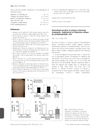
June 2015 in “British Journal of Dermatology” This article discusses the role of lysophosphatidic acid-induced histamine release in generalized pruritus among patients with primary sclerosing cholangitis and reports no new clinical results.
 2 citations
,
January 2022 in “Journal of the American Academy of Dermatology”
2 citations
,
January 2022 in “Journal of the American Academy of Dermatology” This article discusses the use of virtual reality as a sensory distraction technique during intradermal injections for hair loss treatment and reports no new clinical results.
49 citations
,
May 2020 in “The Scientific World JOURNAL” This position paper from the Italian Mesotherapy Society discusses the application of intradermal therapy based on scientific evidence, highlighting its potential benefits for certain localized conditions, although it acknowledges the lack of randomized clinical trials for some uses.
 August 2023 in “International journal of research and review”
 This article discusses how androgenic alopecia, commonly known as pattern hair loss, can have significant psychological effects on both men and women, and it highlights homeopathy as a treatment option that considers both psychological and pathological impacts.
 10 citations
,
December 2005 in “Aktuelle Dermatologie”
10 citations
,
December 2005 in “Aktuelle Dermatologie” This study reported that after 7.5 months of treatment, topical Alfatradiol significantly increased anagen hair rates in women and men with androgenetic alopecia, with minimal side effects.
 April 2023 in “Journal of Investigative Dermatology”
 In this study, a new emulsion containing CBD and ginger root extract significantly reduced symptoms of dry and eczema-prone skin, such as erythema and itching, in a clinical trial.
22 citations
,
March 1999 in “International Journal of Clinical Practice” This review discusses the use of topical immunotherapy for severe alopecia areata and resistant viral warts, highlighting diphencyprone's advantages and the need for careful handling to avoid staff sensitisation; it reports no new clinical results.
 June 2023 in “Buletin de psihiatrie integrativă”
 This research highlights that alopecia, while not physically harmful, significantly impacts individuals' mental health due to its effects on self-image, and suggests a management strategy that includes psychological counseling alongside dermatological treatment to address these challenges.
August 2026 in “JDDG Journal der Deutschen Dermatologischen Gesellschaft” This source presents key guidelines for Alopecia areata treatment, recommending topical steroids and limited systemic treatments, and emphasizes the importance of hair replacement options, particularly advising against most systemic therapies in children and adolescents.
 November 2017 in “Dermatologic Therapy”
 This study reports that a new topical solution, AB-102, containing a high concentration of a weak α1 agonist, significantly reduces hair shedding during brushing by up to 77% without causing cardiac or hemodynamic adverse events.
6 citations
,
December 2016 in “Journal of Obsessive-Compulsive and Related Disorders” This study found that adults with trichotillomania did not show differences in pain tolerance or exhibit analgesia to cold pressor pain compared to healthy controls.
August 2026 in “Pakistan Journal of Pharmaceutical Sciences” In rats with cyclophosphamide-induced hair loss, this study found that applying cetirizine HCl-loaded emulgel with microneedling stimulated hair growth, suggesting a potentially safer alternative to minoxidil for treating chemotherapy-induced alopecia.
 17 citations
,
May 2016 in “Journal of Psychosomatic Research”
17 citations
,
May 2016 in “Journal of Psychosomatic Research” This study observed that in patients with androgenetic alopecia, illness perception was linked to higher psychological distress and lower quality of life compared to those with alopecia areata.
January 2011 in “Repository KITopen (Karlsruhe Institute of Technology)” This study suggests that contact sensitizers may treat alopecia areata by expanding suppressor cells and interfering with antigen presentation to lymphocytes.
 15 citations
,
June 2019 in “Journal of Neuroendocrinology”
15 citations
,
June 2019 in “Journal of Neuroendocrinology” This study found that isoallopregnanolone reduced stress-induced tic-like behaviors and sensorimotor gating deficits in a mouse model of Tourette syndrome, suggesting potential therapeutic properties comparable to existing treatments like haloperidol and finasteride.