 19 citations
,
January 2011 in “Clinics”
19 citations
,
January 2011 in “Clinics” This article reviews alopecia areata incognita, a rare condition mostly seen in young women, and discusses its similarities and differences with telogen effluvium; however, it reports no new clinical findings.
 May 2023 in “Clinical and Experimental Dermatology”
 Alopecia areata has a high chance of persisting and relapsing, with a significant risk of total hair loss, especially if it starts in childhood.
 July 2026 in “Frontiers in Pediatrics”
 In this case study, an 11-year-old girl with severe alopecia areata experienced complete hair regrowth and unexpected white-to-black hair repigmentation after switching from baricitinib to ritlecitinib, suggesting that prolonged Janus kinase inhibition may aid both hair and pigment restoration in severe pediatric cases.
11 citations
,
May 1985 in “Archives of Dermatology” This study found that calcitriol-resistant rickets is associated with alopecia in children and should be considered in the differential diagnosis of hair loss.
12 citations
,
March 2012 in “JEADV. Journal of the European Academy of Dermatology and Venereology/Journal of the European Academy of Dermatology and Venereology” This study observed that some patients with homozygous c.736T>A mutation in LIPH may have mild hypotrichosis with long hairs in adulthood.
 August 2024 in “Clinical Cosmetic and Investigational Dermatology”
 In this case report, a nine-year-old child with vitiligo and alopecia areata was successfully treated with upadacitinib and UVB, resulting in a significant reduction in the affected areas, suggesting a promising treatment approach for similar pediatric cases.
11 citations
,
November 2019 in “The FASEB Journal” In this study, a missense mutation in the MAP2 gene was found to be associated with reduced hair follicle density, leading to the hairless phenotype in pigs.
1 citations
,
September 2020 in “Journal of dermatology” This study identified a novel mutation and confirmed a previous mutation in the LIPH gene in a woman with autosomal recessive woolly hair, expanding the mutation spectrum for this condition.
 July 2025 in “Health Sciences”
 In this case study, researchers described a 7-year-old girl with non-scarring alopecia marked by unique clinical features, likely due to congenital triangular alopecia, and planned a hair follicle transplant to enhance her quality of life.
114 citations
,
June 2000 in “Endocrinology” In this study, the researchers found that alopecia in VDR null mice is likely due to issues with hair cycle initiation rather than defects in keratinocyte proliferation or differentiation.
 21 citations
,
November 2009 in “Dermatologic Clinics”
21 citations
,
November 2009 in “Dermatologic Clinics” This review discusses hair abnormalities in various epidermolysis bullosa subtypes and reports no new clinical findings.
23 citations
,
December 2013 in “Journal of Investigative Dermatology Symposium Proceedings” This study highlights rapid advances in alopecia areata treatment following the identification of genetic variants associated with increased disease risk, suggesting potential for precision medicine approaches.
 11 citations
,
February 1989 in “Journal of veterinary medicine. Series A”
11 citations
,
February 1989 in “Journal of veterinary medicine. Series A” This study observed that congenital hypotrichosis in crossbred cattle is linked to short, curly, dilute-color hair, potentially due to color dilution mutants in European breeds.
January 2026 in “Journal of Dermatology Research and Therapy” This case series found that topical janus kinase inhibitors, along with oral fexofenadine and vitamin D supplementation, significantly reduced disease severity in Black pediatric patients with alopecia areata, demonstrating substantial hair regrowth and minimal adverse side effects.
11 citations
,
October 1941 in “Experimental Biology and Medicine” PABA helps prevent gray hair and hair loss in mice.
1 citations
,
July 2021 in “International Journal of Cosmetics and Dermatology” In this study, 26.66% of vitiligo patients had a familial occurrence, indicating that genetic variations significantly contribute to the disease's etiology.
 10 citations
,
March 2015 in “Journal of dermatology”
10 citations
,
March 2015 in “Journal of dermatology” This case report describes a 12-year-old boy with severe skin scaling due to novel compound heterozygous null truncation mutations in the TGM1 gene, resulting in loss of transglutaminase 1 activity.
23 citations
,
September 1957 in “Archives of Dermatology” This study investigated alkaline phosphatase activity in scalp biopsies from patients with alopecia areata and totalis, but provides no new conclusive clinical results.
August 2024 in “International Journal of Women’s Dermatology” This study characterizes alopecia in ARCI, highlighting its prevalence among patients with severe forms and revealing new associated trichoscopic features.
40 citations
,
December 2010 in “Human Genetics” 87 citations
,
March 2017 in “Journal of Clinical Investigation” In this study, researchers identified PSENEN mutations that can lead to a form of Dowling-Degos disease, characterized by follicular hyperkeratosis and an increased susceptibility to acne inversa, especially in the presence of certain trigger factors.
 21 citations
,
January 2005 in “Pediatric Dermatology”
21 citations
,
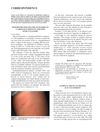
January 2005 in “Pediatric Dermatology” An 8-year-old girl with vitiligo developed extra hair growth on her knee after using tacrolimus ointment.
28 citations
,
October 2017 in “Journal of the American Academy of Dermatology” Pediatric alopecia areata is rare, affecting more girls than boys, and peaks at ages 9-12.
 2 citations
,
December 2018 in “Journal of cosmetic dermatology”
2 citations
,
December 2018 in “Journal of cosmetic dermatology” This study observed a significant increase in cellular retinol-binding protein-1 expression in lesional skin of patients with alopecia areata compared to healthy controls, suggesting its potential role in the disease's pathogenesis.
 16 citations
,
March 2005 in “Journal of The American Academy of Dermatology”
16 citations
,
March 2005 in “Journal of The American Academy of Dermatology” This report describes a case of Birt-Hogg-Dube syndrome with manifestations including multiple fibrofolliculomas, acrochordons, and renal oncocytoma.
61 citations
,
April 1980 in “Journal of the American Academy of Dermatology” This case study describes a young woman with a unique syndrome combining lamellar ichthyosis, neuroectodermal and mesodermal defects, and hair with trichoschisis and low sulfur content.
 6 citations
,
February 2019 in “JAAD case reports”
6 citations
,
February 2019 in “JAAD case reports” This case report suggests acitretin as a potential treatment for pseudoainhum, following the successful resolution of the condition in a patient with palmoplantar keratoderma and congenital alopecia.
 1 citations
,
July 2015 in “British Journal of Dermatology”
1 citations
,
July 2015 in “British Journal of Dermatology” Imiquimod improved skin pigmentation in most patients with xeroderma pigmentosum and may prevent further skin cancer, but some treatments can have side effects.
12 citations
,
March 2004 in “Journal of Investigative Dermatology”