October 2022 in “Journal of pharmaceutical negative results” This study found that patients with Alopecia areata in Iraq had significantly higher levels of CD4+, CD39+, and FOXP3+ Treg cells in their blood compared to healthy controls.
 16 citations
,
July 2000 in “Dermatologic surgery”
16 citations
,
July 2000 in “Dermatologic surgery” This paper contains author contact information and disclosures without reporting new research findings or results.
September 2026 in “Advanced Materials Technologies” In a mouse model study, researchers developed a methacrylated hyaluronic acid-based hydrogel microneedle patch co-loaded with finasteride and a carbon monoxide-releasing molecule for androgenetic alopecia, which showed better hair regrowth and safety compared to traditional treatments, offering an innovative approach with minimized systemic side effects.
25 citations
,
December 2013 in “Journal of Investigative Dermatology Symposium Proceedings” In this study, researchers developed a new humanized mouse model for alopecia areata that highlights the role of specific immune cells and may aid in discovering new treatments for the disease.
July 2024 in “Journal of Investigative Dermatology” The Fas/FasL pathway may play a role in alopecia areata.
November 2025 in “Annals of Dermatology” This study found a strong positive correlation between alopecia areata burden and the Socio-Demographic Index, indicating a disproportionate impact on high-income countries, especially affecting young adults and females.
 May 2026 in “Zenodo (CERN European Organization for Nuclear Research)”
 This study developed a new triamcinolone acetonide serum combined with a microneedling device, showing promise for treating alopecia areata by targeting hair follicles in a less invasive, patient-friendly way with confirmed drug solubility, compatibility, and safety.
54 citations
,
December 2011 in “American Journal Of Pathology” This study found that immune-mediated destruction of bulge stem cells is a key factor in the alopecia observed in AE mice, suggesting it as a model for studying primary cicatricial alopecias, particularly lichen planopilaris.
 8 citations
,
October 2019 in “Immunological investigations”
8 citations
,
October 2019 in “Immunological investigations” This study suggests that the rs2075876 variant in the AIRE gene may significantly increase susceptibility to alopecia areata in the examined male population.
August 2025 in “OPAL (Open@LaTrobe) (La Trobe University)” This study demonstrates that machine learning-assisted fabrication of PRP-incorporated microneedles effectively promotes hair regrowth in AGA mice, outperforming minoxidil and mitigating biosafety risks associated with synthetic materials.
 29 citations
,
November 2012 in “Journal of The European Academy of Dermatology and Venereology”
29 citations
,
November 2012 in “Journal of The European Academy of Dermatology and Venereology” This review discusses the development of an algorithmic guideline for treating androgenetic alopecia in Asian patients, using the BASP classification to address limitations of previous guidelines, and reports no clinical results.
 February 2020 in “Our Dermatology Online”
 A synthetic drug and a South American herb may help treat alopecia areata in Chinese men.
1 citations
,
January 2020 in “IRIS UNIMORE (University of Modena and Reggio Emilia)” This study found that Aminexil clinical 5 significantly reduced hair loss in men and women with mild alopecia and was well tolerated with high subject satisfaction.
 1 citations
,
June 2018 in “International Journal of Dermatology”
1 citations
,
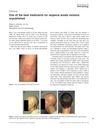
June 2018 in “International Journal of Dermatology” DNCB is highly effective for treating alopecia areata with minimal long-term side effects.
12 citations
,
November 2023 in “Medicine” This study used bibliometric analysis to evaluate global research on AI applications in dermatology, identifying 406 relevant papers and highlighting current priorities such as machine learning for wound progression, AI in teledermatology, and applications for skin diseases.
2 citations
,
February 2025 in “Journal of Nanobiotechnology” In this study, metal-organic frameworks modified with stearic acid were used to deliver cardamonin to hair follicles, significantly promoting hair growth and cell proliferation in testosterone-challenged mice, suggesting potential benefits for androgenic alopecia treatment.

This study identified CD28 as a potential drug target in treating alopecia areata by linking immune signaling pathways to local inflammation, highlighting belatacept as a promising treatment option due to minimal adverse effects and providing insights into autoimmune target discovery.
August 2021 in “The journal of investigative dermatology/Journal of investigative dermatology” This article reviews current treatments for alopecia areata, discussing the potential role of JAK inhibitors and noting the need for further clinical trials, but it reports no new results.
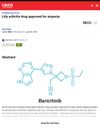 June 2022 in “C&EN global enterprise”
 This source notes that Olumiant (baricitinib), a rheumatoid arthritis drug by Eli Lilly and Company, has been approved as the first systemic treatment for severe alopecia areata.
33 citations
,
September 2020 in “Current Rheumatology Reports” This review discusses the emerging role of AMT in fibrosis and suggests that targeting AMT could offer a novel approach to treatment; it reports no new clinical results.
 June 2025 in “International Journal of Research and Review”
 This review concluded that Unani medicine offers a promising holistic approach to managing androgenetic alopecia by focusing on humoral balance and follicular rejuvenation, but further scientific validation is needed for widespread clinical use.
February 2025 in “Canadian Journal of Health Technologies” This review assessed the clinical and cost-effectiveness of baricitinib, an oral treatment for severe alopecia areata in adults, to inform Canadian reimbursement recommendations, excluding Quebec.
March 2026 in “Skin Appendage Disorders” This study identified CD28, GZMB, and CD1C as key immune regulators in alopecia areata, highlighting CD28 as a potential therapeutic target with a promising safety profile, using a proteome-anchored multi-omics approach to uncover actionable targets for this autoimmune hair-loss disorder.
24 citations
,
January 2023 in “Cancer Research” This study suggests that activating AMPK to phosphorylate ZDHHC13 may enhance MC1R function and reduce melanoma risk in individuals with red hair.
July 2017 in “OPAL (Open@LaTrobe) (La Trobe University)” In this study, researchers investigated the role of the ATX-LPA axis in asthma pathogenesis using human and mouse models and highlighted the potential for developing new ATX inhibitors as effective asthma treatments.
 3 citations
,
August 2021 in “Journal of Investigative Dermatology”
3 citations
,
August 2021 in “Journal of Investigative Dermatology” Baricitinib was more effective than a placebo in regrowing hair in adults with alopecia areata after 36 weeks.
174 citations
,
July 2003 in “The Journal of Clinical Endocrinology & Metabolism” This study investigated genetic and phenotypic characteristics of androgen insensitivity syndrome in individuals with a 46,XY karyotype, documenting a range from complete to partial insensitivity.
129 citations
,
January 2004 in “Journal of medicinal chemistry” This study synthesized nonsteroidal ligands as second-generation androgen receptor agonists and identified three compounds with significant anabolic activity and moderate to minimal androgenic activity in vivo.
26 citations
,
May 2020 in “JCI Insight” In this study, single-cell sequencing revealed clonal expansions of CD4+ and CD8+ T cells in murine and human alopecia areata, supporting the development of predictive models for human disease.
309 citations
,
June 2001 in “Molecular and Cellular Endocrinology” Mutations in the androgen receptor gene cause androgen insensitivity, leading to female traits in genetically male individuals.