2 citations
,
December 1994 in “International Journal of Cosmetic Science” In this study, the combination of biologically engineered hyaluronic acid and polyquaternium-10 improved hyaluronic acid's retention and moisturizing effects on hair by forming a stable complex that increased binding affinity to keratin.
3 citations
,
November 2020 in “Dermatologic Therapy” This study found that intralesional triamcinolone acetonide was more effective than saline for hair regrowth in scalp alopecia areata, with 10 mg/mL showing the best response but more side effects.
This study found that the methanolic heartwood extract of Avicennia marina significantly inhibited the enzyme 5 alpha-reductase type 1 in a cell-based assay, suggesting potential anti-androgenic effects for treating androgenic alopecia.
 November 2025 in “SKIN The Journal of Cutaneous Medicine”
 In this phase 3 trial, baricitinib showed effectiveness and safety in both adolescents and adults with severe alopecia areata, with adolescents achieving higher response rates despite more severe baseline conditions, suggesting the advantages of early treatment.
2 citations
,
March 2025 in “Journal of Translational Autoimmunity” This study reports that AhR pathway expression is significantly reduced in lymphocytes of alopecia areata patients, suggesting its potential as a diagnostic marker and therapeutic target.
 August 2016 in “The journal of investigative dermatology/Journal of investigative dermatology”
 This article discusses how activating the hexosamine pathway may enhance skin homeostasis by increasing hyaluronic acid secretion and supporting hair follicle stem cell self-renewal, but reports no new results.
7 citations
,
August 2020 in “Majalah Farmasetika” This review concluded that a herbal hair tonic formulated with 2.5% green tea leaf extract, in combination with specific solvents and additives, showed the best properties for stimulating hair growth.
 4 citations
,
December 2012 in “Human Biology”
4 citations
,
December 2012 in “Human Biology” In this study, researchers found that two dominant haplotypes in the EDA2R/AR intergenic region have likely been shaped by demographic changes and selection during human evolution, particularly notable in African and non-African populations.
 1 citations
,
September 2019 in “Steroids”
1 citations
,
September 2019 in “Steroids” In this study, genetic testing confirmed the diagnosis of Androgen insensitivity syndrome in most CAIS patients in Tunisia and identified two previously unreported mutations in the androgen receptor gene.
September 2026 in “Angewandte Chemie International Edition” In this study, SEU-302, a newly synthesized covalent organic framework, demonstrated potent photodynamic antibacterial effects, showing effective elimination of Staphylococcus aureus, wound healing promotion, and inflammation reduction both in vitro and in vivo, highlighting its therapeutic promise against bacterial infections.
 5 citations
,
June 2023 in “Engineering Technology & Applied Science Research”
5 citations
,
June 2023 in “Engineering Technology & Applied Science Research” This study developed a new neural network model (AA-GAN-AB-MTEDeep) to enhance Alopecia Areata classification using synthetic scalp images, achieving an accuracy of 96.94%.
9 citations
,
April 2023 in “Experimental Dermatology” This study found that adding allergen immunotherapy to conventional treatment may reduce relapse-related hair loss in house dust mite-allergic alopecia areata patients over a 3-year period.
5 citations
,
January 2019 in “Research journal of pharmacy and technology” In this study, a hair tonic formulated from a 10% water fraction of Angiopteris evecta extract was reported to be stable and promote hair growth in rabbits, showing equal or greater efficacy compared to a synthetic minoxidil control, while being safe and non-irritating.
60 citations
,
December 2003 in “Journal of Investigative Dermatology” This study found that keratin 6hf, a type II keratin, is expressed in specific regions of mouse and human hair and suggests potential interactions with keratin 17, impacting hair development and associated disorders.

In this study, the researchers used a human hair follicle model to demonstrate that T cell stimulation can induce an alopecia areata–like phenotype, with cell proliferation and immune privilege collapse; however, the DHODH inhibitor farudodstat partially mitigated these effects by reducing T cell proliferation.
 April 2018 in “Journal of Investigative Dermatology”
 This study found that the absence of Hes1 in hair follicles delays secondary hair germ activation and shortens the anagen phase, impacting HFSC self-renewal and long-term hair regeneration.
 January 2014 in “International Journal of Trichology”
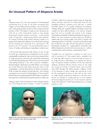
 A man had an unusual type of hair loss that didn't match known patterns and didn't improve with treatment.
183 citations
,
July 2000 in “American Journal of Botany” In this study, wild-type Arabidopsis thaliana demonstrated increased phosphorus acquisition and growth compared to root hair mutants under low-phosphorus conditions.
 10 citations
,
August 2011 in “Clinics”
10 citations
,
August 2011 in “Clinics” This article presents a dissenting opinion, arguing that the case described by Dr. Molina et al. was diffuse alopecia areata, not acute alopecia areata as claimed, emphasizing the importance of distinct clinical differences.
In this study, researchers found that crude extracts from Avicennia marina and its component avicequinone C inhibit mechanisms contributing to androgenic alopecia in vitro, including 5α-reductase activity and DHT-AR interactions, potentially promoting hair growth and delaying the catagen phase in human dermal papilla cells.
 1 citations
,
June 2023 in “Dermatology and therapy”
1 citations
,
June 2023 in “Dermatology and therapy” This study found that patients with alopecia areata had a higher incidence rate of herpes simplex infection compared to matched individuals without the condition.
May 2025 in “OPAL (Open@LaTrobe) (La Trobe University)” This study revealed that tofacitinib may inhibit CD8+ T cell infiltration in alopecia areata by modulating the linoleic acid metabolism-Mg2+ pathway, providing new insights for potential treatments and diagnosis.
5 citations
,
June 2024 in “Experimental Dermatology” This study found that elevated beta-hydroxybutyrate levels may worsen the inflammatory immune response in alopecia areata patients and could indicate a poor prognosis with chronic hair loss.
 August 2018 in “Journal of Investigative Dermatology”
 This study found that the application of polyunsaturated fatty acids, particularly arachidonic acid, promoted hair growth and anagen induction in both human dermal papilla cells and mouse models.
 2 citations
,
June 2000 in “Journal of The American Academy of Dermatology”
2 citations
,
June 2000 in “Journal of The American Academy of Dermatology” In this study, researchers found that heterozygous carriers of a mutation in the hairless gene showed no difference in the pattern of androgenetic alopecia compared to unaffected individuals.
 19 citations
,
May 2014 in “Molecules”
19 citations
,
May 2014 in “Molecules” This study found that the methanolic heartwood extract of Avicennia marina significantly inhibits 5α-reductase type 1, reducing 5α-DHT production by 52% in a cell-based assay with human hair dermal papilla cells.
 December 2025 in “Universal library of medical and health sciences.”
 This study analyzes contemporary theories and practices to understand key factors influencing the development of the examined phenomenon, proposing trends and practical applications for researchers and practitioners, while acknowledging study limitations and suggesting future research directions.
 December 2023 in “JEADV Clinical Practice”
 In this report, a young Caucasian woman developed a hairy tongue as an unusual side effect during baricitinib therapy for severe alopecia areata, which was managed by daily toothbrush debridement.
1 citations
,
November 2025 in “International Journal of Dermatology” This study developed the Alopecia Areata Children's Quality of Life Index (AAcQLI) to assess quality of life in children with alopecia areata, demonstrating good reliability and validity in initial tests.
July 2020 in “Benha Journal of Applied Sciences” This study found that young male patients with grade III and IV androgenetic alopecia had elevated levels of serum amyloid A3, suggesting a higher risk of developing atherosclerosis compared to those without the condition.