 22 citations
,
January 2021 in “Pharmacognosy Journal”
22 citations
,
January 2021 in “Pharmacognosy Journal” This review discusses the traditional uses, phytochemical, and pharmacological studies on Ageratum conyzoides, Tridax procumbens, and Bidens pilosa, emphasizing the need for further clinical research into their medicinal potential, but it does not report new results.
 August 2025 in “Current Botany”
 This study suggests that Acrotrema arnottianum, a herb used in traditional medicine, contains biologically active metabolites like squalene and α-Tocopherol. It showed antibacterial effects against Staphylococcus aureus and antifungal properties against Candida albicans, while demonstrating antioxidant activity.
 July 2024 in “Science and Culture”
 This comprehensive review reports that Thuja orientalis L. displays several pharmacological properties, including antimicrobial, anti-inflammatory, antioxidant, anticarcinogenic, anthelminthic, and hair growth-promoting effects, emphasizing its potential in modern medicine and the need for further research.
 January 2024 in “Editora In Vivo eBooks”
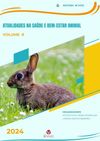
 This case report documents a dog with dermatophytosis, caused by the fungus Microsporum canis, presenting symptoms like alopecia in the neck and ear, highlighting the condition's prevalence in tropical and temperate climates and its zoonotic nature.
5 citations
,
August 2021 in “Journal of Ethnobiology and Ethnomedicine” This study found that the population of Smilax aristolochiifolia in the Poblano Totonacapan region of Mexico has decreased over the past 50 years, mainly due to land-use changes and herbicide use.
 1 citations
,
May 2023 in “Jurnal Farmasi Galenika (Galenika Journal of Pharmacy) (e-Journal)”
1 citations
,
May 2023 in “Jurnal Farmasi Galenika (Galenika Journal of Pharmacy) (e-Journal)” This study explored the traditional use of 18 plant-based remedies by the Amarasi people in Indonesia for treating dandruff and hair loss, detailing plant types, parts used, and processing methods, highlighting their potential as anti-dandruff and anti-baldness treatments.
This study reported that acupuncture combined with topical Aloe vera and celery gel reduced hair loss from alopecia androgenetica after 28 days of treatment.
4 citations
,
January 2024 in “Environmental Research” In this study, the authors reported that Sargassum wightii seaweed-based biostimulants improved soil quality and enhanced rice plant growth and yield by ameliorating acid soil effects, boosting antioxidant enzyme activity, and facilitating nitrogen uptake, photosynthesis, and water use efficiency.
 2 citations
,
April 2022 in “Revista Eletrônica Acervo Médico”
2 citations
,
April 2022 in “Revista Eletrônica Acervo Médico” This review discusses various alternative treatments for androgenetic alopecia, including pharmacological, surgical, and herbal therapies, without presenting new clinical findings.
 2 citations
,
July 1996 in “Hair transplant forum international”
2 citations
,
July 1996 in “Hair transplant forum international” This article discusses ideal techniques for harvesting donor tissue in hair restoration surgery but reports no new clinical results.
44 citations
,
January 2023 in “New Phytologist” This study found that low temperature triggers root hair elongation in Arabidopsis thaliana through a FERONIA-ROP2-TORC signaling pathway, also activated by nitrogen deficiency.
 July 2024 in “International Journal of Pharmaceutical Sciences and Medicine”
 This review highlights that Nyctanthes arbor-tristis contains numerous phytochemicals and has traditional uses for various conditions. It also reports pharmacological activities, suggesting potential benefits for diabetes, cancer, inflammation, and more.
November 2024 in “DELOS Desarrollo Local Sostenible” In this study, researchers observed that Thunbergia grandiflora and Russelia equisetiformis exhibited mutual aid by altering their phenotypic characteristics to facilitate intertwining, suggesting a form of solidarity without apparent external threats.
 April 2025 in “Journal of Advanced Pharmaceutical Technology amp Research”
 In this study, researchers reported that a combination treatment of Morinda citrifolia fruit extract and Averrhoa bilimbi leaf extract at specific concentrations significantly increased hair growth and weight in rabbits compared to controls, suggesting a potential anti-hair loss effect.
November 2001 in “CRC Press eBooks” This article discusses the potential for transplanting follicles from the occiput of the scalp in AGA patients, noting that these hairs tend to remain terminal and non-miniaturized for life.
2 citations
,
November 2012 in “Archimer (Ifremer)” This study found that progression ads are more persuasive for individuals with a weak fresh start mindset, whereas before/after ads are more effective for those with a strong fresh start mindset.
57 citations
,
May 2021 in “Molecules” This review explores the chemical composition and biological activities of essential oils from selected aromatic roots, highlighting their potential for various industries, though more research is needed to standardize their bioactive components.
7 citations
,
August 2025 in “Plants” This review highlights the role of plant-derived organic selenium compounds, noting their high bioavailability and low toxicity, and provides a comprehensive overview of selenium's uptake in plants and metabolism in humans, offering a theoretical basis for future nutritional research.
5 citations
,
January 2025 in “Pharmaceuticals” This review highlights the potential of Coffea arabica as an active ingredient in skincare, noting its bioactive compounds from leaves and beans show promising anticellulite, anti-inflammatory, antioxidant, and anti-aging properties, with unique phenolic concentrations in leaves offering enhanced skin benefits.
4 citations
,
August 2025 in “Molecules” This study highlights the potential of medicinal plants like Rubus vulgaris and Plantago major as sources for skin disorder treatments due to their bioactive compounds' antioxidant, anti-inflammatory, and antimicrobial effects.
 1 citations
,
October 2022 in “Journal of food and nutrition research”
1 citations
,
October 2022 in “Journal of food and nutrition research” This review investigates the potential benefits of cinnamon supplementation alongside lifestyle changes for managing obesity and polycystic ovary syndrome, but it reports no new clinical results.
 May 2025 in “FUDMA Journal of Sciences”
 In a study of shea butter producers in Oyo State, Nigeria, researchers found most producers were women with significant experience, and shea butter provided 26.4% of basic needs. They also reported an 81% annual return, highlighting its profitability despite gender roles influencing production dynamics.
 April 2022 in “Molecules”
 This study identified two potent 5α-reductase inhibitors from Tectona grandis leaves, and suggests that ethanol is a preferable solvent for extracting these compounds, which are potential ingredients for hair loss treatments.
1 citations
,
January 2015 in “MOspace Institutional Repository (University of Missouri)” This study found that applying 120L ha-1 yr-1 of SCD Probiotics to soil significantly increased soil microbial biomass and enzyme activity compared to lower doses and control, but showed no impact on auxin production.
 47 citations
,
August 2016 in “Fitoterapia”
47 citations
,
August 2016 in “Fitoterapia” This article reviews mechanisms by which herbal ingredients may stimulate or inhibit hair growth, and it reports no new clinical findings while suggesting potential for developing hair loss treatments.
28 citations
,
March 2018 in “Scientia Horticulturae” This study found that 3-indolebutyric acid (IBA) increased root-hair growth in trifoliate orange by elevating auxin levels, while 2-naphthoxyacetic acid (2-NOA) had the opposite effect, inhibiting root-hair growth.
7 citations
,
January 2023 This survey documented 114 species of medicinal plants on an Indian college campus, highlighting their potential therapeutic uses and emphasizing the need for conservation to prevent endangerment.
 March 2026 in “Editora Pasteur eBooks”
 This chapter provides a comprehensive review of androgenetic alopecia, covering its key physiological mechanisms, diagnostic methods, and a variety of treatment options ranging from topical therapies to aesthetic and regenerative procedures, emphasizing recent advances observed in dermatological practice.

This study found that teak leaf extract can be effective in promoting hair growth in males with androgenic alopecia; however, significant variability in steroid 5-alpha reductase inhibitory activity among samples from different geographic origins means quality control is important for consistent therapeutic potential.
 June 2025 in “International Journal of Computational Intelligence Systems”
 This study introduces a novel computational model using fuzzy logic and multi-criteria decision-making techniques to create a triage system for androgenetic alopecia management, stratifying patients into seven severity levels and aiding in resource allocation and treatment planning.