August 2023 in “Voprosy dermatologii i venerologii/Dermatologiâ ža̋ne veneralogiâ ma̋selelerì” This review discusses the characteristics and treatment options for abscessing undermining folliculitis and Hoffman's perifolliculitis, concluding that isotretinoin is currently the most effective treatment but reports no new clinical results.
 5 citations
,
October 2020 in “Brain Research Bulletin”
5 citations
,
October 2020 in “Brain Research Bulletin” This study found that etifoxine pretreatment reduced neuroinflammation and improved cognitive function in LPS-induced neuroinflammation in mice, potentially through increased neurosteroid synthesis and reduced apoptosis.
 5 citations
,
February 2013 in “Journal of Liquid Chromatography & Related Technologies”
5 citations
,
February 2013 in “Journal of Liquid Chromatography & Related Technologies” This study developed and validated a micellar electrokinetic chromatography method to determine finasteride stability, finding that the drug degrades under acidic, basic, and oxidative stress conditions.
June 2025 in “British Journal of Dermatology” This study introduces ALUDWIG, an automated tool for assessing female androgenic alopecia severity from smartphone images, which may offer a more consistent alternative to current scoring methods like the Ludwig scale.
January 2023 in “Zenodo (CERN European Organization for Nuclear Research)” This abstract discusses the FitSpresso weight loss supplement's potential benefits and mechanisms but provides no clinical research findings; it reports on its ingredients and consumer ratings instead.
 September 2004 in “Hair transplant forum international”
 This article summarizes a meeting of the American Board of Hair Restoration Surgery's Board of Directors to discuss future plans, but does not report new experimental results.
 17 citations
,
September 2013 in “The International Journal of Neuropsychopharmacology”
17 citations
,
September 2013 in “The International Journal of Neuropsychopharmacology” This study found that neonatal finasteride treatment in male rats altered hippocampal GABAA receptor subunit expression and led to increased anxiety-like behavior in response to progesterone in adulthood.
 June 2018 in “International Review of Intellectual Property and Competition Law”
  31 citations
,
April 2010 in “British journal of dermatology/British journal of dermatology, Supplement”
31 citations
,
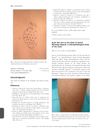
April 2010 in “British journal of dermatology/British journal of dermatology, Supplement” This report describes two patients with frontal fibrosing alopecia who developed acute hair loss on their limbs, revealing that the limb alopecia had similar histological features to scalp alopecia.
July 2026 in “Cosmoderma” This study highlights that alopecia areata, an autoimmune condition often starting in childhood, poses a higher risk of becoming chronic with an early onset and can result in poor therapy response.
 23 citations
,
July 2003 in “Pharmacology, Biochemistry and Behavior”
23 citations
,
July 2003 in “Pharmacology, Biochemistry and Behavior” Finasteride blocks progesterone's effect on absence seizures in rats.
 3 citations
,
February 2021 in “Molecules”
3 citations
,
February 2021 in “Molecules” In this study, researchers developed a sensitive assay to measure the inhibition of steroid 5-α reductase (5AR) by chemicals like finasteride and dutasteride, revealing species-specific differences in inhibitor efficacy between human and fish cell lines.
 7 citations
,
March 2021 in “Journal of the American Academy of Dermatology”
7 citations
,
March 2021 in “Journal of the American Academy of Dermatology” This study observed that some children and young adults with alopecia areata experienced flares during long-term tofacitinib treatment, despite initial successful hair regrowth.
 22 citations
,
November 2011 in “Journal of Analytical Toxicology”
22 citations
,
November 2011 in “Journal of Analytical Toxicology” This review discusses the relevance of human androgen receptor action in sports doping and examines the potential of cell-based biological assays for detecting androgenic anabolic steroid use, without presenting new research findings.
5 citations
,
February 1981 in “Experientia” In this study, a new hairless gene in the Donryu rat strain was identified, showing skin similarities to human skin tumors with multiple follicular cysts.
 1 citations
,
June 2022 in “International Journal of Dermatology”
1 citations
,
June 2022 in “International Journal of Dermatology” FFA in men shows unique features and treatment results vary widely.
 February 2014 in “Plastic and Reconstructive Surgery”
 This abstract provides no new research findings; it appears to be text related to the American Society of Plastic Surgeons' educational resources.
 November 2022 in “The journal of investigative dermatology/Journal of investigative dermatology”
 This study found that STRIP1 and the STRIPAK complex play a key role in regulating F-actin and cell-cell junctions, which are essential for maintaining the epidermal barrier in mouse skin.
 3 citations
,
November 2017 in “International Journal of Pharmacy and Pharmaceutical Sciences”
3 citations
,
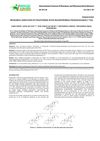
November 2017 in “International Journal of Pharmacy and Pharmaceutical Sciences” This study identified new oxidative derivatives of finasteride, including a newly discovered metabolite, by using the fungus Macrophomina phaseolina.
April 2022 in “The Journal of Urology” In this study, men with persistent sexual dysfunction after stopping finasteride showed significant vascular, neurologic, and hormonal abnormalities, with severe erectile dysfunction being common.
October 2012 in “Organic Process Research & Development” This study developed a new crystallization method using solid solution formation to purify finasteride by effectively removing contamination with dihydrofinasteride.
 9 citations
,
May 2019 in “Journal of dermatological treatment”
9 citations
,
May 2019 in “Journal of dermatological treatment” This article reviews characteristics and mental health impacts of alopecia areata but provides no new clinical findings; future research is encouraged.
February 2021 in “International journal of regenerative medicine” In this study, emulsifying microfragmented adipose tissue increased the number of stromal vascular fraction cells available for regenerative treatments, suggesting the method's potential use in medical facilities.
7 citations
,
August 2024 in “Clinical and Experimental Dermatology” In this retrospective study conducted at a trichology clinic, the off-label use of upadacitinib for at least 24 weeks was found to have a promising efficacy and safety profile for treating severe alopecia areata in adolescents.
 16 citations
,
September 2014 in “International Journal of Biological Markers”
16 citations
,
September 2014 in “International Journal of Biological Markers” This study found that the less common CAG-rs4045402 and GGN-rs3138869 polymorphisms were more frequent in patients with post-finasteride syndrome and androgenetic alopecia, suggesting a genetic predisposition to AGA development.
2 citations
,
December 2004 in “PubMed” August 2006 in “JNCI Journal of the National Cancer Institute” 4 citations
,
April 2018 in “Journal of vacuum science and technology. B, Nanotechnology & microelectronics” This study demonstrated the potential of a methodology combining ToF-SIMS and AFM to effectively analyze human hair structure and identify cosmetic residues, which can aid the cosmetic industry in product development.