 102 citations
,
April 2014 in “International Journal of Dermatology”
102 citations
,
April 2014 in “International Journal of Dermatology” This study found that early intervention and treatment with intralesional triamcinolone acetonide may stabilize hairline recession in patients with frontal fibrosing alopecia, although further research is needed for definitive treatment guidelines.
This document supplements a study on androgenetic alopecia, describing materials and methods, and includes figures showing fibrosis in the bulge region of miniaturized hair follicles.
 March 2026 in “Dermatology Reports”
 This study found that frontal fibrosing alopecia had higher long-term remission rates compared to lichen planopilaris, highlighting differences in their clinical presentations and outcomes.
 December 2024 in “Brazilian Journal of Health Review”
 This article reviews the general, pathophysiological, diagnostic, and therapeutic aspects of alopecia frontal fibrosante, highlighting its irreversible nature and the importance of early diagnosis, but it reports no new clinical results.
9 citations
,
July 2019 in “Dermatologic therapy” In this case report, a patient with frontal fibrosing alopecia and lichen planus responded well to treatment with alitretinoin, suggesting a potential therapeutic role for alitretinoin in similar cases.
 3 citations
,
September 2019 in “Skin appendage disorders”
3 citations
,
September 2019 in “Skin appendage disorders” This study found that females with frontal fibrosing alopecia had more preauricular lines than age-matched controls, indicating a potential new clinical marker for the condition.
 8 citations
,
September 2016 in “Journal of Investigative Dermatology”
8 citations
,
September 2016 in “Journal of Investigative Dermatology” In this study, Flii overexpression in mice enhanced fingertip regeneration and nail formation after both distal and proximal amputations, suggesting a role in digit and hair follicle regeneration possibly involving Wnt signaling.
 115 citations
,
March 2019 in “Nature Communications”
115 citations
,
March 2019 in “Nature Communications” This study identified significant genetic associations with frontal fibrosing alopecia at four genomic loci, suggesting it is a genetically predisposed immuno-inflammatory disorder influenced by the HLA-B*07: 02 allele.
 5 citations
,
July 2023 in “International Journal of Women’s Dermatology”
5 citations
,
July 2023 in “International Journal of Women’s Dermatology” This study reports that anifrolumab showed promising improvement in a case of refractory discoid lupus erythematosus, specifically enhancing skin lesions and promoting hair regrowth, suggesting potential as an effective therapy for severe cases.
 6 citations
,
June 2019 in “International Journal of Dermatology”
6 citations
,
June 2019 in “International Journal of Dermatology” This article discusses familial frontal fibrosing alopecia in two male families and reports no new clinical findings.
 8 citations
,
November 2018 in “Australasian Journal of Dermatology”
8 citations
,
November 2018 in “Australasian Journal of Dermatology” This study adds evidence suggesting a genetic component to frontal fibrosing alopecia, with daughters experiencing an earlier onset than their mothers, although the clinical pattern remains similar to non-familial cases.
 33 citations
,
January 2010 in “Case reports in dermatology”
33 citations
,
January 2010 in “Case reports in dermatology” This article presents a case study of a 50-year-old woman with frontal fibrosing alopecia and discusses the role of dermoscopy in differentiating it from other types of alopecia, reporting no new clinical results.
 December 2023 in “The Sri Lanka Journal of Dermatology”
 In this case report, a 12-year-old girl was diagnosed with alopecia as part of the rare ALX4-related frontonasal dysplasia sequence, highlighting the condition's uniqueness in pediatric dermatology.
17 citations
,
June 2016 in “Archives de Pédiatrie” This case report describes three pediatric cases of frontal fibrosing alopecia, a condition typically seen in postmenopausal women, including a unique instance involving female twins.
2 citations
,
June 2024 in “Skin Appendage Disorders” This study identifies specific trichoscopic features such as empty follicles and perifollicular erythema in Caucasians with frontal fibrosing alopecia, which may assist in diagnosis and monitoring, but stresses the need for further research due to limited demographic data.
 15 citations
,
December 2017 in “Journal of The European Academy of Dermatology and Venereology”
15 citations
,
December 2017 in “Journal of The European Academy of Dermatology and Venereology” This letter discusses potential pathogenetic links among frontal fibrosing alopecia, androgenetic alopecia, and fibrosing alopecia in a pattern distribution and reports no new clinical findings.
2 citations
,
December 2018 This study found that dermatoscopy can quickly and non-invasively detect facial vellus hair involvement in patients with alopecia frontal fibrosante, occurring frequently and associated with specific facial lesions.
 18 citations
,
June 2017 in “Journal of The American Academy of Dermatology”
18 citations
,
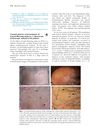
June 2017 in “Journal of The American Academy of Dermatology” In this study, trichoscopy consistently identified typical findings of frontal fibrosing alopecia, revealing three unusual clinical patterns in 18.4% of patients, which may aid in the differential diagnosis when clinical presentations are atypical.
 April 2012 in “Informa Healthcare eBooks”
 Fibrosing alopecia in a pattern distribution is a unique hair loss condition with inflammation and scarring, resembling but distinct from common balding.
2 citations
,
January 2021 in “Journal of The American Academy of Dermatology” This pilot study found that examining changes in scalp scales after scraping may effectively distinguish seborrheic dermatitis associated with androgenetic alopecia from fibrosing alopecia in a pattern distribution.
 53 citations
,
May 2010 in “Dermatologic Surgery”
53 citations
,
May 2010 in “Dermatologic Surgery” This article appears to be a table of contents or navigation page for a journal, not presenting any new findings or research results.
June 2025 in “Journal of Ultrasound in Medicine” This study reports that high-frequency ultrasound can characterize frontal fibrosing alopecia by assessing dermal atrophy, hair follicle changes, and subclinical inflammation.
 123 citations
,
August 2005 in “Journal of the European Academy of Dermatology and Venereology”
123 citations
,
August 2005 in “Journal of the European Academy of Dermatology and Venereology” In this study, the researchers observed that treatment with intralesional and topical corticosteroids, finasteride, and minoxidil may stop the progression of frontal fibrosing alopecia in postmenopausal and premenopausal women.
 April 2023 in “The journal of investigative dermatology/Journal of investigative dermatology”
 This study revealed distinct cellular and transcriptomic differences among various subtypes of cutaneous T-cell lymphoma, particularly highlighting characteristics unique to folliculotropic mycosis fungoides.

In this retrospective study, researchers at a Spanish hospital found that the severity of frontal fibrosing alopecia, primarily affecting postmenopausal women, was correlated with the duration of the disease, though inflammatory signs were not linked with its progression.
 13 citations
,
January 2019 in “Skin appendage disorders”
13 citations
,
January 2019 in “Skin appendage disorders” This study reported that fibrosing alopecia in a pattern distribution can occur in patients of color, with clinical and histopathological features allowing for an accurate differential diagnosis.
 September 2023 in “International Journal of Dermatology”
 In this study, FAPD was characterized in a Chinese population by perifollicular mast cell infiltration, suggesting young individuals may be at higher risk than previously thought.
April 2025 in “Australasian Journal of Dermatology” This report presents the first Australian case of familial frontal fibrosing alopecia involving a mother and daughter and seeks to differentiate clinical features between familial and sporadic cases.
This study reported that prompt diagnosis and treatment with 5-alpha-reductase inhibitors and topical immunomodulators are key to mitigating the effects of frontal fibrosing alopecia and preventing permanent hair loss.

Lichen planopilaris and frontal fibrosing alopecia are likely the same disease with different clinical appearances.