
This review discusses loose anagen hair syndrome, a benign and self-limited condition predominantly affecting children, and highlights the importance of differentiating it from other hair disorders like telogen effluvium and trichotillomania, but reports no new results.
 January 2005 in “Boletín del Instituto de Estudios Giennenses”
 This study found significant improvements in hair growth parameters and a reduction in hair fall after using the test product for 90 days, with no adverse events reported.
 May 2015 in “Journal of The American Academy of Dermatology”
 Niosomal minoxidil, when applied topically, increases hair count more than conventional minoxidil solution.
 15 citations
,
February 2015 in “Han-gug chugsan sigpum hag-hoeji/Korean journal for food science of animal resources”
15 citations
,
February 2015 in “Han-gug chugsan sigpum hag-hoeji/Korean journal for food science of animal resources” This study concludes that egg shell membrane hydrolysates, particularly Fraction I, may effectively mitigate UV-B radiation-induced wrinkles and promote skin collagen and hyaluronic acid production, suggesting potential use in functional cosmetics.
 March 2026 in “Molecular and Cellular Biomedical Sciences”
 This study found that exosomes derived from hypoxia-conditioned mesenchymal stem cells modulated inflammatory biomarkers by decreasing CXCL12 and increasing IL-10 expression in a DHT-induced androgenic alopecia mouse model, indicating potential for treating hair loss through immunoregulation.
 29 citations
,
January 2003 in “Dermatology”
29 citations
,
January 2003 in “Dermatology” This study suggests a new subtype of alopecia, termed 'acute diffuse and total alopecia of the female scalp' (ADTAFS), characterized by acute and total hair loss in women with a favorable recovery profile.
 59 citations
,
January 2002 in “Dermatology”
59 citations
,
January 2002 in “Dermatology” This study suggests the existence of a new subtype of alopecia, called 'acute diffuse and total alopecia of the female scalp (ADTAFS)', characterized by acute, diffuse hair loss primarily in women and a rapid recovery.
September 2023 in “Journal of the American Academy of Dermatology” This study examined the application of new clinical guidelines for diagnosing frontal fibrosing alopecia in 18 men, highlighting that current diagnostic criteria may often overlook early beard involvement and sideburn recession.
 January 2020 in “Clinical Case Reports and Reviews”
 This study observed that the coexistence of Frontal Fibrosing Alopecia and lupus erythematosus in a patient may suggest a shared pathogenic background.
 14 citations
,
June 2021 in “British journal of dermatology/British journal of dermatology, Supplement”
14 citations
,
June 2021 in “British journal of dermatology/British journal of dermatology, Supplement” This paper presents consensus guidelines for standardized diagnostic criteria and assessment methods for frontal fibrosing alopecia to improve clinical research and data collection globally.
January 2024 in “Updates in clinical dermatology” Frontal fibrosing alopecia is a scarring hair loss condition mainly affecting postmenopausal women, with unclear causes.
43 citations
,
November 2009 in “Archives of dermatology” This study found that alefacept showed no significant improvement in treating severe alopecia areata compared to placebo over a 24-week period.
 August 2015 in “Dermatología Argentina”
 This study reviewed 18 postmenopausal women with frontal fibrosing alopecia, noting frontotemporal hairline recession and eyebrow loss, often treated with steroids, triamcinolone, and other medications.
 7 citations
,
March 2021 in “Journal of the American Academy of Dermatology”
7 citations
,
March 2021 in “Journal of the American Academy of Dermatology” This study observed that some children and young adults with alopecia areata experienced flares during long-term tofacitinib treatment, despite initial successful hair regrowth.
 179 citations
,
December 2004 in “Journal of The American Academy of Dermatology”
179 citations
,
December 2004 in “Journal of The American Academy of Dermatology” This study observed that frontal fibrosing alopecia in postmenopausal women involves selective follicular inflammation, and finasteride treatment may slow disease progression, suggesting a potential androgen-related component.
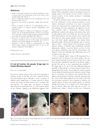
June 2020 in “Journal of Drugs in Dermatology” This case report highlights that frontal fibrosing alopecia can occur in black patients and may resemble androgenetic alopecia, underscoring the importance of considering FFA when diagnosing frontotemporal alopecia in this population.
 39 citations
,
July 2015 in “British Journal of Dermatology”
39 citations
,
July 2015 in “British Journal of Dermatology” This article discusses the pseudo 'fringe sign' in frontal fibrosing alopecia, highlighting that it is not solely related to traction, and it reports no new clinical results.
May 2026 in “International Journal of Dermatology” This study investigated a unique frontal fibrosing alopecia-like presentation of alopecia areata, finding that patients experienced an insidious, chronic course with limited scalp hair regrowth, and showed a lower response to systemic corticosteroids compared to patchy alopecia areata.
13 citations
,
August 2013 in “International Journal of Dermatology” Frontal fibrosing alopecia can affect African men and may be underdiagnosed.
 3 citations
,
February 2022 in “Cureus”
3 citations
,
February 2022 in “Cureus” This study observed an alopecia syphilitica-like pattern of hair loss in a woman with frontal fibrosing alopecia, suggesting it may be another atypical presentation of the condition.
 2 citations
,
October 2017 in “Journal of The American Academy of Dermatology”
2 citations
,
October 2017 in “Journal of The American Academy of Dermatology” In this study, focal atrichia was associated with late-onset female pattern hair loss, providing a clinical clue to its diagnosis, particularly separating it from other hair disorders.
 December 2024 in “Brazilian Journal of Health Review”
 This article reviews the general, pathophysiological, diagnostic, and therapeutic aspects of alopecia frontal fibrosante, highlighting its irreversible nature and the importance of early diagnosis, but it reports no new clinical results.
2 citations
,
January 2016 in “Dermatology online journal” This case report describes a 46-year-old man diagnosed with frontal fibrosing alopecia, a condition primarily affecting postmenopausal women, highlighting its rare occurrence in men.
 1 citations
,
April 2017 in “Journal of Investigative Dermatology”
1 citations
,
April 2017 in “Journal of Investigative Dermatology” In this study, D-OCT imaging revealed distinct structural and vascular changes in patients with frontal fibrosing alopecia, highlighting the technique's potential for diagnosing and monitoring the condition's activity.
 130 citations
,
February 2018 in “Journal of Investigative Dermatology”
130 citations
,
February 2018 in “Journal of Investigative Dermatology” This study found that tofacitinib led to ≥50% hair regrowth in eight out of twelve patients with moderate to severe alopecia areata, suggesting a potential benefit for using JAK inhibitors in treating this condition.
 10 citations
,
August 2011 in “Clinics”
10 citations
,
August 2011 in “Clinics” This article presents a dissenting opinion, arguing that the case described by Dr. Molina et al. was diffuse alopecia areata, not acute alopecia areata as claimed, emphasizing the importance of distinct clinical differences.
July 2024 in “Journal of Investigative Dermatology” The Fas/FasL pathway may play a role in alopecia areata.
9 citations
,
January 2023 in “Journal of Clinical Medicine” This study presents a validated questionnaire, the FFA-QLI, which effectively assesses and differentiates the quality of life impact among patients with frontal fibrosing alopecia, showing greater sensitivity in identifying severe cases than the DLQI.
 January 2025 in “Indian Journal of Dermatology”
 This review discusses the various factors implicated in the etiology of frontal fibrosing alopecia and notes the need for effective treatments, reporting no new clinical findings.
April 2019 in “Journal of Investigative Dermatology” Targeting immune pathways like JAK/STAT may help treat frontal fibrosing alopecia.