February 2023 in “Research Square (Research Square)” In this study, autologous cellular micrografts significantly improved hair parameters in androgenic alopecia patients, showing promise as an effective treatment without dangerous side effects.
August 2024 in “Skin Research and Technology” This report describes the diagnosis and treatment of traumatic anserine folliculosis in children, highlighting its distinct skin features and suggesting tretinoin cream as an effective remedy.
 56 citations
,
December 2011 in “The Plant Journal”
56 citations
,
December 2011 in “The Plant Journal” AGD1 is important for root hair development in Arabidopsis, working with phosphoinositide signaling and the actin cytoskeleton.
 103 citations
,
June 2018 in “International Journal of Molecular Sciences”
103 citations
,
June 2018 in “International Journal of Molecular Sciences” This review discusses the applications and research on fibroblast growth factors, including their use in wound healing, diabetes, and cancer, but it reports no new clinical results.
4 citations
,
July 2023 in “Frontiers in Microbiology” HGF combined with ADA is highly accurate for diagnosing tuberculous pleural effusion, especially in younger females.
 February 2021 in “Dermatological reviews”
 In this study, a specially adapted nonablative radiofrequency device significantly increased hair growth measures in most patients with androgenetic alopecia, including hair count and density.
September 2026 in “Endocrine and Metabolic Science” This study found that while androgenetic alopecia was common and more frequent with age and in men within the PERSIAN Guilan Cohort, it was not independently associated with depression.
 339 citations
,
February 2014 in “Journal of The American Academy of Dermatology”
339 citations
,
February 2014 in “Journal of The American Academy of Dermatology” This study found that eyelash loss, facial papules, and body hair involvement were linked to severe frontal fibrosing alopecia, and antiandrogens were the most effective treatment.
July 2025 in “Journal of Drug Delivery Science and Technology” Hydrogel microneedles with special nanoparticles and growth factor improve hair growth better than minoxidil for hair loss treatment.
 4 citations
,
May 2002 in “Therapeutische Umschau”
4 citations
,
May 2002 in “Therapeutische Umschau” AGA treated with finasteride, minoxidil, and hair transplantation.
 6 citations
,
March 2014 in “Annals of Pharmacotherapy”
6 citations
,
March 2014 in “Annals of Pharmacotherapy” This case report suggests that anidulafungin may be associated with hair loss, highlighting the need for physicians to monitor this potential adverse effect.
January 2026 in “Case Reports in Dermatological Medicine” In this case study, a young female with aseptic and alopecic nodules of the scalp achieved full resolution without recurrence using intralesional steroids.
2 citations
,
April 2022 in “Sleep and Breathing” This study found an association between sleep disturbances and androgenetic alopecia in men, with severe AGA linked to shorter sleep duration, poorer sleep quality, and higher STOP-BANG scores.
October 2021 in “QJM: An International Journal of Medicine” This study suggests that altered levels of NRF2 may be important in the development of androgenetic alopecia in men.
September 2016 in “Journal of dermatological science” This study suggests that FGF18 may enhance radioresistance in telogen hair follicles by inducing cell cycle arrest, potentially serving as a radioprotector against radiation-induced hair follicle damage.
2 citations
,
January 2016 in “Dermatology online journal” This case report describes a 46-year-old man diagnosed with frontal fibrosing alopecia, a condition primarily affecting postmenopausal women, highlighting its rare occurrence in men.
43 citations
,
November 2009 in “Archives of dermatology” This study found that alefacept showed no significant improvement in treating severe alopecia areata compared to placebo over a 24-week period.
 August 2024 in “International Journal of Molecular Sciences”
 The study investigated immune cell patterns around the hair follicle infundibulum in androgenetic alopecia, revealing significant differences in immune signatures between patients with AGA and control donors, specifically noting an enrichment of CD4 cells in the patient group.
 1 citations
,
July 2018 in “Elsevier eBooks”
1 citations
,
July 2018 in “Elsevier eBooks” This review discusses the pathogenesis and clinical features of androgenetic alopecia, highlighting potential links to fibrosing alopecia and suggesting the need for combined therapeutic approaches; it reports no new clinical results.

This review of SVF treatment for androgenetic alopecia found a significant increase in hair density across studies with no serious adverse events, but calls for standardized protocols and further research.
May 2026 in “International Journal of Dermatology” This study investigated a unique frontal fibrosing alopecia-like presentation of alopecia areata, finding that patients experienced an insidious, chronic course with limited scalp hair regrowth, and showed a lower response to systemic corticosteroids compared to patchy alopecia areata.
 39 citations
,
July 2015 in “British Journal of Dermatology”
39 citations
,
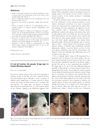
July 2015 in “British Journal of Dermatology” This article discusses the pseudo 'fringe sign' in frontal fibrosing alopecia, highlighting that it is not solely related to traction, and it reports no new clinical results.
1 citations
,
April 2017 in “Journal of Investigative Dermatology” Abatacept may help some people with alopecia areata regrow hair.
 June 2023 in “Skin Research and Technology”
 The researchers reported that an oral supplement containing hydrolysed fish-origin collagen, taurine, cysteine, methionine, iron, and selenium significantly improved the effectiveness of anti-hair loss treatments in people with androgenic alopecia or chronic telogen effluvium after 12 weeks, compared to drug treatments alone.
 April 2024 in “European Journal of Dermatology”
 This study suggests that the PPP2R3C gene may confer susceptibility to psoriatic arthritis and psoriasis vulgaris in Chinese patients, with additional possible associations involving IL-23R, ERN1, IFIH1, and KIF3A genes.
September 2026 in “Advanced Materials Technologies” In a mouse model study, researchers developed a methacrylated hyaluronic acid-based hydrogel microneedle patch co-loaded with finasteride and a carbon monoxide-releasing molecule for androgenetic alopecia, which showed better hair regrowth and safety compared to traditional treatments, offering an innovative approach with minimized systemic side effects.
January 2020 in “Proyecto de investigación:” This study found a significant association between AGDAC measurements and the presence of PCOS, suggesting it could be an effective clinical tool in diagnosing the condition and its phenotypes, especially when combined with AMH.
This study examined epidemiological data on patients with frontal fibrosing alopecia in Greece and found demographic patterns consistent with international studies.

This study highlights that traumatic anserine folliculosis is a benign condition often seen in young males, which can be diagnosed without invasive biopsies using clinical examination and dermoscopy.
July 2025 in “Journal of Investigative Dermatology” In this study, higher expression of PEDF was observed in hair follicles from balding regions in AGA patients, suggesting that targeting PEDF could be a promising approach for treating androgenetic alopecia.