November 2023 in “Children” In this study, valproic acid, levetiracetam, and phenytoin were the main anti-seizure medications associated with adverse drug reactions in pediatric epilepsy patients, with younger children and those on polytherapy at higher risk.
 November 2023 in “The journal of investigative dermatology/Journal of investigative dermatology”
 In this study, treatment with oral JAK inhibitors was associated with improved disease outcomes in 80.6% of patients with refractory lichen planopilaris over a mean duration of 5 months.
 October 2023 in “Dermatology practical & conceptual”
 This study found that pulse corticosteroids effectively induce hair regrowth in alopecia areata, with betamethasone showing higher efficacy but more side effects, and treatment success varying depending on age, onset time, and disease type.
June 2023 in “Revista de Ciências Médicas e Biológicas” This study examined current literature and recommendations for preventing and treating skin lesions induced by chemotherapy, highlighting common dermatological issues such as discoloration, pruritus, and alopecia, and noting that specific treatments can alleviate these problems to improve patients' skin integrity, self-esteem, and quality of life.
May 2023 in “Cytotherapy” This review highlights recent trends and innovations in facial plastic surgery and nonsurgical aesthetic technologies, emphasizing minimally invasive and preservation approaches to improve patient outcomes.
 November 2022 in “The journal of investigative dermatology/Journal of investigative dermatology”
 This study explores how EGFR signaling impacts skin inflammation and follicular integrity during hair eruption, aiming to identify druggable pathways to mitigate skin inflammation in cancer patients receiving EGFR inhibitors.
September 2022 in “Zenodo (CERN European Organization for Nuclear Research)” This article discusses various methods, including Skincell Advanced and Mesoderm youth activator cream, for improving skin appearance and reducing signs of aging but reports no new research findings.
August 2022 in “Frontiers in Pharmacology” Ultrasound can improve targeted drug delivery, making treatments more effective with fewer side effects.
 March 2022 in “Nepal Journal of Dermatology Venereology & Leprology”
 In this prospective clinical trial, azathioprine with steroid minipulse therapy and methotrexate with steroid minipulse therapy both improved hair regrowth in alopecia areata patients, but methotrexate showed slightly higher efficacy.
December 2021 in “OPAL (Open@LaTrobe) (La Trobe University)” This study found a significant association between montelukast and neuropsychiatric adverse events such as suicidal ideation and depression, suggesting that the drug's interaction with specific genes may contribute to these effects.
 October 2021 in “International journal of basic and clinical pharmacology”
 This case report discusses how trichomegaly, an adverse effect of the cancer therapy drug erlotinib, might serve as a marker of positive tumor response and potentially aid in treating madarosis.
 March 2021 in “Clin-Alert”
 This abstract lists a range of drugs and treatment agents like Abatacept, Amiodarone, and Remdesivir, but does not report any study results or findings.
 January 2021 in “arXiv (Cornell University)”
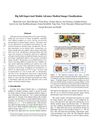
 This study found that self-supervised pretraining significantly improves accuracy in medical image classifiers for dermatology and chest X-ray tasks, outperforming supervised baselines and showing robustness to distribution shifts with limited labeled data.
This study found that adverse effects from hormonal contraception were more common and severe with progestin-only injections compared to estradiol levonorgestrel combination pills.
 January 2019 in “Durham e-Theses (Durham University)”
 This study utilized advanced imaging techniques to quantify hair damage and dye uptake dynamics, revealing that compound penetration in hair is influenced by molecule size and lipophilicity.
 June 2018 in “Exchanges: The Warwick Research Journal”
 This article investigates how print advertisements create persuasive messages using hidden meanings within their language and structure, without presenting new empirical results.
 September 2017 in “Springer eBooks”
 FUE hair transplants have improved to give more natural results with less scarring and pain.
 July 2017 in “Clin-Alert”
 Different medications can cause serious side effects in some people.
January 2017 in “Durham e-Theses (Durham University)” This study developed new label-free imaging methods to analyze human hair, identifying distinct chemical environments within cuticle layers and changes in hair structure caused by depilatories, while showing that the treatments tested did not significantly affect skin cell differentiation or proliferation.
June 2016 in “Current opinion in pediatrics, with evaluated MEDLINE/Current opinion in pediatrics” This correspondence paper does not report new research findings; it provides contact information for further inquiries on dermatological topics.
 April 2016 in “Journal of The American Academy of Dermatology”
 People with certain allergic conditions or higher white blood cell counts have more severe hair loss, and treating hair and nail side effects early in melanoma therapy can improve quality of life.
 February 2016 in “Evidence Based Women Health Journal (Online)”
 This study observed that women with polycystic ovarian syndrome had higher serum SRAGE levels compared to controls, but the difference was not statistically significant.

This overview of traditional Chinese medicine extracts discusses their effects on hair follicle development in various animal species but does not report specific experimental results.

Hair restoration techniques have improved based on scientific evidence.
 November 2015 in “Clin-Alert”
 Some medications and supplements can cause serious side effects, including hair loss, heart rhythm problems, liver injury, and other health issues.
 January 2015 in “Aesthetic Surgery Journal”
 This article reviews cosmetic dermatology as presented in the January 2014 volume of Dermatologic Clinics and reports no new clinical findings.
 June 2011 in “Oncology times”
 This article covers discussions from the Society of Urologic Oncology Annual Meeting outlining that new therapies, such as Provenge, Prostvac, and denosumab, are making the treatment of advanced prostate cancer more complex but may offer extended survival benefits.
 November 2010 in “Clin-Alert”
 Monitoring for adverse effects in clinical treatments is crucial.
July 2009 in “Hair transplant forum international” This abstract is a commemorative note for the 15th anniversary of the Orlando Live Surgery Workshop and provides no new research findings.