 February 2024 in “PloS one”
 This review concluded that oral tofacitinib and adalimumab are promising treatments for cicatricial alopecia, showing effectiveness in improving signs and symptoms but requiring regular monitoring for adverse effects. The authors emphasize the need for further extensive studies to solidify these findings.
 November 2023 in “Open Repository of the University of Porto (University of Porto)”
 Pharmacists play a crucial role in patient care and education.
 October 2023 in “Microorganisms”
 This study reported that COVID-19 patients treated with nirmatrelvir/ritonavir had lower anti-spike IgG levels and different cytokine patterns compared to those not receiving antiviral treatment, suggesting early antiviral use may alter immune response by reducing viral load and antigen presentation.
 September 2023 in “JAAD case reports”
 In this review, the authors noted that while baricitinib, a treatment for refractory rheumatoid arthritis and severe alopecia areata, shows promising efficacy, it may pose risks of serious infections and malignancy due to immune downregulation.
 September 2023 in “Nature Communications”
 In this animal study, the researchers found that biodegradable extracellular matrix scaffolds accelerated wound healing and enhanced hair follicle neogenesis in mice, suggesting a role for immune systems in tissue regeneration.
 August 2023 in “Journal of The American Academy of Dermatology”
 This article discusses various treatments for primary cicatricial alopecia with a focus on early intervention to manage symptoms and improve hair density, but it reports no new clinical results.
June 2023 in “University of Thi-Qar Journal of Science” This review discusses the various uses of retinoids, derived from vitamin A, in cosmetic and dermatological treatments for conditions like acne, psoriasis, and skin aging. The authors emphasize retinoids' limited use due to their susceptibility to degradation and safety concerns, particularly with retinoic acid.
November 2022 in “Journal of Investigative Dermatology” This pilot study suggests that lovastatin may counteract stress-induced MICA expression in hair follicles and enhance MICA shedding, potentially offering a complementary approach for alopecia areata treatment.
 May 2022 in “Liver transplantation”
 This source does not report original research findings but reviews the mechanisms and challenges of immune response and immunosuppressive management in liver transplantation.
 April 2022 in “Australasian Journal of Dermatology”
 This case report describes a rare presentation of recurrent plaque psoriasis on the penile shaft, which was controlled with systemic therapy after topical treatments failed.

This study reports the case of a 12-year-old girl who developed psoriatic alopecia after increasing her dose of the TNF-α inhibitor adalimumab for Crohn's disease, emphasizing psoriatic alopecia as a phenomenon associated with these medications.

This review summarizes recent genetic research on hidradenitis suppurativa, highlighting potential therapeutic targets and genetic mutations, but reports no new clinical findings.
April 2020 in “The journal of investigative dermatology/Journal of investigative dermatology” This source reports that a study by Liu et al. analyzed genetic factors influencing adalimumab response in hidradenitis suppurativa, finding a specific genetic variant (SNP rs59532114) associated with an inadequate response to the treatment due to increased abscess and inflammatory nodule counts.
January 2019 in “Frontiers in neurology” This case report observed significant improvement in post-concussion symptoms, such as sleep and energy levels, in a 23-year-old female following a clinical nutrition program.
August 2018 in “Jundishapur journal of natural pharmaceutical products” Transfollicular drug delivery can improve medication absorption through hair follicles.
 January 2018 in “Springer eBooks”
 Hidradenitis Suppurativa is likely an autoinflammatory disease, and better understanding its causes could improve treatments.
December 2017 in “Annales de dermatologie et de vénéréologie” This article reviews key developments in pediatric dermatology for 2017, including consensus recommendations, novel genetic findings, and treatment insights for conditions like psoriasis and vascular malformations, without providing new clinical trial results.

The document recommends a multidisciplinary approach and experience sharing to advance facial feminization surgery as a medical field.
 April 2016 in “The journal of investigative dermatology/Journal of investigative dermatology”
 In this study, Mpzl3-/- mice developed severe seborrhea-like dermatitis with skin inflammation, indicating MPZL3's role in the skin condition's development, independent of adaptive immunity.
 May 2015 in “Journal of The American Academy of Dermatology”
 This study suggests that blood microarray biomarkers may help predict individual treatment response in psoriasis patients, highlighting a distinct blood signature related to inflammation, interferon, and myeloid lineage transcripts.
January 2015 in “프로그램북(구 초록집)” This study highlights that the combination of adapalene and benzoyl peroxide (Epiduo®) is an effective first-line treatment for acne, significantly inhibiting antibiotic-susceptible and antibiotic-resistant P. acnes strains.
 March 2013 in “Hair transplant forum international”
 This article discusses the role of inflammation in causing various types of alopecia but reports no clinical results; the author notes an ongoing interest in the topic.
April 2012 in “Cancer Research” In this study, mouse models with EGFR deficiency showed that disrupted hair follicle cycling leads to increased mast cell numbers and inflammation, suggesting EGFR's role in managing hair cycle transitions and preventing folliculitis.
 November 2010 in “Journal of The American Academy of Dermatology”
 The issue concluded that various skin conditions have different effective treatments and factors influencing them.
 November 2010 in “Value in Health”
 Real-life dosing of biologics for plaque psoriasis often deviates from recommended guidelines, especially for high-need patients.
 March 2010 in “Anti-inflammatory & anti-allergy agents in medicinal chemistry”
 This review details the adverse effects and drug interactions of biologic agents used in rheumatoid disease treatment, highlighting their significant side effect profile without reporting new clinical findings.
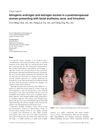 August 2009 in “International Journal of Dermatology”
 This case report describes a postmenopausal woman who experienced facial erythema, acne, and hirsutism due to excess androgen and estrogen levels.
 March 2023 in “Research Square (Research Square)”
 In this study, researchers found that changes in immune cell infiltration and immune-related gene expression may contribute to the immune microenvironment changes in male androgenetic alopecia.
February 2023 in “Archives of Dermatological Research” This study found that despite challenges, a combination of oral antibiotics, anti-androgens, oral retinoids, biologics, and surgery were important in managing hidradenitis suppurativa in patients with intellectual and developmental disabilities.
December 2022 in “Research Square (Research Square)” In this study, a comprehensive treatment approach involving multiple therapies was found to play a crucial role in managing hidradenitis suppurativa in patients with intellectual and developmental disorders despite practical challenges.