 1 citations
,
December 2015 in “Journal of the Medical Sciences (Berkala Ilmu Kedokteran)”
1 citations
,
December 2015 in “Journal of the Medical Sciences (Berkala Ilmu Kedokteran)” This review discusses transplantation of melanocyte stem cells for vitiligo treatment and reports no new clinical results; it suggests the procedure could be effective in reactivating melanocyte precursors for repigmentation.
 1 citations
,
May 2015 in “Journal of The American Academy of Dermatology”
1 citations
,
May 2015 in “Journal of The American Academy of Dermatology” Finasteride for hair loss in young men may significantly increase the risk of sexual dysfunction.
 1 citations
,
January 2015 in “Actas dermo-sifiliográficas/Actas dermo-sifiliográficas”
1 citations
,
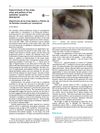
January 2015 in “Actas dermo-sifiliográficas/Actas dermo-sifiliográficas” Latanoprost eye drops caused excessive cheek hair growth and eyelash whitening in a woman.
 1 citations
,
November 2014
1 citations
,
November 2014 This chapter reviews patchy hair loss due to skin disease, nail disorders related to chronic trauma, and treatments for small carcinomas, but it reports no new clinical findings.
 1 citations
,
September 2013 in “Elsevier eBooks”
1 citations
,
September 2013 in “Elsevier eBooks” This review discusses factors affecting hair aging, such as inflammation and UV exposure, and examines potential anti-aging benefits of antioxidants and nutraceuticals for hair, but reports no new clinical results.
 1 citations
,
June 2013 in “Medicine”
1 citations
,
June 2013 in “Medicine” This article reviews how to take a thorough dermatological history, conduct examinations, and discusses diagnostic tools; it reports no new clinical findings.
 1 citations
,
January 2013 in “Springer eBooks”
1 citations
,
January 2013 in “Springer eBooks” Cosmeceuticals may benefit skin health but need more research for efficacy and safety confirmation.
 1 citations
,
August 2012
1 citations
,
August 2012 The document discusses various diseases of the outer ear, categorized by symptoms like redness, crusts, bumps, pus-filled lesions, lumps, ulcers, and hair loss.
 1 citations
,
September 2010 in “The journal of investigative dermatology/Journal of investigative dermatology”
1 citations
,
September 2010 in “The journal of investigative dermatology/Journal of investigative dermatology” This article reviews a variety of research presentations from the Society for Investigative Dermatology's annual meeting, highlighting advances in dermatological research without reporting new clinical results.
 1 citations
,
April 2010 in “Expert Review of Dermatology”
1 citations
,
April 2010 in “Expert Review of Dermatology” This review discusses primary cicatricial alopecias, detailing their classification, pathogenesis, clinical features, histopathologic findings, and treatment, without reporting new experimental results.
 1 citations
,
January 2010 in “Elsevier eBooks”
1 citations
,
January 2010 in “Elsevier eBooks” Any drug can cause skin reactions, but antibiotics, NSAIDs, and psychotropic drugs are more common, with some reactions being life-threatening.
 1 citations
,
January 2009 in “CRC Press eBooks”
1 citations
,
January 2009 in “CRC Press eBooks” This chapter discusses the increasing prevalence of overactive bladder in aging men, examining potential causes and treatment options, without reporting new clinical results.
 1 citations
,
January 2009 in “Actas Dermo-Sifiliográficas”
1 citations
,
January 2009 in “Actas Dermo-Sifiliográficas” Docetaxel, a chemotherapy drug, was reported to cause psoriasis in a patient for the first time.
 1 citations
,
January 2006 in “Elsevier eBooks”
1 citations
,
January 2006 in “Elsevier eBooks” Cats lose fur due to various reasons, including allergies, infections, genetics, hormones, diet, cancer, stress, and some conditions are treatable while others are not.
 1 citations
,
November 1976 in “Archives of Dermatology”
1 citations
,
November 1976 in “Archives of Dermatology” This article discusses the role of clinical observation and microscopic correlation in American dermatology training and reports no new clinical results.
 1 citations
,
July 1973 in “British Journal of Dermatology”
1 citations
,
July 1973 in “British Journal of Dermatology” The document concludes that secondary syphilis cases are increasing and often misdiagnosed, pityriasis rubra pilaris can be distinguished from psoriasis by skin cell features, and different skin layers produce specific components during skin repair.
 June 2026 in “Frontiers in Oncology”
 In this study, researchers found that deficiencies in Gsdma1/2/3 significantly inhibited the initiation and progression of cutaneous squamous cell carcinoma (cSCC) in mice, suggesting GSDMA's role in promoting cSCC proliferation and its potential as a therapeutic target.
 June 2026 in “Discover Immunity.”
 This review discusses current advancements in mesenchymal stem cell-based therapies for skin repair and rejuvenation, focusing on therapeutic strategies, particularly highlighting the potential of neonatal and placenta-derived MSCs, and reports no new clinical results.
 May 2026 in “Journal of Skin and Sexually Transmitted Diseases”
 This review highlights the demonstrated efficacy and growing use of upadacitinib for cutaneous disorders, emphasizing its cost-effectiveness and recent availability in India compared to other biologics and small-molecule therapies, rather than providing new primary data.

In this study, researchers aim to evaluate the effectiveness and safety of combining plum-blossom needle tapping with ginger juice rubbing to prevent hair loss in obese women after metabolic bariatric surgery, through a randomized controlled trial involving 96 participants.
 April 2026 in “Nowotwory Journal of Oncology”
 This review provides a clinical guide for safely using dermo-aesthetic treatments to improve the quality of life for oncology patients dealing with treatment-related side effects, emphasizing the importance of consulting with an oncologist before undergoing such procedures.
 April 2026 in “Health Sciences Quarterly”
 In this single-center study, researchers conducted comprehensive dermatological exams of 112 hospitalized adult patients, revealing that several skin issues, like seborrheic dermatitis and xerosis cutis, were common but often unnoticed in routine hospital care, highlighting the need for better dermatology collaboration.
 April 2026 in “Frontiers in Medicine”
 In this case report, a female patient with both psoriasis and lichen planus initially responded to acitretin and topical mometasone but experienced a relapse after stopping the treatment. The authors reported marked improvement within 3 months after switching to upadacitinib, aiming to guide clinical decision-making.

In this phase 2 trial, STS01 1% significantly improved hair regrowth in patients with mild to moderate patchy alopecia areata compared to placebo, with a manageable skin irritation side effect profile.
 March 2026 in “Journal of Community Genetics”
 In this narrative review, the authors found that stigma related to oculocutaneous albinism in Africa is primarily driven by socio-cultural beliefs and structural inequities, affecting individuals' health, education, and psychosocial well-being, with interventions needed to dispel myths and provide specialized healthcare and support.
 March 2026 in “IP Indian Journal of Clinical and Experimental Dermatology”
 Among elderly individuals attending a dermatology department, this study found that common skin conditions were wrinkles, xerosis, and seborrheic keratosis, with infections and eczema being the most frequent pathological conditions, highlighting the need for public health measures targeting geriatric dermatoses.
 March 2026 in “Folia Histochemica et Cytobiologica”
 This review highlights LTBP1 as a critical integrator in disease processes, showing its dual role in cancer progression and suppression, its pathological influence in fibrosis, and its contribution to various disorders, suggesting its potential as a biomarker and therapeutic target.
 March 2026 in “Aging Research”
 This review provides a comprehensive synthesis of skin aging research, highlighting the interplay of genetic and environmental factors, cellular mechanisms, and advances in diagnostic and therapeutic strategies, while also addressing current debates and future directions in the anti-aging field.
 February 2026 in “American Journal of Clinical Dermatology”
 This source discusses how radiotherapy-induced skin fibrosis, a chronic side effect affecting cancer survivors' quality of life, is driven by ongoing inflammation and fibroblast activity, and emphasizes the need for comprehensive dermatologic management and better diagnostic tools.
 February 2026 in “Clinical Cosmetic and Investigational Dermatology”
 In this study, the authors emphasize that IFK, though rare in young patients, should be considered when diagnosing scalp lesions in all age groups, highlighting the importance of recognizing its dermoscopic and histopathologic features to avoid misdiagnosis and ensure proper management.