January 2026 in “JCEM Case Reports” This case report presents a rare instance of recurrent ACTH-independent Cushing’s syndrome due to PBMAH, coinciding with the development of a pheochromocytoma, highlighting the need for thorough reevaluation in similar recurring cases.
2 citations
,
January 2014 in “Case Reports in Clinical Medicine” This case study presents an 81-year-old woman diagnosed with Cronkhite-Canada syndrome and discusses the importance of recognizing its clinical and histopathological features for timely and accurate diagnosis.
1 citations
,
October 2023 in “Pharmaceuticals” In this study, researchers investigated GAGs from the marine invertebrate Microcosmus exasperatus, finding that its polysaccharides possess antitumoral properties without affecting anticoagulant activity. The unique composition shows potential for cancer treatment when combined with existing therapies in future studies.
5 citations
,
October 2022 in “Frontiers in Genetics” This study presents the first documented case of a woman with Alström syndrome successfully conceiving and giving birth, highlighting the importance of managing systemic comorbidities during pregnancy.
 October 2021 in “Acta Scientific Medical Sciences”
 This case report describes an isolated DHEA-S secreting adrenocortical carcinoma in a 52-year-old woman who presented without typical hyperandrogenic symptoms.
 November 2021 in “Plastic and Reconstructive Surgery”
 This supplement reviews advancements in the science of aging, including facial age simulation and stem cell applications for hair restoration, and reports no new clinical results.
May 2025 in “OPAL (Open@LaTrobe) (La Trobe University)” This study found that tofacitinib may inhibit CD8+ T cell infiltration in alopecia areata by affecting the linoleic acid metabolism-Mg2+ pathway in a sodium sulfide-induced mouse model, highlighting new insights for clinical diagnosis and treatment strategies.
 May 2015 in “Hair transplant forum international”
 This article discusses the American Society of Hair Restoration Surgery (ASHRS) but does not present new research findings.
 November 2021 in “Journal of the European Academy of Dermatology and Venereology”
 This study found that children with COVID-19 experienced more frequent acral ischemic lesions, whereas telogen effluvium was the most common skin manifestation in adults.
December 2021 in “OPAL (Open@LaTrobe) (La Trobe University)” This study found that knocking out the Hars2 gene in mouse cochlear hair cells led to mitochondrial dysfunction and ROS stress, resulting in progressive hearing loss and differential effects on inner and outer hair cells.
November 2024 in “Journal of Functional Foods” In this study, APC collagen peptides were observed to enhance hair elasticity and gloss in human hair follicles by increasing amino acid and lipid component levels, suggesting their potential benefits for improving hair qualities.
March 2016 in “Journal of Pharmacological Sciences” This discussion reviews the shift in pharmaceutical strategy towards evidence-based and structure-guided drug development, highlighting ongoing challenges and efforts in computer-aided drug design without presenting new clinical results.
 February 2026 in “Veterinary Sciences”
 This study found that SPARC-overexpressing adipose-derived mesenchymal stem cells significantly improved various aspects of skin wound healing in dogs, including re-epithelialization, collagen deposition, and angiogenesis, showing promise for enhancing treatment effectiveness under different physiological and pathological conditions.
This study found that Ca²⁺ signaling and peptidylarginine deiminase enzymes play a crucial role in activating neural stem cells in response to injury in zebrafish, suggesting potential therapeutic targets for CNS injuries and cancer.
 April 2018 in “Journal of Investigative Dermatology”
 This study demonstrated that in genetic mouse models, the calcium sensor Stim1, not Stim2, is essential for sweat secretion in sweat glands.
3 citations
,
January 2013 in “Dermatology” This study identified novel compound heterozygous mutations in the hairless gene among a non-consanguineous Chinese family with congenital atrichia, illustrating phenotypic variations due to founder or modifier genes.
 June 2023 in “Romanian Medical Journal”
 In this case study, a 53-year-old female with multiple autoimmune symptoms was diagnosed with Mixed Connective Tissue Disease, confirmed by specific antibodies, and showed significant clinical improvement after one year of treatment.
8 citations
,
March 2015 in “International Journal of Oncology” This study successfully established Tsc2-deficient embryonic stem cells from Eker rats and found these cells have distinct gene expression compared to non-mutant cells, which could help identify new therapeutic targets for TSC-related pathogenesis.

This study reports that in a rat model of myocardial infarction, Zn-Cu ion sequential therapy improved cardiac function and cardiomyocyte metabolic activity by precisely regulating ion concentrations and maintaining elevated levels of the Per2 protein, important for cellular repair.
16 citations
,
December 2006 in “Chinese Medical Journal” This case report describes a 12-year-old boy with congenital insensitivity to pain with anhidrosis and progressing acro-osteolysis, highlighting the severe complications and the necessity for early intervention.
 129 citations
,
November 2005 in “Internal Medicine Journal”
129 citations
,
November 2005 in “Internal Medicine Journal” This article reviews the recognition and management of Staphylococcus aureus toxin-mediated diseases, but it does not present new research findings.
43 citations
,
December 1988 in “International Journal of Bio-Medical Computing”  2 citations
,
January 2006 in “International Journal of Cosmetic Science”
2 citations
,
January 2006 in “International Journal of Cosmetic Science” This study investigated the penetration of a low-molecular-weight cationic conditioning compound into the hair cortex and suggests it may improve hair's fatigue resistance.
24 citations
,
May 2006 in “Journal of Investigative Dermatology” This study found that allergen treatment in alopecia areata mice appeared to alter leukocyte subset distribution and impaired dendritic cell migration, which may affect T-cell activation and hair follicle recovery.
This chapter reviews secondary soft tissue revision surgeries for residual defects in patients with orofacial clefts, highlighting the various aesthetic issues and their surgical management after reaching skeletal maturity.
 8 citations
,
December 1996 in “Dermatologic Surgery”
8 citations
,
December 1996 in “Dermatologic Surgery” This article discusses surgical innovations in scalp reduction to improve cosmetic outcomes but reports no new clinical results, emphasizing the benefits of anchor techniques for minimizing scars and stretch-back.
July 2025 in “Malaria Journal” This study suggests that while Nanostring profiling identifies important processes in resolving MA-ARDS, solely targeting late-stage resolution by altering SPM production is not enough. The researchers conclude that combining multi-targeted adjunctive therapies with antimalarial drugs may be necessary to enhance survival and recovery.
February 2022 in “DOAJ (DOAJ: Directory of Open Access Journals)” In this study, all-trans retinoic acid was found to protect against oxidative stress-induced apoptosis in cultured hair cell-like cells.
 157 citations
,
May 2021 in “Endocrine Reviews”
157 citations
,
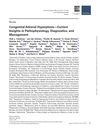
May 2021 in “Endocrine Reviews” This review discusses recent advancements in understanding and managing congenital adrenal hyperplasia, including improvements in screening, diagnostics, and potential genetic and cell-based treatments, but reports no new clinical findings.
July 2026 in “Journal of Investigative Dermatology” Alopecia totalis/universalis involves more intense immune activity and inflammation than patchy alopecia areata.