April 2018 in “The journal of investigative dermatology/Journal of investigative dermatology” This commentary discusses the crucial role of the alternative splicing factor Esrp1 in maintaining skin barrier function and its association with skin diseases like atopic dermatitis and psoriasis, but reports no new clinical results.
 14 citations
,
October 2018 in “PloS one”
14 citations
,
October 2018 in “PloS one” In this study, Far2-/- mice were observed to develop focal alopecia with altered sebaceous gland morphology and lower skin lipid levels compared to wildtype mice.
 May 2025 in “The Journal of Rheumatology”
 This case report describes a 47-year-old woman with dilated cardiomyopathy as the first sign of primary antiphospholipid syndrome, highlighting the need for APS screening in similar patient presentations.
 36 citations
,
July 2014 in “Neuromuscular Disorders”
36 citations
,
July 2014 in “Neuromuscular Disorders” This study investigated a patient with spinal and bulbar muscular atrophy who had 68 CAG repeats, revealing early onset and unique symptoms not previously documented in the condition.
14 citations
,
February 1991 in “FEBS Letters” This study found that introducing rat ornithine transcarbamylase gene into spf-ash mice improved liver and intestinal enzyme activity and normalized some metabolic indicators.
 1 citations
,
January 2018 in “ARC Journal of Dermatology”
1 citations
,
January 2018 in “ARC Journal of Dermatology” A patient had both chronic lupus and systemic scleroderma, requiring careful treatment to manage symptoms.
July 2005 in “Journal of the American Academy of Dermatology”  January 2016 in “Skin appendage disorders”
 The document discusses various nail and hair disorders and their treatments.
June 2025 in “Rapid Communications in Mass Spectrometry”  2 citations
,
April 2010 in “The Open Dermatology Journal”
2 citations
,
April 2010 in “The Open Dermatology Journal” This review discusses the development and role of corneodesmosin in skin and hair follicle integrity, highlighting findings from mouse models and its connection to genetic diseases, with no new experimental results included.
 October 2023 in “IJEM case reports”
 This case report describes the diagnosis and management of a 15-year-old girl with complete androgen insensitivity syndrome, highlighting the importance of thorough physical exams for early detection and treatment planning.
July 2025 in “Journal of Investigative Dermatology” January 2026 in “Applied Sciences” In this study, cyclic ADP-ribose (cADPR) treatment in human hair follicle dermal papilla cells was associated with increased intracellular calcium retention and activated anagen-related signaling without causing significant cytotoxicity, indicating its potential impact on hair growth processes.
November 2015 in “Journal of the Korea Academia-Industrial cooperation Society” This study established a stable cell line for CRF1 receptor screening, which can be used to develop functional cosmetics and modulators potentially affecting hair re-growth.
 October 2007 in “Clinical Biochemistry”
 This study identified a new genotype, V281+I172N/V281L, linked to non-classical 21-hydroxylase deficiency, suggesting it should be considered in genetic panels for the condition.
3 citations
,
April 2009 in “Congestive Heart Failure” This case study illustrated that a patient's severe autonomic neuropathy due to amyloidosis prevented the expected development of heart failure symptoms despite significant cardiac abnormalities.
2 citations
,
September 2017 in “Journal of Investigative Dermatology” This study found that notch1 signaling is severely impaired in hidradenitis suppurativa patients with or without NCSTN or other gamma-secretase gene mutations, highlighting a canonical defect at the lesional tissue level.
 April 2017 in “Journal of Investigative Dermatology”
 This case study reports that a heterozygous missense GJA1 mutation, p.Gly138Ser, in a 2-year-old boy with oculodentodigital syndrome primarily resulted in syndactyly, fifth finger hypoplasia, and hypotrichosis, without neurological or craniofacial abnormalities.
 January 2011 in “Journal of Human Genetics”
 This study found a severe MBTPS2 gene mutation in a Japanese IFAP syndrome patient, suggesting other factors may influence the syndrome's clinical features compared to previously studied patients.
 4 citations
,
December 2013 in “Acupuncture and related therapies”
4 citations
,
December 2013 in “Acupuncture and related therapies” This review summarizes the potential of N-acetyl-cysteine in managing diseases linked to redox imbalance, discussing its effects from cellular mechanisms to clinical applications, though further research is suggested for broader use.
 November 2022 in “Journal of Investigative Dermatology”
 This study found that dysregulation of the DNA damage response in stem cells is a common factor of aging, affecting tissues like the skin, brain, kidneys, and intestine.
 2 citations
,
August 2024 in “Animal Bioscience”
2 citations
,
August 2024 in “Animal Bioscience” This study suggests that m6A-circHECA may influence the physiology of cashmere goats' SHFs both through miRNA pathways and interactions with target proteins, with promoter methylation potentially inhibiting its gene expression.
 2 citations
,
April 2022 in “Clinical, cosmetic and investigational dermatology”
2 citations
,
April 2022 in “Clinical, cosmetic and investigational dermatology” In this case series, four African American women with treatment-resistant central centrifugal cicatricial alopecia showed scalp itch relief and significant hair regrowth after using a new botanical formula for 8 weeks to 1 year, with no adverse effects reported.
22 citations
,
September 2003 in “Journal of Investigative Dermatology” This study analyzed patients with X-linked dominant chondrodysplasia punctata and identified novel mutations in the emopamil-binding protein gene, highlighting the need for genetic testing alongside biochemical analysis for accurate diagnosis.
 1 citations
,
May 2011 in “Molecular Medicine Reports”
1 citations
,
May 2011 in “Molecular Medicine Reports” This study found no association between the -866G/A polymorphism in the UCP2 gene and the development of polycystic ovary syndrome.
 May 2025 in “The Journal of Rheumatology”
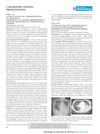
 This case report highlights a rare instance of diffuse alveolar hemorrhage in a patient with catastrophic antiphospholipid syndrome, emphasizing the importance of early recognition and multidisciplinary management.
January 2025 in “SSRN Electronic Journal” May 2021 in “Medicina internă” This case report highlights a 31-year-old male with Adult Onset Still Disease, whose symptoms, including high fever, responded only to pulse-therapy with Methylprednisolone after failing to improve with usual treatments.
September 2022 in “Indian Journal of Paediatric Dermatology” This case report documents the first confirmed mutation-proved instance of Clouston syndrome in a large Chinese-Malaysian family, linked to the c.263C>T (A88V) mutation in the GJB6 gene, with no available treatment but highlighting the importance of genetic counseling.
January 2026 in “JCEM Case Reports” This case report presents a rare instance of recurrent ACTH-independent Cushing’s syndrome due to PBMAH, coinciding with the development of a pheochromocytoma, highlighting the need for thorough reevaluation in similar recurring cases.