7 citations
,
October 2018 in “South African journal of botany” This study found that the plant Clausena anisata exhibited promising antimicrobial, antioxidant, and anti-inflammatory activities against acne-causing bacteria and inflammation, suggesting its potential as a candidate for further anti-acne treatment research.
 7 citations
,
February 2006 in “Clinical and Experimental Dermatology”
7 citations
,
February 2006 in “Clinical and Experimental Dermatology” This clinical report details the case of a 22-year-old man experiencing severe pustular eruptions on his chest and back, which improved after increasing minocycline to 100 mg twice daily.
4 citations
,
April 2008 in “Experimental Dermatology” This review hypothesizes that nicotine plays a crucial role in the pathogenesis of hidradenitis suppurativa by promoting inflammation and microbial growth, suggesting that anticholinergic agents might be a potential treatment strategy, but reports no new clinical findings.
January 2026 in “Case Reports in Dermatological Medicine” In this case study, a young female with aseptic and alopecic nodules of the scalp achieved full resolution without recurrence using intralesional steroids.
31 citations
,
March 1963 in “American journal of diseases of children” This report details a case of acrodermatitis enteropathica in a 4-month-old infant, noting the disorder's rarity and familial transmission, and includes a literature review with no new clinical results.
35 citations
,
March 2012 in “Journal of dermatological science” This observational study aims to more accurately detect and localize Propionibacterium acnes in acne lesions by combining multiple microbiological visualization techniques, but it does not present new results on their causality to acne.
 30 citations
,
September 2017 in “Clinics in Dermatology”
30 citations
,
September 2017 in “Clinics in Dermatology” This article reviews the clinical and histological features of acanthosis nigricans and its associations with insulin resistance and other conditions, but highlights the need for more research on its classification, severity assessment, and treatment options.
 August 2024 in “Turkish Journal of Pediatric Disease”
 This case report details a 5-month-old infant with acrodermatitis enteropathica, linked to zinc deficiency from total parenteral nutrition, who showed improvement using zinc spray and cream, contrasting with typical literature outcomes.
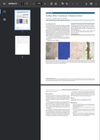
In this case study, a 15-year-old obese boy was diagnosed with acanthosis nigricans and hair casts in the axillae, with Wood's lamp and dermoscopic examination revealing specific features, yet fungal infection was ruled out through a negative KOH test.
 5 citations
,
April 2013 in “Nasza Dermatologia Online”
5 citations
,
April 2013 in “Nasza Dermatologia Online” This study reports no new clinical results on oral zinc therapy for acrodermatitis enteropathica but provides demographic data and symptom prevalence among thirty affected children.
 27 citations
,
June 2017 in “International Journal of Dermatology”
27 citations
,
June 2017 in “International Journal of Dermatology” This study found that acne keloidalis nuchae was associated with pseudofolliculitis barbae, chronic scalp folliculitis, and aspects of the metabolic syndrome, particularly hypertension, in the examined population.

In this case report, combination therapy with topical tretinoin, topical and intralesional steroids, and systemic doxycycline showed improvement in AKN lesions for a 19-year-old man, with notable reductions in lesion size and number observed by the second week.
1 citations
,
December 1978 in “British journal of dermatology/British journal of dermatology, Supplement” Hormonal imbalances in congenital adrenal hyperplasia cause acne.
 1 citations
,
December 2019 in “Acta Medica Medianae”
1 citations
,
December 2019 in “Acta Medica Medianae” This article discusses connubial contact dermatitis, emphasizing its frequent misrecognition and the importance of identifying and eliminating the underlying causes for effective treatment.
6 citations
,
January 1997 in “Pediatric dermatology” This case report highlights a 21-year-old man with severe nodulocystic acne resistant to conventional treatments, who showed moderate improvement with isotretinoin, and discusses its potential link to congenital digital abnormalities and Apert syndrome.

This case report describes a 3-month-old infant with acquired acrodermatitis enteropathica who was successfully treated with zinc supplementation over 3 weeks.
2 citations
,
January 2016 in “Journal of clinical & experimental dermatology research” This case report describes a child with acrodermatitis enteropathica showing dramatic improvement with oral zinc therapy, highlighting the importance of early diagnosis and treatment to prevent severe outcomes.
2 citations
,
September 2023 in “JAAD Case Reports” This article discusses the chronic inflammatory skin diseases acne keloidalis nuchae and dissecting cellulitis of the scalp, focusing on their shared etiology and differing progression, and reports no new clinical findings.
3 citations
,
May 2023 in “Pediatric Dermatology” This case report describes a 9-year-old boy with atypical alopecic and aseptic nodules of the scalp, suggesting possible inclusion within the spectrum of typical AANS and DCS due to its prepubertal onset and facial involvement.
20 citations
,
January 1998 in “Dermatology” This report highlights a case of acne neonatorum in a newborn boy, linking it to familial hyperandrogenism, and emphasizing the importance of family history and maternal hyperandrogenism in diagnosis.
 April 2019 in “The journal of investigative dermatology/Journal of investigative dermatology”
 The researchers reported that DHT may reduce the inflammatory responses induced by C. acnes in androgen-sensitive human sebocyte cells, suggesting a potential link between androgens and infection in sebaceous disorders.
 February 2022 in “International journal of reproduction, contraception, obstetrics and gynecology”
 This study concluded that acanthosis nigricans in female adolescents with PCOS is a marker of obesity but not an indicator of insulin resistance or glucose intolerance.
96 citations
,
March 2003 in “Life Sciences” This study found that acetylcholine levels in the superficial skin of atopic dermatitis patients were significantly higher compared to healthy volunteers, suggesting a potential role in skin cell regulation.
6 citations
,
January 2000 in “The Journal of Trace Elements in Experimental Medicine” In this study, an 11-year-old girl with acrodermatitis enteropathica showed significant improvement in symptoms after oral zinc therapy.
 September 2021 in “CRC Press eBooks”
 This article discusses the characteristics and pathogenesis of acne keloidalis nuchae among men with coarse curly hair, reviewing its association with factors like chronic inflammation and potential roles for metabolic syndrome and infection. It reports no new results.
 December 2025 in “Cureus”
 In this report, successful management of inherited acrodermatitis enteropathica, a zinc absorption disorder due to an SLC39A4 gene defect, was demonstrated in an infant through zinc supplementation.
This case report describes folliculitis as a rare side effect in a 37-year-old woman using acitretin for pustular psoriasis, suggesting it should be considered in differential diagnoses for similar eruptions.
 43 citations
,
May 1988 in “British Journal of Dermatology”
43 citations
,
May 1988 in “British Journal of Dermatology” This study reported that patients with acanthosis nigricans and insulin resistance exhibited higher insulin levels and were associated with increased insulin resistance correlating with serum testosterone levels.
April 2015 in “Our Dermatology Online” This report presents a case of acrodermatitis enteropathica in a 22-year-old female, highlighting the absence of underlying comorbid conditions.
 45 citations
,
January 1998 in “Dermatology”
45 citations
,
January 1998 in “Dermatology” This review examines acneiform eruptions, often drug-induced, highlighting that they differ from acne vulgaris in causes and characteristics, with no new clinical results reported.