June 2025 in “British Journal of Dermatology” This case report details a probable severe adverse event associated with ritlecitinib for alopecia areata, highlighting risks of pulmonary emboli, infection, atrial fibrillation, and acute kidney injury despite an absence of known risk factors.
August 2026 in “Acta Dermato Venereologica” This study found that women with central centrifugal cicatricial alopecia had a substantial prevalence of systemic comorbidities, including strong associations with dyslipidemia, uterine leiomyomas, and anxiety disorders.
 July 2023 in “Clinical, cosmetic and investigational dermatology”
 In this study, reflectance confocal microscopy was used to diagnose periorificial dermatitis, revealing specific skin changes such as hair follicle dilatation, increased vascular density, and inflammation, which help distinguish it from similar conditions.
January 2020 in “JAAD case reports” Systemic mastocytosis may cause a type of hair loss called cicatricial alopecia.
74 citations
,
August 2002 in “Clinical Endocrinology” In this study, low doses of cyproterone acetate with ethinylestradiol were as effective as low-dose flutamide in reducing acne severity in hyperandrogenic women, while finasteride was less effective.
2 citations
,
January 2017 in “Indian dermatology online journal” This case study reports a 30-year-old woman with a mixed infection of white piedra and pediculosis capitis, indicating the difficulty in distinguishing between these conditions upon casual examination.
 22 citations
,
November 2013 in “Clinical and experimental dermatology (Print)”
22 citations
,
November 2013 in “Clinical and experimental dermatology (Print)” This study suggests that Ecklonia cava, particularly its component dioxinodehydroeckol, may promote hair growth by enhancing dermal papilla and outer root sheath cell activity in culture and mice models.
 April 2026 in “Buletin Veteriner Udayana”
 In this case report, researchers observed that apple cider vinegar used as a topical antimicrobial agent effectively improved skin condition and reduced lesions associated with scabiosis and malasseziosis in a 3-year-old domestic cat, with noticeable results in 7 days.
 January 2025 in “Turkish Journal of Cerebrovascular Diseases”
 This case report details two consanguineous patients with cerebral autosomal recessive arteriopathy, both having the same HTRA1 gene mutation, but exhibiting different clinical presentations, including one with epileptic seizures and lobar hemorrhages—previously undocumented in this condition.
 1 citations
,
March 2022 in “Cureus”
1 citations
,
March 2022 in “Cureus” This case report discusses a 25-year-old woman diagnosed with acne necrotica varioliformis and highlights the diagnostic challenges and potential associations with systemic diseases.
This study found that an injectable calcium alginate-amelogenin hydrogel is biocompatible, degradable, anti-inflammatory, and promotes osteogenesis, which may enhance the bone healing process in jaw and facial bone defect areas by mediating the bone immune microenvironment.
 14 citations
,
January 2015 in “Acta dermato-venereologica”
14 citations
,
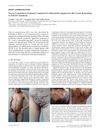
January 2015 in “Acta dermato-venereologica” Acitretin significantly reduced inflammatory attacks in a woman with Naevus Comedonicus Syndrome but caused side effects.
19 citations
,
April 2023 in “Antibiotics” This study found that azelaic acid entrapped in transethosomes exhibited enhanced antidermatophyte activity and improved treatment outcomes in guinea pig models of dermatophytosis compared to free azelaic acid.
 April 2016 in “Journal of Investigative Dermatology”
 This study found that topical phenylephrine, an α1-AR agonist, significantly reduced hair shedding and increased epilation force threshold in women experiencing traction alopecia during cosmetic procedures.
 3 citations
,
March 2019 in “Journal of Pigmentary Disorders”
3 citations
,
March 2019 in “Journal of Pigmentary Disorders” This presentation highlighted future directions in acne care, emphasizing the roles of topical and oral antibiotics, as well as skin microbiome studies. It also described how clascoterone targets androgen receptors in hair follicles and sebaceous glands to reduce sebum production.
52 citations
,
August 2021 in “Microorganisms” This review observes higher ACE2 expression in myocardial and lung tissues of heart failure and COPD patients but finds no link between RAAS inhibitors and COVID-19 severity.
June 2025 in “British Journal of Dermatology” This narrative review discussed Avicenna's influential "Canon of Medicine," highlighting its contributions to early dermatology with detailed insights into skin and hair conditions and treatments based on correcting humoral imbalances with lifestyle changes.
1 citations
,
December 2025 in “Diagnostics” This case study reported a rare occurrence of cicatricial alopecia linked to zolpidem-induced sleep-related amnestic behavior, highlighting the importance of a comprehensive medication history for accurate diagnosis.
 14 citations
,
June 1952 in “The BMJ”
14 citations
,
June 1952 in “The BMJ” Phenobarbitone can cause severe and sometimes fatal skin reactions.

In this study, 1'-S-1'-acetoxychavicol acetate (ACA) from Alpinia galanga showed potential in suppressing testosterone-induced hair loss by inhibiting Nox isozymes in a mouse model of androgenetic alopecia.
 1 citations
,
January 1989 in “Journal of dermatological treatment”
1 citations
,
January 1989 in “Journal of dermatological treatment” Azelaic acid may help treat acne by killing bacteria, reducing inflammation, and preventing clogged pores.
 76 citations
,
November 2009 in “Medical Clinics of North America”
76 citations
,
November 2009 in “Medical Clinics of North America” This article reviews the hormonal and medication-related factors associated with acne development but does not present new research findings.
May 2023 in “Zenodo (CERN European Organization for Nuclear Research)” In this review, researchers synthesized current knowledge on Eclipta alba (Bhringaraja) from traditional Ayurvedic texts and scientific literature, reporting its wide range of pharmacological properties, including hepatoprotective, antioxidant, antimicrobial, and anticancer effects, attributed to its chemical compounds like wedelolactone.
 4 citations
,
October 2022 in “Microbial Cell Factories”
4 citations
,
October 2022 in “Microbial Cell Factories” This study identified novel endophytic actinobacteria from the Citrullus colocynthis plant with antibacterial properties, suggesting potential for new antibiotic development against multi-drug-resistant bacteria.
 September 1988 in “Inpharma (Balgowlah)”
 Retinoids are effective for acne but can cause serious side effects.

This scoping review found that chemotherapy-induced alopecia in breast cancer patients, especially when using anthracycline- and taxane-based regimens, occurs at higher rates and with more persistence than historically reported.
 February 2020 in “International research journal of pharmacy”
 This study suggests that a topical emulsion containing Camellia sinensis and Allium cepa extracts may show promise for treating alopecia areata in Wistar rats.
86 citations
,
December 2002 in “Tissue Antigens” In this study, researchers found that the AIRE G961C variant is a significant risk factor for severe alopecia areata and early-onset cases, particularly in patients with alopecia universalis.
 1 citations
,
May 2018 in “International Journal of Advanced Community Medicine”
1 citations
,
May 2018 in “International Journal of Advanced Community Medicine” In this research, a new cream containing salicylic acid was developed to treat acne vulgaris, showing no allergic reactions or skin irritation and maintaining stability in controlled conditions, suggesting potential future benefits for skin care and anti-acne treatment.
16 citations
,
October 2018 in “BMC Complementary and Alternative Medicine” In this animal study, the methanolic extract of Crataeva nurvala leaves was found to possess sedative and anxiolytic properties, potentially linked to GABAergic activity and certain neuroactive compounds.