July 2026 in “Journal of Medicinal Chemistry” In this study, candidate compound 39 demonstrated potent androgen receptor antagonism and faster hair-growth efficacy in a mouse model compared to pyrilutamide, while maintaining favorable safety and pharmacokinetic profiles, suggesting potential for topical use in androgenic alopecia.
April 2025 in “European Journal of Pharmaceutics and Biopharmaceutics” This study developed and tested Bicalutamide-loaded lipid vesicles in dissolving microarray patches for topical application, finding that they effectively deliver Bicalutamide through murine skin while maintaining a favorable safety profile, suggesting potential to improve treatments for androgenetic alopecia.
 2 citations
,
April 2023 in “Expert Review of Clinical Immunology”
2 citations
,
April 2023 in “Expert Review of Clinical Immunology” This review details how baricitinib successfully demonstrated significant hair regrowth in clinical trials for severe alopecia areata, now leading to its approval as the first systemic therapy for the condition, while also highlighting the importance of assessing individual risk factors for adverse events.
 January 2022 in “Asian journal of Current Research in Clinical Cancer”
 This study reviews the potential of dibenzo derivatives as safer cancer treatments but finds conflicting evidence about their effectiveness, possibly due to structural differences among the compounds, and reports no new results.
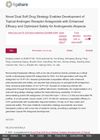
This study found that the optimized AR antagonist compound 39 showed potent hair growth activity with improved safety in mice, suggesting potential for better topical treatments for androgenetic alopecia.
 June 2023 in “Faculty Opinions – Post-Publication Peer Review of the Biomedical Literature”
 Bicalutamide mesotherapy improved hair density in women with hair loss and was well received.
 3 citations
,
April 2017 in “Clinical Drug Investigation”
3 citations
,
April 2017 in “Clinical Drug Investigation” The researchers concluded that after the 2013 EMA recommendation, there was an overall reduction in CPA/EE prescriptions, but no substantial change in patient diagnoses or potential concurrent hormonal contraceptive use.
14 citations
,
January 1980 in “Journal of steroid biochemistry/Journal of Steroid Biochemistry” This study found that both cyproterone acetate alone and combined with ethinyl oestradiol reduced androgen levels and slightly increased SHBG binding in women with hirsutism, but showed no difference in hair regrowth rate between the treatments.
 November 2023 in “Bioorganic Chemistry”
 This review provides an overview of clinically approved small molecule drugs targeting androgen receptors and discusses therapeutic applications, without presenting new experimental results.
 November 2025 in “SKIN The Journal of Cutaneous Medicine”
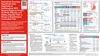
 This phase 3 trial found that over 50% of adolescents with severe alopecia areata achieved successful hair regrowth after 52 weeks on baricitinib 4-mg, with no new safety concerns reported compared to existing safety profiles.
1 citations
,
December 1970 in “European journal of endocrinology” This study reports experience treating 140 women with hirsutism and other virilism signs using cyproterone acetate and ethinyl estradiol, focusing on those treated for over five months.
 11 citations
,
August 2007 in “Bioorganic & Medicinal Chemistry Letters”
11 citations
,
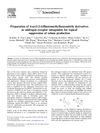
August 2007 in “Bioorganic & Medicinal Chemistry Letters” This study found that among the tested analogs, compound 4e was the most effective in inhibiting wax esters in vivo in the Golden Syrian hamster ear model.
3 citations
,
May 2025 in “Carbohydrate Polymers” In this study, researchers developed a dissolvable microneedle patch containing baricitinib for alopecia areata treatment, reporting significantly higher hair growth in mouse models compared to controls, suggesting its potential as an effective, pain-free topical therapy.
50 citations
,
December 2006 in “Bone” This study found that the steroidal aromatase inhibitor exemestane stimulated proliferation of human osteoblast cells, suggesting both androgen receptor-dependent and independent pathways are involved.
19 citations
,
August 2023 in “Journal of Dermatological Treatment” This case study reports that abrocitinib therapy led to clinical remission of alopecia universalis in a patient with a history of drug-induced DRESS, suggesting its potential as a treatment option.
August 2025 in “JAAD International” Bicalutamide may take longer to work for female hair loss, and higher doses might be needed.

This study observed that a combination of sinapic acid and glabridin from Zhimo herbal extract improved hair growth and reduced oxidative stress in a DHT-induced model of androgenetic alopecia in mice by preventing ferroptosis and stabilizing β-Catenin, offering potential application for AGA treatment.
129 citations
,
January 2004 in “Journal of medicinal chemistry” This study synthesized nonsteroidal ligands as second-generation androgen receptor agonists and identified three compounds with significant anabolic activity and moderate to minimal androgenic activity in vivo.
94 citations
,
July 1991 in “Clinical endocrinology” In this study, cyproterone acetate at 2 mg daily was found to be as effective as higher doses in reducing hair growth for hirsute women over 12 months.
 January 2024 in “Clinical and Experimental Dermatology”
 In this study, baricitinib treatment over an average of 18.5 months resulted in a 72% reduction in alopecia severity scores among patients aged 65 or older, with mild adverse effects and no severe complications reported.
May 2026 in “Journal of Assisted Reproduction and Genetics” In this study, researchers developed and tested a novel peptide, AMHR2BP, which mimics the function of Anti-Müllerian hormone to protect ovarian follicles in mice, showing promise for preserving ovarian health during chemotherapy without causing toxicity.
In this study, researchers optimized the soft drug AR antagonist 14-P1 to create candidate 39, which demonstrated effective AR antagonism and safety in a hair-growth mouse model, showing similar efficacy to pyrilutamide but with quicker onset and a lower risk of systemic toxicity.
 September 2023 in “Journal of The American Academy of Dermatology”
 This announcement discusses the recent FDA approval of baricitinib for treating severe alopecia areata in adults and reports no new clinical results.
![Activity of 17β-(N-Alkyl/Arylformamido) and 17β-[(N-Alkyl/Aryl) Alkyl/Arylamido]-4-Methyl-4-Aza-5α-Androstan-3-Ones as 5α-Reductase Inhibitors in the Hamster Flank Organ and Ear](/images/assets/861159f1-7bd4-420c-a16b-4829458efe68/small/15592.jpg) 10 citations
,
August 1998 in “Journal of Investigative Dermatology”
10 citations
,
August 1998 in “Journal of Investigative Dermatology” This study observed that the compound EM-402 reduced 5α-reductase activity and sebaceous gland size in the flank organs and ears of hamsters, indicating potent localized anti-androgenic effects without systemic action.
 September 2024 in “Journal of the American Academy of Dermatology”
 In this study, patients with severe alopecia areata treated with baricitinib over 152 weeks experienced sustained patient-reported improvements in scalp, eyebrow, and eyelash hair regrowth, with higher responders observed in the 4mg dose group compared to the 2mg group.
56 citations
,
July 2014 in “PloS one” This study found that selective androgen receptor modulators (SARMs) significantly inhibited tumor growth and metastasis-promoting factors in AR-positive triple-negative breast cancer models.
 September 2011 in “American Journal of Clinical Dermatology”
 The birth control pill containing ethinylestradiol and chlormadinone may help treat acne and other skin and hair conditions related to hormones.
 July 1991 in “Endocrinology”
 This study suggests that combining the 5α-reductase inhibitor 4-MA with the antiandrogen Flutamide may improve prostate cancer therapy by additively inhibiting prostatic growth and androgen-sensitive functions in rats.
3 citations
,
May 2017 in “Bioorganic & medicinal chemistry letters” This study identified compounds 11d and 11k as potential dual 5α-reductase inhibitors and AR antagonists with significant anti-proliferative effects on prostate cancer cell lines, suggesting they may offer therapeutic value.
 15 citations
,
January 2024 in “The AAPS Journal”
15 citations
,
January 2024 in “The AAPS Journal” This study demonstrates that bioequivalence for proposed 50-mg ritlecitinib capsules versus clinical 100-mg capsules can be supported using a PBPK model-based biowaiver, achieving over 90% probability of success.