8 citations
,
October 2013 in “Der Hautarzt” This article discusses approaches to diagnosing and treating androgenetic alopecia but reports no new clinical results.
July 2020 in “Journal of Tissue Engineering and Reconstructive Surgery” January 2026 in “Dermatologic Therapy” This study found that a hair serum containing Acanthus ebracteatus extract improved hair regrowth in men with androgenic alopecia, increasing hair count and density of anagen hairs over a 6-month period, with combination treatments showing early effectiveness.
 January 2007 in “대한피부과학회지”
 In this clinical trial, the topical agent AP-FHG0604T significantly increased hair counts and growth rates in women with female pattern hair loss compared to a placebo, though some reported mild local irritation.
 January 2020 in “bioRxiv (Cold Spring Harbor Laboratory)”
 This study found that the ethyl acetate extract of Semecarpus anacardium leaves demonstrated cytotoxicity against MCF-7 cancer cells and induced apoptosis, suggesting potential as a cancer treatment with fewer side effects.
August 2025 in “Journal of Polymer Science” This review reports that combining adipose-derived stem cells with decellularized extracellular matrix enhances tissue repair by improving scaffold biological activity and promoting angiogenesis, integration, and functional regeneration across various tissues, while addressing challenges in traditional transplantation methods.
 January 1983 in “Elsevier eBooks”
 This article reviews the discovery and various physiological effects of cyproterone acetate, reporting its established indications for several androgen-driven conditions but providing no new clinical data.
April 2023 in “Journal of Investigative Dermatology” This study found that intradermal injection of a specially designed RNA molecule, cp-asiAR, successfully reduced androgen receptor levels and promoted hair growth in a mouse model of androgenetic alopecia, while also improving hair follicle characteristics in ex vivo human scalp tissues without significant toxicity.
 March 2023 in “Journal of Cosmetic Dermatology”
 This case report illustrates that fibrosing alopecia in a pattern distribution may be misdiagnosed as androgenetic alopecia due to similar hair loss patterns, but distinctive trichoscopic and histopathologic features help differentiate it.
November 2007 in “Cancer Epidemiology and Prevention Biomarkers” In this study, PSA levels were significantly lower among African-American men with higher C-peptide levels and Caucasian men with higher HbA1c levels, suggesting a link between metabolic markers and prostate cancer detection.
 December 2024 in “Journal of Medicinal Chemistry”
 In this study, researchers discovered a compound called C6 that exhibits excellent skin retention and androgen receptor degradation properties, significantly promoting hair regeneration in a mouse model of androgenetic alopecia following non-invasive topical application, suggesting potential for broader use of PROTACs in treating skin diseases.
20 citations
,
July 1998 in “Archives of dermatology” November 2016 in “Pediatric dermatology” This article describes the development of a patient handout database by the SPD to provide reliable medical information for use by various healthcare providers; it reports no new clinical results.

This study suggests that a combination of blue light photobiomodulation and biomimetic peptide infiltrations may effectively increase hair density in patients with androgenetic alopecia.

In this preclinical study, PA-011 derived from Periplaneta americana showed significant hair regrowth effects in androgenetic alopecia mouse models by inhibiting inflammation and oxidative stress, activating hair follicle stem cell proliferation, and normalizing skin microbiota, suggesting promise as an AGA treatment.
10 citations
,
January 2016 in “ACG Case Reports Journal” This case report describes a 73-year-old male with numerous colon polyps whose long-term use of Cape Aloe likely caused melanosis coli, which helped highlight the polyps' locations.
 December 2023 in “Clinical Cosmetic and Investigational Dermatology”
 This case report describes an 8-year-old boy in Saudi Arabia diagnosed with IFAP syndrome, highlighting its distinct characteristics and distinguishing features from similar conditions, and notes successful genetic confirmation of the disorder.
 76 citations
,
May 2011 in “Cell death and differentiation”
76 citations
,
May 2011 in “Cell death and differentiation” This study found that the enzyme A20 helps regulate EDAR-induced NF-κB signaling in mice, preventing ectodermal abnormalities like disheveled hair and assuring proper skin and appendage development.
 13 citations
,
April 1994 in “Journal of Investigative Dermatology”
13 citations
,
April 1994 in “Journal of Investigative Dermatology” Androgen receptors found in monkey scalps, similar to humans, affect hair growth.
 11 citations
,
September 2011 in “British Journal of Dermatology”
11 citations
,
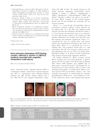
September 2011 in “British Journal of Dermatology” New ABCA12 gene mutations were linked to a skin condition with scaling and hair loss, and a treatment helped with hair loss in a related case.
52 citations
,
May 2011 in “Journal of Neuroendocrinology” This study found that palmitoylethanolamide may stimulate allopregnanolone synthesis and reduce oxidative stress in astrocytes through PPAR-α activation, suggesting a neuroprotective role.
1 citations
,
May 2024 in “Journal of Investigative Dermatology” African American adults and non-White children experience more hair loss episodes than White patients with alopecia areata.
 1 citations
,
September 2022 in “Nepal journal of dermatology, venereology & leprology”
1 citations
,
September 2022 in “Nepal journal of dermatology, venereology & leprology” This review examines the use of apremilast for non-FDA-approved dermatological conditions, noting varied efficacy but a favorable safety profile compared to conventional treatments.
3 citations
,
June 2023 in “Frontiers in Medicine” This study constructed a model using serum levels of BMP2, CD8A, PRF1, and XCL1 as a non-invasive biomarker to accurately predict recurrence in patients with alopecia areata.
March 2015 in “DergiPark (Istanbul University)” This study concluded that topical psoralen and ultraviolet A photochemotherapy is an effective and safe treatment for alopecia areata, as it produced a good response in 43.8% of patients.
 March 2022 in “Journal of The American Academy of Dermatology”
 This study characterized the incidence of hair loss patterns among men of different races, highlighting a lack of direct racial comparisons in previous research.
 11 citations
,
November 2013 in “Skin Pharmacology and Physiology”
11 citations
,
November 2013 in “Skin Pharmacology and Physiology” This case collection reports that 15% azelaic acid gel can be effectively used as a monotherapy to treat mild-to-moderate adult female acne.
 56 citations
,
December 2011 in “The Plant Journal”
56 citations
,
December 2011 in “The Plant Journal” AGD1 is important for root hair development in Arabidopsis, working with phosphoinositide signaling and the actin cytoskeleton.
 January 2000 in “Springer eBooks”
 This article discusses the terminology and historical context of androgenic alopecia, also known as androgenetic alopecia, but presents no new research findings.
January 2021 in “Brazilian Journal of Development” This study found that women with androgenic alopecia in Patos, Brazil, experienced significant psychological and social impacts, including feelings of frustration, low self-esteem, and social withdrawal.