 1 citations
,
May 2015 in “Journal of The American Academy of Dermatology”
1 citations
,
May 2015 in “Journal of The American Academy of Dermatology” Finasteride for hair loss in young men may significantly increase the risk of sexual dysfunction.
20 citations
,
October 2024 in “British Journal of Dermatology” In this updated guideline, the British Association of Dermatologists' expert group provided 49 management recommendations for alopecia areata and highlighted future research priorities, aiming to improve care for individuals affected by this condition.
 September 2021 in “CRC Press eBooks”
 This article discusses alopecia areata incognito, highlighting its diffuse hair loss pattern and favorable response to steroid treatment, but it reports no new clinical data.
 May 2022 in “The Journal of Sexual Medicine”
 In this retrospective study at Toyama University Hospital, amoxapine was reported to significantly improve semen volume, sperm concentration, and total sperm count in 17 men with ejaculatory disorders, with no observed side effects over an average of 13 months of therapy.
 14 citations
,
June 2021 in “British journal of dermatology/British journal of dermatology, Supplement”
14 citations
,
June 2021 in “British journal of dermatology/British journal of dermatology, Supplement” This paper presents consensus guidelines for standardized diagnostic criteria and assessment methods for frontal fibrosing alopecia to improve clinical research and data collection globally.
 January 2015 in “Ankara Üniversitesi Tıp Fakültesi mecmuası”
 In this study, patients with advanced androgenetic alopecia stages had higher carotid intima media thickness and worse aortic elasticity, suggesting a potential link to subclinical atherosclerosis.
4 citations
,
October 2020 in “The journal of investigative dermatology. Symposium proceedings/The Journal of investigative dermatology symposium proceedings” This study suggests that IL-4 and IL-13 may play a role in the immunopathogenesis of alopecia areata in some patients, indicating a possible Th2-driven pathway in this condition.
 7 citations
,
January 2019 in “Australasian Journal of Dermatology”
7 citations
,
January 2019 in “Australasian Journal of Dermatology” In this study, the CYP 21A2 gene p.V281L mutation was associated with an increased susceptibility to familial frontal fibrosing alopecia, suggesting an antigen-driven mechanism linked to certain human leukocyte antigen haplotypes.
 January 2023 in “Postępy Dermatologii i Alergologii”
 This review provides an overview of azelaic acid's dermatological uses, mechanisms, and its potential in skin cancer treatment, but reports no new clinical results.
September 2025 in “Science Advances” This study reports that PADI4, an enzyme involved in posttranslational protein modifications, regulates progenitor cell transitions in hair follicle development by repressing transcription and interacting with translational and ribosomal processes.
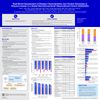
In this retrospective study of alopecia areata patients across several European countries, researchers observed a notable reduction in SALT scores, but few patients reached or maintained a clinically significant SALT score of ≤20, indicating potentially limited effectiveness of current treatments for extensive hair loss.
244 citations
,
January 2010 in “Journal of the American Academy of Dermatology” This review discusses treatment options for alopecia areata and suggests tailored treatment plans, noting the challenges posed by spontaneous remission and limited high-quality clinical trials.
 April 2017 in “Journal of Investigative Dermatology”
 This study observed that using a 1064 nm Nd: YAG laser may stabilize hair loss and promote new growth in some females with frontal fibrosing alopecia, though individual results varied.
 2 citations
,
February 2023 in “Journal of the American Academy of Dermatology”
2 citations
,
February 2023 in “Journal of the American Academy of Dermatology” This study observed that patients with autism spectrum disorder have a higher risk of developing alopecia areata compared to those without ASD, suggesting a possible link between the two conditions.
 March 2005 in “Journal of the American Academy of Dermatology”
 Bexarotene 1% topical gel helped some patients with alopecia areata regrow hair.
 10 citations
,
January 2023 in “Journal of the European Academy of Dermatology and Venereology”
10 citations
,
January 2023 in “Journal of the European Academy of Dermatology and Venereology” This review highlights the significant negative impact of alopecia areata on quality of life, mental health, and work, calling for individualized approaches and effective treatments to mitigate these effects.
 June 2026 in “Zenodo (CERN European Organization for Nuclear Research)”
 This source reviews alopecia areata, highlighting its epidemiology, immune-related causes, diagnostic methods, and the shift in treatment with JAK inhibitors like baricitinib and ritlecitinib, marking the first disease-modifying options for this hair loss condition.
 6 citations
,
June 2018 in “PLOS ONE”
6 citations
,
June 2018 in “PLOS ONE” This study demonstrated that the Alopecia Areata Assessment Tool (ALTO) effectively identifies alopecia areata cases with high sensitivity and specificity in a dermatology clinic setting.
May 2018 in “Endocrine Abstracts” SFRP-4 might be an early indicator of diabetes and hypertension in men with androgenic alopecia.
December 2022 in “IntechOpen eBooks” This source evaluates the clinical effectiveness of 308 nm monochromatic excimer phototherapy in treating moderate-to-severe alopecia areata, noting that both laser and lamp methods show promise without significant risks.
August 2022 in “Precision Clinical Medicine” This study found that the 3' UTR of JAM-A acts as a key competing endogenous RNA that supports dermal papilla cell function and hair follicle regeneration in alopecia areata.
April 2025 in “International Journal of Clinical & Medical Case Studies” This source explains that unlike genetic hormonal alopecia, alopecia areata is associated with inflammatory factors and may also involve psychological and genetic contributions.
8 citations
,
January 2020 in “PeerJ” This study found significant structural and compositional differences in hair affected by alopecia areata compared to healthy hair, using a range of physico-chemical investigation methods.
 April 2024 in “International journal of women's health”
 This review explores adult female acne, focusing on its multifactorial causes, treatment options, and impact on quality of life, but reports no new clinical results.
 4 citations
,
May 2018 in “Electronic Journal of Biotechnology”
4 citations
,
May 2018 in “Electronic Journal of Biotechnology” This study found that all-trans retinoic acid (ATRA) negatively affects hair growth by reducing goat dermal papilla cell viability and growth factor expression.
This study introduces a novel pro-drug formulation of all-trans retinoic acid that reduces skin inflammation and achieves sustained drug release over several days compared to traditional methods.
July 2026 in “Macromolecular Bioscience” In this study on wound healing, sulfated glycosaminoglycans from sturgeon cartilage enhanced fibroblast cell proliferation, migration, and collagen deposition, significantly accelerating wound closure and promoting re-epithelialization in both in vitro and in vivo tests.
 87 citations
,
December 2016 in “British journal of dermatology/British journal of dermatology, Supplement”
87 citations
,
December 2016 in “British journal of dermatology/British journal of dermatology, Supplement” This study describes and characterizes four cases of alopecia areata induced by immune checkpoint inhibitor therapy in cancer patients, highlighting the importance of recognizing and managing these hair-related adverse events.
April 2019 in “Journal of the Endocrine Society” This case report documents successful virilization, including penile length increase, in a boy with partial androgen insensitivity syndrome using high-dose testosterone combined with anastrozole.
This study tested a novel cryo-carboxy dispensing device for treating androgenetic alopecia in six volunteers and found an unexpectedly rapid and positive response, with significant hair regrowth observed by day 90, prompting early conclusion of the trial.