September 2026 in “Portuguese Journal of Dermatology and Venereology” In this review, the researchers discuss the potential effectiveness of azelaic acid peels for treating acne vulgaris, melasma, and other skin conditions, while acknowledging that the precise role of these peels in dermatology is not yet fully established due to limited studies.
 August 1995 in “Journal of The European Academy of Dermatology and Venereology”
 New therapy helps treat hair loss.
December 2012 in “http://isrctn.org/>”  18 citations
,
October 2018 in “Nutrients”
18 citations
,
October 2018 in “Nutrients” This study found that Annurca apple polyphenolic extracts reprogram hair follicle metabolism in mice, enhancing mitochondrial activity and keratin production while inhibiting some metabolic pathways.
September 2025 in “Journal of the American Academy of Dermatology”  10 citations
,
December 2005 in “Aktuelle Dermatologie”
10 citations
,
December 2005 in “Aktuelle Dermatologie” This study reported that after 7.5 months of treatment, topical Alfatradiol significantly increased anagen hair rates in women and men with androgenetic alopecia, with minimal side effects.
 1 citations
,
June 2017 in “Journal of The American Academy of Dermatology”
1 citations
,
June 2017 in “Journal of The American Academy of Dermatology” Topical treatment SM04554 safely promotes hair growth in male baldness.
1 citations
,
November 2025 in “International Journal of Dermatology” This study developed the Alopecia Areata Children's Quality of Life Index (AAcQLI) to assess quality of life in children with alopecia areata, demonstrating good reliability and validity in initial tests.
5-ARI therapy may help prevent prostate cancer progression.
 16 citations
,
May 2017 in “American Journal of Clinical Dermatology”
16 citations
,
May 2017 in “American Journal of Clinical Dermatology” This review discusses the clinical features, diagnosis, and treatment options for alopecia areata of the beard and reports no new clinical results.
19 citations
,
April 2023 in “Antibiotics” This study found that azelaic acid entrapped in transethosomes exhibited enhanced antidermatophyte activity and improved treatment outcomes in guinea pig models of dermatophytosis compared to free azelaic acid.
 April 2012 in “Informa Healthcare eBooks”
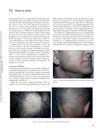
 Alopecia areata is a common autoimmune condition causing varying hair loss, diagnosed by specific patterns of inflammation around hair follicles, with several treatment options available.
10 citations
,
May 2020 in “International Journal of Molecular Sciences” This study suggests that human hair follicles may serve as a model for molecular analysis of ABCA4 gene splice-site variants, facilitating research into the pathogenicity of ABCA4 retinopathies.
9 citations
,
October 2022 in “Journal of Molecular Neuroscience” This study reports a novel LSS gene mutation in an Egyptian family with alopecia intellectual disability syndrome 4, expanding the known clinical and genetic features of the condition.
 1 citations
,
July 2019 in “Medicina Clínica (English Edition)”
1 citations
,
July 2019 in “Medicina Clínica (English Edition)” Tofacitinib partially improved hair regrowth in a patient with severe hair loss.
 13 citations
,
September 2018 in “Journal of the American Academy of Dermatology”
13 citations
,
September 2018 in “Journal of the American Academy of Dermatology” This editorial proposes a new classification for alopecia areata that incorporates the SALT score and body hair involvement, aiming to improve the assessment and treatment outcomes.
April 2025 in “Anais Brasileiros de Dermatologia” Abrocitinib effectively treats severe alopecia areata with significant improvement and no side effects.
 16 citations
,
May 2000 in “Endocrinology”
16 citations
,
May 2000 in “Endocrinology” This study identified a new gene, mrp4, in mice, which suggests it may have a unique role in the growth and development of hair follicles in the ears and tails.
 185 citations
,
August 2005 in “Autoimmunity Reviews”
185 citations
,
August 2005 in “Autoimmunity Reviews” This review discusses alopecia areata as a model for studying tissue-directed autoimmune diseases and reports no new clinical findings.
April 2025 in “International Journal of Dermatology” This study found that Black patients with alopecia areata showed an average 20% reduction in scalp involvement after JAK inhibitor therapy, indicating positive treatment outcomes in this group.
 42 citations
,
November 2018 in “Archives of dermatological research”
42 citations
,
November 2018 in “Archives of dermatological research” Apremilast was not effective in treating moderate-to-severe alopecia areata.
 2 citations
,
November 2015 in “Journal of Investigative Dermatology Symposium Proceedings”
2 citations
,
November 2015 in “Journal of Investigative Dermatology Symposium Proceedings” This article discusses the creation of Alopecia Areata Uniform Protocols by the National Alopecia Areata Foundation to standardize clinical trials for alopecia areata treatments and reports no new results.
April 2012 in “The FASEB Journal” In this study, researchers observed that knocking down the LPA 4 receptor in zebrafish embryos led to vascular and lymph vessel development abnormalities, including edema and decreased heartbeats.
 17 citations
,
December 2015 in “BMC Complementary and Alternative Medicine”
17 citations
,
December 2015 in “BMC Complementary and Alternative Medicine” This study found that Avicennia marina extract significantly inhibited 5α-reductase type 1 activity in human hair dermal papilla cells, suggesting its potential use for treating androgenic alopecia.
161 citations
,
March 1992 in “International Journal of Dermatology” This study analyzed survey responses from 800 alopecia areata patients and found a possible genetic association with increased insulin-dependent diabetes mellitus in relatives but not in the patients themselves.
 2 citations
,
December 2008 in “Journal of Chemical Crystallography”
2 citations
,
December 2008 in “Journal of Chemical Crystallography” This study reports the crystal structure and geometric parameters of a modified Finasteride derivative, highlighting significant differences in dihedral angles compared to its solvated analog and computational models.
 May 2026 in “BMC Medicine”
 This study found that ACOD1 deficiency in dermal papilla cells promotes mitochondrial dysfunction and contributes to cellular senescence in androgenetic alopecia, suggesting ACOD1 as a potential therapeutic target and 4-octyl itaconate as a promising treatment option for AGA.
12 citations
,
December 2011 in “Journal of Dermatological Science” This study suggests that the C-terminal of AHF is crucial for its binding to keratin bundles and modulating the keratin meshwork in hair follicles.
 March 2022 in “Wound practice & research”
 This review synthesizes current evidence on alopecia areata, detailing its clinical features, pathogenesis, and treatment options, but does not present new clinical results.
 July 2018 in “British Journal of Dermatology”
 Hair regrowth was seen in 83% of children with alopecia, immune system plays a role in the condition, and various treatments showed effectiveness for hair and nail disorders.