September 2019 in “Journal of Investigative Dermatology” CCCA in women of African ancestry may be caused by PADI3 gene mutations and intense hair grooming.
11 citations
,
October 1941 in “Experimental Biology and Medicine” PABA helps prevent gray hair and hair loss in mice.
 September 2024 in “Journal of the American Academy of Dermatology”
 In this study, a novel compound named AH-001 demonstrated effective androgen receptor protein degradation, reducing hair loss progression in a mouse model of androgenetic alopecia, with minimal systemic exposure and side effects, suggesting potential for safer treatment.
 25 citations
,
November 2014 in “British Journal of Dermatology”
25 citations
,
November 2014 in “British Journal of Dermatology” This study found various ABC transporters are transcribed in human hair follicles, suggesting their possible role in HF biology and potential for new therapeutic interventions.
 24 citations
,
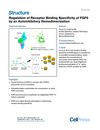
July 2017 in “Structure”
24 citations
,
July 2017 in “Structure” In this study, researchers found that ligand homodimerization controls the receptor binding specificity of the FGF9 subfamily, preventing off-target activation of FGFR "b" isoforms.
This study introduces a novel visible light-mediated intramolecular [2+2] cycloaddition process that forms 6-azabicyclo[3.1.1]heptanes, offering a new synthesis route for bioisosteric mimetics used in drug discovery, potentially expanding medicinal chemistry applications beyond traditional limitations.
May 2023 in “International journal of molecular sciences” This study investigated the role of the ABCA4 gene in human keratinocytes and hair follicle stem cells and found that silencing the ABCA4 gene increases the harmful effects of all-trans-retinal on hair follicle stem cells.
 July 2026 in “bioRxiv (Cold Spring Harbor Laboratory)”
 In this study, researchers found that the efflux of calcium in root hairs of Arabidopsis thaliana, particularly through the ER-localized ACA2 and ACA7, is crucial for modulating cytoplasmic calcium signals and enabling proper root hair growth, with disruptions leading to impaired elongation.
 1 citations
,
August 2021 in “Journal of The American Academy of Dermatology”
1 citations
,
August 2021 in “Journal of The American Academy of Dermatology” In this study, baricitinib treatment led to significant regrowth of scalp, eyebrow, and eyelash hair in alopecia areata patients compared to placebo, with higher effectiveness seen at the 4-mg dose.
 January 2024 in “Archives of Endocrinology and Metabolism”
 In this case report, a novel heterozygous mutation in the insulin receptor gene was identified in an adolescent girl with type A insulin resistance syndrome, characterized by excessive hair growth and skin changes, and her mother.
 11 citations
,
March 2014 in “Journal of Investigative Dermatology”
11 citations
,
March 2014 in “Journal of Investigative Dermatology” In this study, basal cell carcinoma developed in Ptch-deficient mice only after chemical treatment, not skin wounding, suggesting a second unknown event is necessary for tumor formation.

CaBP1 and 2 are necessary for maintaining calcium currents and hearing in inner ear cells.
March 2026 in “Experimental Dermatology” This study developed an in vitro model using NTERT keratinocytes expressing AEC-related TP63 mutations, which replicated skin defects observed in AEC patients and offers a valuable tool for understanding the disorder and developing new treatments.
July 2024 in “Journal of Investigative Dermatology” This study suggests that macrophages, especially CD206+ subsets, play a key role in hair growth induced by squaric acid dibutyl ester, a therapy used for alopecia areata.
 November 2023 in “bioRxiv (Cold Spring Harbor Laboratory)”
 This study used a novel fluorescent tagging method in mice to observe collagen IV dynamics during hair follicle development, revealing that alterations in basement membrane turnover can influence epithelial progenitor cell behavior and organ morphology by affecting cell proliferation and movement.
 7 citations
,
November 2010 in “Genesis”
7 citations
,
November 2010 in “Genesis” Mouse Scube3 affects teeth, tongue, vibrissae, and eye development, but not facial structure or limb growth.
 12 citations
,
February 1998 in “Gene”
12 citations
,
February 1998 in “Gene” This study identified two high sulfur protein genes, B2E and B2F, in rats, which are expressed in hair cortical cells during anagen and contribute to hair fiber production.
 1 citations
,
April 2017 in “Journal of Investigative Dermatology”
1 citations
,
April 2017 in “Journal of Investigative Dermatology” This study suggests that alkaline phosphatase-regulated expression of CCL5 contributes to the trichogenicity of human dermal papilla spheres.
August 2022 in “Precision Clinical Medicine” This study found that the 3' UTR of JAM-A acts as a key competing endogenous RNA that supports dermal papilla cell function and hair follicle regeneration in alopecia areata.
11 citations
,
September 2021 in “American Journal of Medical Genetics Part A” This study reports that newly diagnosed patients with Bachmann-Bupp syndrome exhibit a broader phenotype than previously documented, including late-onset seizures, and suggests a possible universal biochemical mechanism involving elevated ODC activity.
1 citations
,
February 2025 in “Journal of the Neurological Sciences” This study suggests that BTP levels in cerebrospinal fluid might help diagnose CIDP and predict therapy response but require validation in larger cohorts.
 45 citations
,
August 2010 in “Hormone Molecular Biology and Clinical Investigation”
45 citations
,
August 2010 in “Hormone Molecular Biology and Clinical Investigation” This study found that SRD5a-3 is a highly efficient enzyme for converting hormones into androgens, with dutasteride being a much more potent inhibitor of SRD5a-3 than SRD5a-2.
21 citations
,
September 2021 in “New Phytologist” This study found that the transcription factor HB24 plays a critical role in root hair elongation in Arabidopsis thaliana by promoting the conversion of indole-3-butyric acid to indole-3-acetic acid through regulation of IBR1 expression.
4 citations
,
January 2023 in “Journal of Clinical Investigation” This study identified a recurrent mutation in the endothelin receptor type A associated with mandibulofacial dysostosis with alopecia, and proposed a mechanism involving increased ligand affinity due to structural changes.
 8 citations
,
July 2024 in “PLoS ONE”
8 citations
,
July 2024 in “PLoS ONE” In a comparative genomic study, researchers observed significant genetic differences among the three chemical races of the alga Botryococcus braunii, leading them to propose reclassifying these races as distinct species based on their unique genomic characteristics.
 April 2018 in “Journal of Investigative Dermatology”
 In this study, the authors identified a role for hair follicles in regulating the formation and sympathetic innervation of arrector pili muscles, influencing hair follicle stem cell activity and potentially explaining hair loss associated with beta-blockers and androgenic alopecia.
 July 2024 in “Egyptian Journal of Medical Human Genetics”
 In this case-control study, the researchers found no significant association between IL-4 VNTR intron 3 and TNF-α (rs1799964) gene polymorphisms and alopecia areata susceptibility among the Egyptian population.
This study found that the protein Formin 2 helps regulate cell-to-cell transport in thale cress by stabilizing actin filaments at plasmodesmata, with its absence leading to increased permeability and vulnerability to viral infections.
3 citations
,
January 2017 in “Acta Dermato Venereologica” This study found that a specific T-cell receptor motif associated with lipid-antigen stimulation may play a role in the pathogenesis of folliculotropic mycosis fungoides.
47 citations
,
June 1994 in “Experimental Cell Research” mHa2 and mHa3 keratins have different structures and roles in mouse hair and tongue tissues.