2 citations
,
January 1975 in “Archives of Dermatological Research” Certain enzymes react strongly with some hormones in rat skin during hair growth, mainly in sebaceous glands and hair sheaths.
 1 citations
,
May 2019 in “Journal of The European Academy of Dermatology and Venereology”
1 citations
,
May 2019 in “Journal of The European Academy of Dermatology and Venereology” New method, hair distribution width (HDW), improves accuracy in diagnosing androgenetic alopecia (AGA).
 February 2026 in “Chromatographia”
 This study used advanced chromatographic and mass spectrometric techniques to develop a method for reliably detecting 17 hair growth compounds in consumer products, aiming to enhance regulatory compliance and ensure consumer safety against illicit compounds.
12 citations
,
September 2014 in “Bone” This study characterized two siblings with hereditary vitamin D resistant rickets and a mutation in the vitamin D receptor, finding no immune-related disorders despite a defective T cell response to vitamin D.
 June 2024 in “International Journal of Pharmaceutical Quality Assurance”
 This study established a new reverse-phase high-performance liquid chromatography method to accurately and precisely quantify silodosin and dutasteride in mixtures, meeting International Council of Harmonization validation criteria for stability, sensitivity, and recovery.
5 citations
,
July 2017 in “International journal of endocrinology and metabolism/International journal of endocrinology and metabolism.” This study described the clinical and genetic features of two Iranian siblings with hereditary vitamin D resistant rickets, identifying a specific VDR gene mutation contributing to their symptoms.
 25 citations
,
August 2014 in “Endocrinology”
25 citations
,
August 2014 in “Endocrinology” This study created a humanized mouse model of hereditary vitamin D-resistant rickets that lacks alopecia, indicating the mutant receptor's potential to explore the syndrome's characteristics beyond vitamin D binding.
 199 citations
,
April 2010 in “Nature”
199 citations
,
April 2010 in “Nature” A gene called APCDD1, which controls hair growth, is found to be faulty in a type of hair loss called hereditary hypotrichosis simplex.

This case report describes a 33-year-old Kashmiri woman with Woodhouse-Sakati syndrome who has a rare DCAF17 gene mutation, c.321+1G>A, providing further evidence for its role in the genetic basis of this neuroendocrine disorder.
78 citations
,
November 2005 in “Endocrinology” This study found that Hairless (Hr) acts as a corepressor of the vitamin D receptor (VDR) in human keratinocytes, blocking the action of vitamin D on keratinocyte differentiation.
 December 2024 in “Journal of Clinical Research in Pediatric Endocrinology”
 This study explains that congenital adrenal hyperplasia due to 21-hydroxylase deficiency presents as a continuous phenotype and involves symptoms ranging from virilization to accelerated growth in children, with diagnosis relying on clinical, biochemical, and genetic evaluation.
26 citations
,
September 1999 in “Canadian Journal of Botany” This study found that a recessive mutation in the RHD4 gene of Arabidopsis thaliana leads to slower and more variable tip growth in seedling root hairs, resulting in shorter and wider hairs than in wild-type plants.
September 2018 in “Fertility and Sterility” In this study, researchers observed that overweight Taiwanese women with PCOS who carry the HSD3B1 1245C allele have a significantly higher risk of developing androgenic alopecia compared to those with the wild-type allele.
22 citations
,
April 2010 in “Journal of Cellular Biochemistry” This study concluded that the hairless protein interacts with the vitamin D receptor to repress transcription crucial for hair cycling, employing multiple protein interfaces and modulating chromatin structure.
 7 citations
,
May 2019 in “Journal of the Formosan Medical Association”
7 citations
,
May 2019 in “Journal of the Formosan Medical Association” This study found that overweight women with polycystic ovary syndrome carrying the HSD3B1 1245C allele had an increased presence of female pattern hair loss compared to those with the wild-type genotype.
8 citations
,
March 2011 in “Endocrine” In this study, researchers identified a novel p.R50X mutation in the vitamin D receptor gene, linked to hereditary vitamin D-resistant rickets in two siblings.
January 2006 in “OpenCommons at University of Connecticut (University of Connecticut)” This study found that double transgenic Arabidopsis plants overexpressing both AVP1 and AtNHX1 showed improved salt tolerance and enhanced root hair and hypocotyl growth compared to single transgenic lines.
 12 citations
,
January 2012 in “Dermatology”
12 citations
,
January 2012 in “Dermatology” Finasteride helped treat a 28-year-old's facial skin condition.
 10 citations
,
February 2008 in “Photochemistry and photobiology”
10 citations
,
February 2008 in “Photochemistry and photobiology” This study suggests that the vitamin D receptor and hairless gene may directly regulate each other via a transcriptional mechanism, potentially explaining phenotypic similarities between atrichia and VDRRIIa rickets.
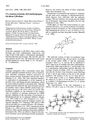 December 1998 in “Acta Crystallographica Section C-crystal Structure Communications”
 This study describes the molecular conformation and intermolecular interactions in the crystalline structure of the compound C24H31BrO4.
56 citations
,
November 2007 in “Molecular and cellular endocrinology” This study identified enzymes responsible for regulating androgen action in the human prostate, suggesting that inhibiting AKR1C2 or RL-HSD may have therapeutic potential in androgen insufficiency or benign prostatic hyperplasia, respectively.
 August 2025 in “International Journal of Contemporary Pediatrics”
 This case report presents a rare subtype of hypomyelinating leukodystrophy linked to a PYCR2 gene mutation, emphasizing exome sequencing's value in diagnosing undiagnosed childhood HLDs with atypical symptoms.
 4 citations
,
January 1989 in “Journal of Steroid Biochemistry”
4 citations
,
January 1989 in “Journal of Steroid Biochemistry” This study suggests that 5-ADIOL-S may contribute to the synthesis of potent androgens in peripheral tissues, and 3 alpha-DIOL-S could be a marker of androgen metabolism in various female patient groups.
 70 citations
,
April 2014 in “Annales d'endocrinologie”
70 citations
,
April 2014 in “Annales d'endocrinologie” This review discusses the pathways of androgen biosynthesis and reports no new findings, highlighting the need to understand the interplay between the classic and backdoor pathways.
 45 citations
,
August 2010 in “Hormone Molecular Biology and Clinical Investigation”
45 citations
,
August 2010 in “Hormone Molecular Biology and Clinical Investigation” This study found that SRD5a-3 is a highly efficient enzyme for converting hormones into androgens, with dutasteride being a much more potent inhibitor of SRD5a-3 than SRD5a-2.
February 2026 in “Pediatric Dermatology” April 2019 in “Journal of the Endocrine Society” This case report documents successful virilization, including penile length increase, in a boy with partial androgen insensitivity syndrome using high-dose testosterone combined with anastrozole.

This study explores the expression and function of 11β-HSD1 in human hair follicles and its potential regulation of glucocorticoid effects on dermal papilla cells, but reports no definitive findings on 11β-HSD1's role.
1 citations
,
September 2021 in “Frontiers in genetics” This case report identifies a previously undocumented nonsense mutation in DCAF17 in a Chinese patient with Woodhouse-Sakati syndrome, inherited from consanguineous parents.
9 citations
,
April 2016 in “Clinical Endocrinology” This study suggests that measuring scalp hair 17-hydroxyprogesterone and androstenedione concentrations can be a promising tool for monitoring treatment in children with congenital adrenal hyperplasia.