 835 citations
,
October 2008 in “Nature Genetics”
835 citations
,
October 2008 in “Nature Genetics” Lgr5 is a marker for active, long-lasting stem cells in mouse hair follicles.
84 citations
,
September 2008 in “Developmental biology” This study found that cellular retinoic acid-binding proteins and fatty acid-binding proteins are dynamically expressed in skin development and respond differently to retinoic acid, β-catenin, and Notch signaling.
415 citations
,
January 2008 in “Cell” NFATc1 controls hair stem cell activity, affecting hair growth and could be a target for hair loss treatments.
 153 citations
,
October 2007 in “Cell Stem Cell”
153 citations
,
October 2007 in “Cell Stem Cell” New research suggests that skin cell renewal may not require a special type of cell previously thought to be essential.
 57 citations
,
May 2007 in “Nature”
57 citations
,
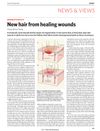
May 2007 in “Nature” This study suggests that wounding skin in adult mice can trigger new hair follicle formation, indicating mammalian skin may have greater regenerative capacity than previously thought.
 829 citations
,
May 2007 in “Nature”
829 citations
,
May 2007 in “Nature” Hair follicles can regrow in wounded adult mouse skin using a process like embryo development.
38 citations
,
December 2006 in “Journal of Investigative Dermatology” Keratin patterns in hair follicles help understand hair growth and potential hair and nail disorders.
207 citations
,
July 2006 in “Development” This study identified a novel MTS24-positive murine keratinocyte population with increased colony-forming ability, suggesting these cells may serve as a new reservoir of proliferative progenitor or stem cells in hair follicles.
1279 citations
,
November 2005 in “Nature Medicine” 335 citations
,
March 2004 in “Development” This study found that continuous β-catenin signaling in adult mouse epidermis can reprogram hair follicles to form benign tumors, which regress after the signaling is discontinued.
387 citations
,
November 2003 in “Journal of Investigative Dermatology” The K15 promoter effectively targets stem cells in the hair follicle bulge.
421 citations
,
September 2003 in “Development” This study concluded that label-retaining cells in mouse epidermis differ in their sensitivity to proliferative stimuli, influencing their division and potential transdifferentiation without consistently depleting their population.
561 citations
,
April 2003 in “Journal of Investigative Dermatology” CD34 is a marker for isolating stem-like cells in mouse hair follicles.
315 citations
,
June 2001 in “Nature Genetics” 338 citations
,
April 2001 in “Current Biology” This study found that transient activation of c-Myc in transgenic mice stimulates keratinocyte proliferation and sebocyte differentiation, affecting normal epidermal and hair follicle development.