 1 citations
,
July 2023 in “Journal of Biophotonics”
1 citations
,
July 2023 in “Journal of Biophotonics” This study found that red light at an irradiance of 8 mW/cm² was most effective in promoting growth and modulating signaling pathways in dermal papilla cells treated with dihydrotestosterone, suggesting the need for personalized photobiomodulation treatment approaches for androgenetic alopecia.
1 citations
,
June 2022 in “Journal of Cosmetic Dermatology” This study in a Korean population identified two novel genetic variants that may increase the risk of androgenetic alopecia, contributing to understanding its genetic basis in non-European populations.
 7 citations
,
March 2022 in “Molecules”
7 citations
,
March 2022 in “Molecules” This study found that 5-bromo-3,4-dihydroxybenzaldehyde (BDB) promoted hair growth in rat vibrissa follicles by activating Wnt/β-catenin and autophagy pathways and inhibiting the TGF-β pathway in dermal papilla cells.
 7 citations
,
August 2021 in “Heliyon”
7 citations
,
August 2021 in “Heliyon” This study suggests that the herbal formulation Phyllotex™ may promote hair growth in androgenetic alopecia by enhancing cell proliferation and reducing oxidative stress and TGF-β1 expression in vitro.
 4 citations
,
December 2020 in “Journal of Dermatology”
4 citations
,
December 2020 in “Journal of Dermatology” This study suggests that impaired autophagy may be a potential mechanism contributing to androgenetic alopecia, as observed in miniaturized hair follicles from balding scalps.
 7 citations
,
September 2020 in “Journal of Cosmetic Dermatology”
7 citations
,
September 2020 in “Journal of Cosmetic Dermatology” This study found that patients with androgenetic alopecia had increased oxidative stress and microinflammation, contributing to hair loss, due to elevated levels of specific serum biomarkers compared to controls.
 57 citations
,
November 2017 in “Nature Communications”
57 citations
,
November 2017 in “Nature Communications” This genome-wide association study identified 71 genetic loci linked to male pattern baldness, with 30 novel loci, explaining 38% of the risk and suggesting shared pathways with lifespan and cancer traits.
 64 citations
,
March 2017 in “Nature communications”
64 citations
,
March 2017 in “Nature communications” This study identified 63 genetic loci associated with male-pattern baldness, uncovering genes and pathways that may help develop treatments and suggesting its connection to other human conditions.
 18 citations
,
July 2016 in “Medicine”
18 citations
,
July 2016 in “Medicine” This study suggests that crosstalk between Wnt/β-catenin and TGF-β signaling pathways may contribute to the development of androgenetic alopecia.
 9 citations
,
August 2013 in “PLOS ONE”
9 citations
,
August 2013 in “PLOS ONE” This study validated that the 20p11 genetic locus is associated with increased risk of androgenic alopecia in the Chinese Han population, suggesting shared genetic factors between Chinese and European populations.
 19 citations
,
September 2011 in “Journal of Dermatological Science”
19 citations
,
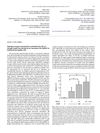
September 2011 in “Journal of Dermatological Science” TGF-β1 increases androgen receptor activity in hair loss, but Hic-5/ARA55 can counter this effect.
 126 citations
,
January 2010 in “British Journal of Dermatology”
126 citations
,
January 2010 in “British Journal of Dermatology” This study found that the prevalence of androgenetic alopecia in Chinese men and women was lower than in Caucasians and similar to that in Koreans.
 44 citations
,
January 2006 in “Biological & Pharmaceutical Bulletin”
44 citations
,
January 2006 in “Biological & Pharmaceutical Bulletin” This research suggests that testosterone-induced expression of TGF-beta1 and type I procollagen may lead to perifollicular fibrosis in androgenetic alopecia, with finasteride inhibiting this process as a possible mechanism for its effects.