7 citations
,
April 2025 in “Phytomedicine”  April 2024 in “JEADV. Journal of the European Academy of Dermatology and Venereology/Journal of the European Academy of Dermatology and Venereology”
 This study investigates the role of retinoic acid in regulating hair follicle stem cell homeostasis to identify new potential targets for treating androgenetic alopecia.
7 citations
,
August 2023 in “Ageing Research Reviews” More research is needed to understand hair aging and develop effective treatments.
 July 2023 in “Current Issues in Molecular Biology”
 This study found that escin acts as a natural agonist of the Wnt/β-catenin signaling pathway in cultured human dermal papilla cells by promoting the degradation of GSK-3β, highlighting its potential therapeutic use for conditions like androgenetic alopecia and vitiligo.
1 citations
,
July 2022 in “British Journal of Dermatology” In this study, researchers identified key transcriptome changes in male androgenetic alopecia hair follicles, suggesting that HIF-1 pathway genes and Wnt pathway inhibitors could be potential therapeutic targets.
 20 citations
,
May 2020 in “Experimental Dermatology”
20 citations
,
May 2020 in “Experimental Dermatology” This review discusses age-related changes in scalp skin and their potential effects on hair follicle aging, but reports no new clinical results, calling for further investigation.
 59 citations
,
April 2016 in “Cell Reports”
59 citations
,
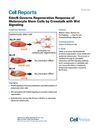
April 2016 in “Cell Reports” This study demonstrated that EdnrB signaling promotes melanocyte stem cell proliferation and differentiation, enhancing hair and epidermal melanocyte regeneration, especially under conditions of active Wnt signaling.
 66 citations
,
July 2015 in “Organogenesis”
66 citations
,
July 2015 in “Organogenesis” This review summarizes recent findings on how Wnt signaling proteins play crucial roles in the cutaneous wound healing process but reports no new clinical results.
 173 citations
,
January 2014 in “Nature Cell Biology”
173 citations
,
January 2014 in “Nature Cell Biology” This study found that Wnt signalling activates hair follicle fate in hair follicle stem cells by relieving TCF3/4–TLE-mediated repression, with β-catenin being crucial for this process.
 170 citations
,
July 2012 in “Journal of Investigative Dermatology”
170 citations
,
July 2012 in “Journal of Investigative Dermatology” In this study, researchers showed that Wnt ligands secreted by hair follicle epithelium are crucial for hair follicle regeneration and may be significant for treating hair disorders like alopecia.
 260 citations
,
June 2011 in “Cell”
260 citations
,
June 2011 in “Cell” This study found that Wnt signaling in the hair follicle is crucial for coordinating the behavior of epithelial and melanocyte stem cells, which drives hair regeneration and melanocyte differentiation in mice.